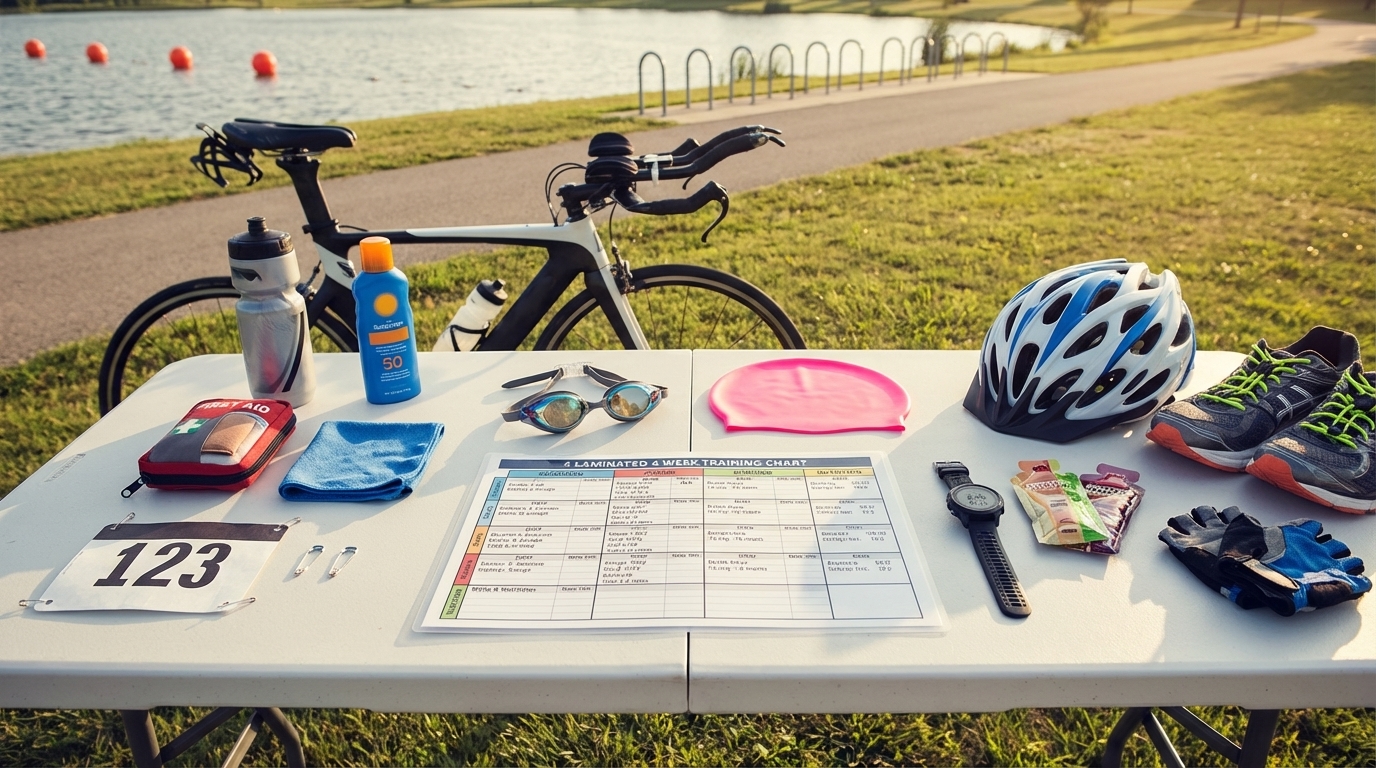
Multisport Merit Badge — Complete Digital Resource Guide
https://merit-badge.university/merit-badges/multisport/guide/
Introduction & Overview
Multisport is not just one sport. It is the challenge of putting two or three sports together and learning how to move from one to the next with control, confidence, and grit. If you like swimming, biking, running, or simply testing yourself in new ways, this badge shows you how to train smart and race safely.
What makes multisport special is that success is not only about speed. You also need planning, pacing, nutrition, transitions, and the ability to stay calm when your body is tired. That combination makes this badge a great fit for Scouts who enjoy setting goals and working toward them one step at a time.
Then and Now
Then
Modern multisport grew out of endurance challenges in the 1970s, when athletes began combining swimming, biking, and running into one event. Early triathlons were small and experimental. Competitors often figured things out as they went, using ordinary bikes, basic gear, and handwritten course notes. The idea was simple: test the whole athlete, not just one skill.
As the sport spread, organizers created shorter distances for younger athletes and beginners. That made multisport less intimidating and more accessible. Instead of needing to be an elite racer, you could learn the basics, train with a group, and enjoy the experience of moving through more than one discipline in a single event.
Now
Today, multisport includes much more than the classic triathlon. Duathlons skip the swim. Aquathlons focus on swimming and running. Aquabike events combine swimming and biking. Para-triathlon and adaptive events have opened the sport to more athletes, and youth programs now teach safe, age-appropriate training all over the world.
Technology has changed the sport too. Coaches use heart-rate data, athletes plan nutrition more carefully, and race organizers use better safety systems for open water, bike courses, and transition areas. But the heart of the sport is still the same: prepare well, race fairly, and discover what you can do when one challenge turns into the next.
Get Ready!
You do not need to be the fastest swimmer, strongest cyclist, or best runner to enjoy this badge. You need curiosity, a willingness to practice, and the patience to improve little by little. By the time you finish, you will know how to train with purpose and how to approach race day with a plan.
Kinds of Multisport
Triathlon
Triathlon is the classic multisport format: swim, then bike, then run. It asks for the widest range of skills because you must be comfortable in the water, on wheels, and on your feet. If you enjoy variety and want the full multisport experience, triathlon is the broadest path.
Duathlon
Duathlon replaces the swim with an opening run. That makes it a strong choice for Scouts who are more comfortable on land or who do not yet want open-water racing to be the center of the challenge. It still teaches pacing, bike handling, and transitions.
Aquathlon
Aquathlon combines swimming and running. It is a great fit if you enjoy the rhythm of moving from water to land and want a simpler gear setup than a full triathlon. Because there is no bike, you can focus more on stroke efficiency, breathing control, and quick foot turnover.
Aquabike
Aquabike combines swimming and biking. This format works well for Scouts who are strong in the water or on the bike and want to build endurance without the pounding of a run. It still requires smart planning, safe transitions, and steady pacing.
Next Steps
Your first requirement is about staying safe and helping others stay safe. Before you worry about race times or training plans, you need to know the hazards that come with swimming, biking, running, heat, cold, and overuse.
Req 1 — Hazards and First Aid
This requirement covers the two safety habits that support every other part of the badge:
- Spotting hazards before they become problems
- Handling common multisport injuries and illnesses
If you can recognize trouble early, you are much more likely to finish training safely and help a teammate when something goes wrong.
Requirement 1a
A multisport event can move you from a pool deck or shoreline to a bike course and then onto a run route. Each setting has its own risks. Good athletes do not just react to hazards. They look ahead and reduce risk before the starting horn ever sounds.
The hazards you are most likely to face
Heat and dehydration are common because training sessions often happen outdoors and last long enough for sweat loss to matter. The fix starts before the workout: drink water during the day, arrive hydrated, and adjust effort for hot or humid weather.
Cold water and weather changes matter most when swimming outdoors. Water pulls heat from your body much faster than air does. Wind after a swim can also make you cold quickly.
Falls and collisions on the bike happen when riders swerve, fail to signal, look down too long, or ride too close to others. Predictable riding and constant awareness prevent many crashes.
Overuse injuries build up when you increase distance or intensity too fast. Shin pain, sore knees, and tight calves are warning lights, not badges of honor.
Poor transitions create avoidable mistakes. A dropped helmet, twisted race belt, forgotten shoes, or hasty mount can cause both lost time and injuries.
Hazard Scan Before Training
Use this quick check before every multisport session- Weather: Is heat, lightning, strong wind, or cold water a concern?
- Course: Are there traffic crossings, slippery surfaces, potholes, or crowded lanes?
- Gear: Does your helmet fit, your bike work, and your swim gear match the conditions?
- Body: Are you rested, hydrated, and healthy enough to train today?
- Plan: Do you know the route, supervision, emergency contact, and turnaround point?
Anticipate, prevent, mitigate, respond
A good way to explain this requirement is to organize each hazard using four verbs:
- Anticipate — notice what could go wrong
- Prevent — take steps that lower the chance of trouble
- Mitigate — reduce the seriousness if something starts going wrong
- Respond — act calmly and correctly when a real problem happens
For example, with heat illness you anticipate hot conditions, prevent by hydrating and pacing smartly, mitigate by taking shade and cooling breaks, and respond by stopping activity and treating symptoms right away.
🎬 Video: How To Avoid Injury When Triathlon Training (video) — https://youtu.be/LckcSB-O8UI
Requirement 1b
This is practical first aid. You are not expected to be a doctor. You are expected to recognize common problems, stop the activity when needed, and give smart basic care.
Skin injuries: abrasions and blisters
Abrasions are scrapes, often from a fall. Clean the area gently, remove dirt, control minor bleeding, and cover it with a clean dressing.
Blisters come from friction, especially during running. Prevent them with good shoe fit, dry socks, and early treatment of hot spots. A hot spot treated early is much easier than a full blister later.
🎬 Video: How To Avoid and Treat Foot Blisters (video) — https://youtu.be/H6xlECl9ZBg
Impact injuries: contusions and concussions
A contusion is a bruise caused by a direct blow. Rest, protect the area, and watch for swelling or pain that gets worse.
A concussion is more serious. After a fall or collision, warning signs include headache, confusion, dizziness, vomiting, memory trouble, or unusual behavior. If you suspect a concussion, stop activity immediately and get medical evaluation. Do not “shake it off.”
Temperature and fluid problems
Dehydration often starts with thirst, dry mouth, reduced performance, and dark urine. Mild dehydration may improve with rest, shade, and fluids.
Overheating can progress from heat cramps to heat exhaustion and then heat stroke. Heat stroke is an emergency.
Hypothermia happens when the body loses heat faster than it can make it. Wet clothing, wind, and cold water make it worse.
🎬 Video: Treating Heat Exhaustion and Heat Stroke (video) — https://youtu.be/5hSpMdlXZw0
Muscle and joint injuries
Sprains affect ligaments. Strains affect muscles or tendons. Both usually need activity stopped right away. Protect the area, rest, and use the kind of care your counselor may describe as RICE or POLICE depending on current guidance.
🎬 Video: R.I.C.E. Treatment for Sprains and Strains (video) — https://youtu.be/TZqDBgiEfL8
A simple way to remember your job
- Stop the activity
- Check for danger to the person and to you
- Assess the problem
- Give basic care within your training
- Get adult or medical help when needed
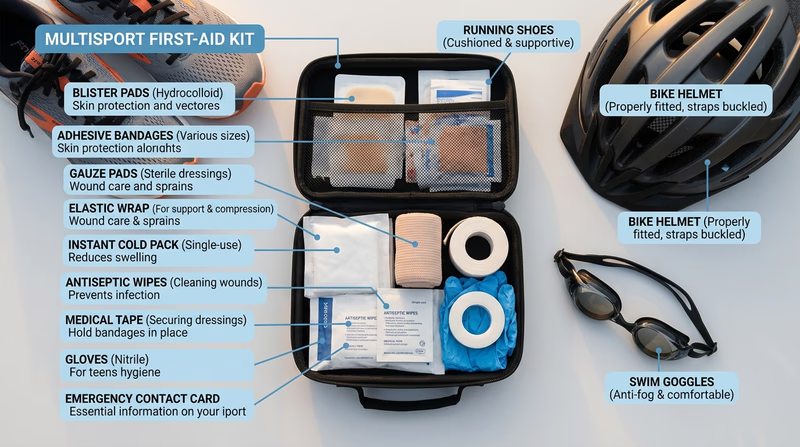
Before you can train hard, you need a body that is ready to train. Next, you will look at medical readiness, healthy habits, and nutrition.
Req 2 — Physical Readiness and Nutrition
This requirement is about preparing your body to handle training. It covers three big topics:
- Medical readiness
- Healthy daily habits
- Nutrition that supports performance
You do not build a strong multisport season only during workouts. You also build it through sleep, food, recovery, and honest conversations about your health.
Requirement 2a
A yearly physical helps catch problems before they become emergencies. In multisport, that matters because training stresses your heart, lungs, joints, and immune system. A physical gives adults and medical professionals a clearer picture of what is normal for you and what needs attention.
Overall health helps answer whether you are growing well, recovering well, and staying strong enough for activity.
Immunizations matter because races, camps, and team practices put you around many people. Staying current lowers the risk of preventable illness.
Medications matter because some affect hydration, alertness, breathing, or heat tolerance. Adults supervising you should know what is relevant in an emergency.
Allergies matter because multisport events may happen around insects, grass, food stations, and sunscreen or adhesive products.
Medical history matters because past injuries, asthma, fainting episodes, heart concerns, or heat illness can shape how you train and what precautions you need.
Scouting America Annual Health and Medical Record (website) Use Scouting America’s health record forms to organize medical information that helps leaders and counselors support you safely. Link: Scouting America Annual Health and Medical Record (website) — https://www.scouting.org/health-and-safety/ahmr/Requirement 2b
Good training habits are not glamorous, but they are powerful. Sleep, hydration, recovery days, and steady eating habits help your body adapt to training instead of just surviving it.
Health habits that actually help performance
- Sleep enough so your muscles, brain, and immune system can recover.
- Hydrate every day, not only during workouts.
- Eat regular meals instead of skipping and then trying to “catch up.”
- Respect recovery days so soreness does not turn into injury.
- Tell an adult early when pain, fatigue, breathing trouble, or illness feels unusual.
Tobacco, vaping, alcohol, and other harmful substances hurt performance because they interfere with oxygen use, decision-making, recovery, and judgment. A sport that asks you to manage breathing, pace, balance, and fast decisions is a terrible place to carry those disadvantages.
🎬 Video: 7 Reasons To Be Smoke-Free (video) — https://youtu.be/hCC1dgmwO_4
🎬 Video: Vaping Impacts Your Athletic Ability (video) — https://youtu.be/zXL9k-rJvIo
🎬 Video: 3 Things To Know About Drinking Alcohol (video) — https://youtu.be/YbBIl2KcVIQ
Requirement 2c
A healthy diet gives your body the fuel to train, recover, and stay healthy. For a multisport athlete, that usually means a mix of carbohydrates for energy, protein for repair, healthy fats for long-term fuel, and plenty of fruits, vegetables, and fluids.
A healthy diet is not about following a fad. It is about eating enough of the right things often enough to support growth and performance.
What that looks like in real life
- Carbohydrates give you quick energy for swimming, biking, and running.
- Protein helps repair muscles after training.
- Healthy fats support overall body function and longer-lasting energy.
- Fruits and vegetables bring vitamins, minerals, and fiber.
- Water helps with temperature control and performance.
🎬 Video: Nutrition Fuels Training! (video) — https://youtu.be/zMposrWrPC0
Simple Fueling Habits
Small choices that make training easier- Before training: Eat something light and easy to digest if you need energy.
- After training: Have food and fluids soon after the workout.
- During the day: Build meals around real food, not just snacks.
- On hard days: Pay extra attention to hydration and recovery food.
Your body is the engine for the whole badge. Next, you will look at your own experience level and choose the multisport format that fits you best.
Req 3 — Picking Your Event
This requirement helps you choose your path through the rest of the badge. You will look honestly at your experience, compare the three disciplines, gather the right gear, and decide which race format makes the most sense for you.
Requirement 3a
Start by being honest, not impressive. Your counselor does not need a speech about being “good at sports.” They need to understand what you have actually done.
For each discipline, think about questions like these:
- Have you done it recently?
- Do you feel relaxed, average, or nervous doing it?
- What distance feels manageable right now?
- What part feels strongest?
- What part needs the most work?
It also helps to know the order of events in the formats you may choose. In a triathlon, you swim first, then bike, then run. In a duathlon, you run, bike, and run again. In an aquathlon, you swim and then run. In an aquabike, you swim and then bike.
🎬 Video: Empowering Youth Through Multisport (video) — https://youtu.be/qmW51zdyduc
Requirement 3b
Everyone has a natural entry point. Some Scouts are calm and efficient in the water. Others have strong cycling confidence or a runner’s rhythm. There is no single “best” discipline. The best starting point is the one that helps you build confidence while still challenging you.
When you explain your strongest and weakest areas, think in terms of skills, not just speed:
- Swimming: breathing, comfort in water, sighting, pacing
- Biking: bike handling, balance, signaling, confidence around turns
- Running: pacing, form, recovery, consistency
Requirement 3c
You do not need fancy equipment, but you do need the right basics.
Swimming basics
You need appropriate swimwear, goggles, and safe water supervision. Depending on conditions, you might also need a swim cap, towel, and a wetsuit.
Biking basics
You need a safe bicycle that fits you, a properly fitted helmet, and clothing that allows movement and visibility. Water bottles and basic repair supplies become more important as rides get longer.
Running basics
You need shoes that fit well, comfortable clothing for the weather, and a simple hydration plan for longer or hotter efforts.
USA Triathlon Youth Guide (PDF) This youth guide gives a beginner-friendly overview of gear, safety, and training expectations for young multisport athletes. Link: USA Triathlon Youth Guide (PDF) — https://assets.contentstack.io/v3/assets/blteb7d012fc7ebef7f/blteec8160c769bfc2e/648b54b80f2d9bd22bed580b/USAT_Youth_Guide_2019.pdf🎬 Video: Triathlon Equipment You Really Need (video) — https://youtu.be/kgbz_3B9dNA
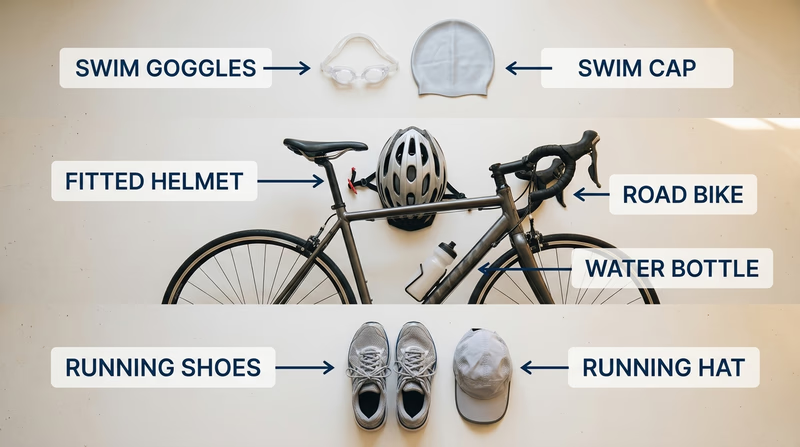
Requirement 3d
This choice should match your current skills and your goal for the badge.
If you want the broadest challenge
Choose triathlon. You will work on all three disciplines and the most complete transition experience.
If you want to avoid making swimming the center of the event
Choose duathlon. It is still demanding, but it stays on land.
If you like moving from water to running
Choose aquathlon. It is a simpler setup with less equipment than triathlon.
If you want endurance without the final run
Choose aquabike. It still asks for smart pacing and a clean transition.
In the next section, you will follow the path for the format you chose. Start with the option that matches your counselor discussion.
Req 4a — Triathlon Roadmap
Triathlon asks you to connect all three disciplines in sequence. This overview page helps you see the whole branch before you dive into the details.
What You’ll Complete
- Req 4a1 — Triathlon Swim Skills: Build the swim foundation, including swimming readiness, Safe Swim Defense, and open-water awareness.
- Req 4a2 — Triathlon Bike Skills: Learn how to ride predictably, check your bike, and gear up safely for the cycling section.
- Req 4a3 — Triathlon Run Skills: Practice run warmups, rules of the road, and drills that improve form and efficiency.
A good way to approach this branch is to think of it in order from highest consequence to highest fatigue. Swimming needs the strongest safety mindset. Biking demands the most equipment awareness. Running often happens when you are already tired, so technique and judgment matter.
How to prepare for the triathlon branch
Three things to gather before you start- Water confidence: Make sure your swimming skills are current and supervised.
- Bike readiness: Confirm that your bicycle fits and passes a safety check.
- Run routine: Be ready to demonstrate warmups, drills, and safe road habits.
Req 4a1 — Triathlon Swim Skills
Swimming is the first discipline in a triathlon and often the one that feels most intimidating. This page covers three connected skills: proving that you already have the Swimming merit badge foundation, understanding Safe Swim Defense, and knowing how open water changes the challenge.
Requirement 4a1a
This requirement is here for a reason. In triathlon, swimming happens first, when the field is crowded and your body is still settling into race mode. The Swimming merit badge gives you the basic water safety, stamina, and confidence you need before adding race pressure.
Swimming Merit Badge (website) Review the official Swimming merit badge page so you understand the prerequisite skills and safety expectations behind this branch. Link: Swimming Merit Badge (website) — https://www.scouting.org/merit-badges/swimming/%20What this prerequisite really means
It means you should already know how to move in the water calmly, follow safety rules, and respond instead of panicking. If you are still uncomfortable with basic swimming skills, the answer is not to rush forward. The answer is to strengthen the foundation first.
Requirement 4a1b
Safe Swim Defense is the system Scouting uses to reduce swimming risk. You should be ready to explain its parts and how they apply in your own training.
The components in plain language
- Qualified supervision means a responsible adult is in charge.
- Personal health review means swimmers are medically ready for activity.
- Safe area means the swim site is appropriate for the activity.
- Response personnel and equipment means people and gear are ready if something goes wrong.
- Lifeguards or lookouts means someone is actively watching, not just nearby.
- Ability groups mean swimmers are matched to their actual skill level.
- Buddy system means no one is alone in the water.
- Discipline means everyone follows the plan and rules.
Requirement 4a1c
A pool is controlled. The lines are clear, the temperature is more predictable, and you can stop at the wall. Open water removes those comforts. You may deal with current, waves, poor visibility, cold water, and the need to sight your direction while still swimming efficiently.
Pool swim vs. open water swim
Pool swim
- Clear lane lines and walls
- Predictable water conditions
- Easier supervision and easier stopping points
- Less navigation stress
Open water swim
- Fewer visual references
- Possible waves, current, or chop
- More temperature risk
- Greater need for calm breathing and sighting
Wetsuits are often used when the water is cold enough that extra warmth and buoyancy improve safety and comfort. Your counselor will want to hear that the exact decision depends on event rules, water temperature, and conditions, not just preference.
🎬 Video: 4 Things To Know Before Your First Open Water Swim (video) — https://youtu.be/0VN9xikjs2E
🎬 Video: The Dangers of Cold Water Immersion (video) — https://youtu.be/fLdw5NBOf6g
🎬 Video: How Do Wetsuits Keep You Warm? (video) — https://youtu.be/6B05sU20-Jw
Triathlon continues on land. Next, you will turn from water safety to bike handling and equipment checks.
Req 4a2 — Triathlon Bike Skills
The bike leg covers the most ground and usually creates the highest speeds in your multisport event. This section focuses on control, awareness, and equipment care.
Requirement 4a2a
A safe rider is not mysterious to everyone else on the road or trail. Predictable riders hold their line, signal clearly, and avoid sudden moves.
- Ride predictably: keep a steady line and do not weave
- Be conspicuous: wear visible clothing and make sure others can see you
- Think ahead: scan for turns, traffic, gravel, and stops before you reach them
- Ride ready: start every ride with working gear and a focused mindset
🎬 Video: Bike Safety | Hand Signals (video) — https://youtu.be/v_hRsNHlq8M?
Requirement 4a2b
A quick bike check can prevent a long walk home or a dangerous crash. Look at your brakes, tires, chain, handlebars, seat, and quick releases if your bike has them.
A simple beginner habit is the ABC quick check:
- A — Air: tires properly inflated
- B — Brakes: both brakes work and do not rub badly
- C — Chain / Cranks: chain moves smoothly and pedals turn normally
🎬 Video: Bike Tips: Preflight Checklist for a Safe Ride (video) — https://youtu.be/EHLq5Em-EPI
Bike check before training
Look for these each time- Tires: enough air, no obvious cuts
- Brakes: strong stopping power
- Helmet: secure and undamaged
- Chain: clean enough to run smoothly
- Bars and seat: tight and aligned
Requirement 4a2c
A helmet only helps if it fits correctly. It should sit level on your head, low on your forehead, and stay put when you move. Straps should form a snug V shape under each ear.
Clothing matters because weather changes how your body performs. In heat, you need breathable clothing and hydration. In cooler or wet conditions, you need layers that help you stay warm without blocking movement.
🎬 Video: Fitting a Bike Helmet (video) — https://youtu.be/hLlXswx0VvQ
Next comes the run leg, where efficiency, road awareness, and drills help you finish strong instead of just surviving the final segment.
Req 4a3 — Triathlon Run Skills
The run often feels hardest because it comes after the swim and bike. Good run habits help you stay efficient when your legs are already tired.
Requirement 4a3a
A warmup prepares your muscles, joints, and breathing for movement. A cooldown helps your body settle after the work is done.
A strong run warmup often includes light jogging or brisk walking, leg swings, lunges, and dynamic movement. A cooldown can include easy jogging or walking followed by gentle stretching once your effort drops.
Healthy habits matter because your body cannot keep improving if it is always under-fueled or under-rested. Hydration supports temperature control. Nutrition supports energy and repair. Rest gives your body time to adapt.
🎬 Video: Warm-Up for Running (video) — https://youtu.be/PkF3jjFZc0s
🎬 Video: Hydration for Running (video) — https://youtu.be/MpCO8Y7iPYk
Requirement 4a3b
Where runners should position themselves
When there is no sidewalk, runners should generally face traffic so they can see what is coming. If there is a sidewalk or safe separated path, use it.
How runners stay visible
Wear bright or reflective gear in low light, especially early in the morning or near sunset. Make eye contact with drivers when possible.
How runners make smart decisions
Do not assume a driver sees you. Watch driveways, intersections, turning vehicles, cyclists, and loose surfaces.
🎬 Video: Safety Tips for Running (video) — https://youtu.be/I6aDhB_uC8A
Requirement 4a3c
Drills improve movement quality. They help your body rehearse the patterns that support strong running form.
- High knees wake up hip flexors and posture
- Butt kicks activate the back of the legs
- Lunges build balance and control
- Inchworms warm the core, hamstrings, and shoulders
- Soldier kicks improve hamstring mobility and coordination
🎬 Video: High Knees and Butt Kicks (video) — https://youtu.be/tY2bLt7roOQ
🎬 Video: Lunges (video) — https://youtu.be/amElt61OHgM
🎬 Video: Inchworms (video) — https://youtu.be/pv_8CdDPAAk
🎬 Video: Soldier Kicks (video) — https://youtu.be/9cacAKZESf0
You have now covered the full triathlon branch. If your chosen format is triathlon, these are your main discipline skills. The next guide pages show the alternate branches for other Scouts choosing a different format.
Req 4b — Duathlon Roadmap
Duathlon removes the swim and puts extra focus on how you move between running and biking. It is a strong option for Scouts who are more comfortable on land and want to concentrate on pacing plus transition control.
What You’ll Complete
- Req 4b1 — Duathlon Bike Skills: Learn bike handling, safety checks, and helmet-and-clothing basics.
- Req 4b2 — Duathlon Run Skills: Practice warmups, running safety, and drills that support efficient movement.
Duathlon often feels simpler because there is no swim, but that can trick athletes into starting too fast. Because the event begins with running, pacing matters right away. Then you have to transition onto the bike without losing focus.
How to choose duathlon well
This branch fits best when...- You want a land-based format without making swimming the deciding factor.
- You have reliable access to roads or paths for cycling and running.
- You want to practice pacing twice on foot, not just once.
- You are ready to manage transitions between run and bike efficiently.
Req 4b1 — Duathlon Bike Skills
The bike section in duathlon uses the same core cycling habits as triathlon: be visible, stay predictable, and make sure your equipment is safe before every ride.
Requirement 4b1a
Good riding is about being easy to understand. Hold your line, signal your choices, and scan ahead for hazards before they become emergencies.
🎬 Video: Bike Safety | Hand Signals (video) — https://youtu.be/v_hRsNHlq8M?
Requirement 4b1b
Before each ride, check tires, brakes, chain, pedals, and helmet. A bike that is “almost fine” can become unsafe quickly once speed and fatigue enter the picture.
🎬 Video: Bike Tips: Preflight Checklist for a Safe Ride (video) — https://youtu.be/EHLq5Em-EPI
Quick bike check
A simple routine before every session- Air: tires inflated and free from obvious damage
- Brakes: both brakes engage firmly
- Chain: drivetrain moves cleanly
- Controls: handlebars and saddle secure
- Helmet: fits and buckles correctly
Requirement 4b1c
Helmets reduce risk only when they fit right. Weather-appropriate clothing also matters because a rider who is overheating, shivering, or poorly visible is more likely to make mistakes.
🎬 Video: Fitting a Bike Helmet (video) — https://youtu.be/hLlXswx0VvQ
Next, you will move to the run skills that bookend the bike section and make duathlon unique.
Req 4b2 — Duathlon Run Skills
Duathlon begins and ends with running, so efficient form and smart pacing matter even more. The first run should leave something in the tank for the bike and the final run.
Requirement 4b2a
A good warmup prepares you to run well from the first minutes instead of spending the first part of the session feeling stiff and awkward. A cooldown helps you recover more smoothly.
🎬 Video: Warm-Up for Running (video) — https://youtu.be/PkF3jjFZc0s
🎬 Video: Hydration for Running (video) — https://youtu.be/MpCO8Y7iPYk
Requirement 4b2b
Position on the road
Use sidewalks or separated paths when available. Without them, runners should generally face traffic so they can see approaching vehicles.
Visibility
Choose bright or reflective gear when light is low, and assume drivers may not notice you right away.
Awareness
Watch intersections, parked cars, driveways, and cyclists. Safe runners pay attention even when tired.
🎬 Video: Safety Tips for Running (video) — https://youtu.be/I6aDhB_uC8A
Requirement 4b2c
These drills help you move better, not just warm up longer. They support posture, stride rhythm, balance, and flexibility.
🎬 Video: High Knees and Butt Kicks (video) — https://youtu.be/tY2bLt7roOQ
🎬 Video: Lunges (video) — https://youtu.be/amElt61OHgM
🎬 Video: Inchworms (video) — https://youtu.be/pv_8CdDPAAk
🎬 Video: Soldier Kicks (video) — https://youtu.be/9cacAKZESf0
The next branch shows aquathlon, where the swim-to-run transition creates a different kind of challenge.
Req 4c — Aquathlon Roadmap
Aquathlon combines swimming and running without the bike leg. That makes the gear simpler, but it still asks for strong safety awareness and a smooth shift from water to land.
What You’ll Complete
- Req 4c1 — Aquathlon Swim Skills: Cover the swimming prerequisite, Safe Swim Defense, and open-water differences.
- Req 4c2 — Aquathlon Run Skills: Build run warmup habits, road awareness, and key drills.
Aquathlon suits Scouts who like the simplicity of two disciplines but still want the challenge of leaving the water and continuing under fatigue.
Req 4c1 — Aquathlon Swim Skills
Aquathlon begins in the water, so the swim foundation still matters. This page mirrors the key swim ideas from the triathlon branch because the same safety rules apply.
Requirement 4c1a
The Swimming merit badge gives you the safety, stamina, and confidence needed before you add multisport transitions and race pressure.
Swimming Merit Badge (website) Review the official Swimming merit badge page to understand the water-safety foundation this branch depends on. Link: Swimming Merit Badge (website) — https://www.scouting.org/merit-badges/swimming/%20Requirement 4c1b
Safe Swim Defense means qualified supervision, a safe area, trained response, ability groups, buddy checks, and clear discipline. You should be able to explain how these show up in your actual swim setting, not just recite them from memory.
Requirement 4c1c
Pool swims are controlled. Open water swims require more navigation, more comfort with uncertainty, and more awareness of temperature and conditions.
🎬 Video: 4 Things To Know Before Your First Open Water Swim (video) — https://youtu.be/0VN9xikjs2E
🎬 Video: The Dangers of Cold Water Immersion (video) — https://youtu.be/fLdw5NBOf6g
🎬 Video: How Do Wetsuits Keep You Warm? (video) — https://youtu.be/6B05sU20-Jw
What changes in open water
Points to explain to your counselor- Navigation: you may need to sight where you are going
- Conditions: wind, waves, and current can change effort quickly
- Temperature: cold water can affect breathing and control
- Exit strategy: you need to know where and how you will finish the swim safely
Next comes the run section, where you learn how to carry your effort from the water onto the course efficiently.
Req 4c2 — Aquathlon Run Skills
In aquathlon, the run begins after the swim, so your legs may feel strange at first and your breathing may still be settling. Good run habits help you regain rhythm quickly.
Requirement 4c2a
Warmups prepare you to move well. Cooldowns help you recover. Hydration, nutrition, injury prevention, and rest make those efforts sustainable across weeks of training.
🎬 Video: Warm-Up for Running (video) — https://youtu.be/PkF3jjFZc0s
🎬 Video: Hydration for Running (video) — https://youtu.be/MpCO8Y7iPYk
Requirement 4c2b
Safe positioning
Use sidewalks or paths when possible. Without them, face traffic so you can see approaching vehicles.
Safe visibility
Wear bright or reflective gear and expect low-light conditions to make you harder to notice.
Safe awareness
Stay alert at driveways, intersections, and course crossings. Tired runners still need good judgment.
🎬 Video: Safety Tips for Running (video) — https://youtu.be/I6aDhB_uC8A
Requirement 4c2c
These drills build coordination, mobility, and better movement patterns.
🎬 Video: High Knees and Butt Kicks (video) — https://youtu.be/tY2bLt7roOQ
🎬 Video: Lunges (video) — https://youtu.be/amElt61OHgM
🎬 Video: Inchworms (video) — https://youtu.be/pv_8CdDPAAk
🎬 Video: Soldier Kicks (video) — https://youtu.be/9cacAKZESf0
The next branch is aquabike, where the swim leads into the bike instead of the run.
Req 4d — Aquabike Roadmap
Aquabike combines the technical demands of swimming with the equipment and handling skills of cycling. It removes the run, but it still rewards careful pacing and an organized transition.
What You’ll Complete
- Req 4d1 — Aquabike Swim Skills: Review the swimming prerequisite, Safe Swim Defense, and open-water awareness.
- Req 4d2 — Aquabike Bike Skills: Build safe riding habits, routine bike checks, and proper helmet-and-clothing practices.
Aquabike is a good fit if you like endurance but want less impact than a run finish. It still asks for strong focus because you must switch from the water to the bike without losing control.
Req 4d1 — Aquabike Swim Skills
The aquabike swim section uses the same swimming foundation as triathlon and aquathlon. You still need the prerequisite badge, Safe Swim Defense knowledge, and an understanding of open-water conditions.
Requirement 4d1a
The Swimming merit badge proves you already have the water-safety baseline needed before you combine swimming with the stress of a multisport event.
Swimming Merit Badge (website) Use the official Swimming merit badge page to review the prerequisite skills that support safe participation in the aquabike branch. Link: Swimming Merit Badge (website) — https://www.scouting.org/merit-badges/swimming/%20Requirement 4d1b
You should be able to explain supervision, safe areas, ability groups, buddy systems, and emergency readiness in a way that connects to your actual swim setting.
Requirement 4d1c
Open water demands more navigation, more comfort with uncertainty, and more attention to temperature than a pool swim. Wetsuit use depends on event rules and conditions, not just preference.
🎬 Video: 4 Things To Know Before Your First Open Water Swim (video) — https://youtu.be/0VN9xikjs2E
🎬 Video: The Dangers of Cold Water Immersion (video) — https://youtu.be/fLdw5NBOf6g
🎬 Video: How Do Wetsuits Keep You Warm? (video) — https://youtu.be/6B05sU20-Jw
Next, you will shift from the swim to the bike, where control and equipment checks become the focus.
Req 4d2 — Aquabike Bike Skills
In aquabike, the bike leg is your finish. That means you want to start it safely, settle into a sustainable pace, and keep your equipment dependable from beginning to end.
Requirement 4d2a
Safe riders are steady, visible, and alert. They scan ahead, communicate clearly, and begin the ride with equipment that works.
🎬 Video: Bike Safety | Hand Signals (video) — https://youtu.be/v_hRsNHlq8M?
Requirement 4d2b
Check tires, brakes, chain, controls, and fit before every ride. A small problem found early is easier to fix than a failure on course.
🎬 Video: Bike Tips: Preflight Checklist for a Safe Ride (video) — https://youtu.be/EHLq5Em-EPI
Requirement 4d2c
Helmets protect only when they fit well. Clothing helps regulate temperature and visibility, which directly affect judgment and safety.
🎬 Video: Fitting a Bike Helmet (video) — https://youtu.be/hLlXswx0VvQ
Now that you have chosen and studied your event branch, it is time to build the four-week training plan that turns ideas into action.
Req 5 — Build Your Four-Week Plan
This requirement turns practice into a plan. You will design four weeks of training, track what you do, set a personal goal, and reflect on how you changed.
Requirement 5a
A good training plan is realistic, not heroic. It should match your current level, use the format you chose in Requirement 3d, and give you enough work to improve without overloading your body.
Multisport Training Plan Worksheet Resource: Multisport Training Plan Worksheet — /merit-badges/multisport/guide/training-plan-worksheet/A simple four-week plan usually includes:
- 2–3 focused sessions each week
- At least one easier or recovery day between harder efforts
- Practice in the disciplines your format requires
- A clear skill focus such as pacing, transitions, swimming comfort, or bike handling
🎬 Video: Advice for Younger Athletes | Our Tips For Junior And Youth Triathletes (video) — https://youtu.be/PxVw1eZp7d4
🎬 Video: How to Start Swim Training (video) — https://youtu.be/Zh9bhXe5lug
🎬 Video: Is There a Perfect Swimming Technique for Triathlon? (video) — https://youtu.be/i6-w8RXf45Y
🎬 Video: How To Start Running Training (video) — https://youtu.be/kVnyY17VS9Y
Requirement 5b
Tracking matters because memory is unreliable. If you only guess how often you trained or how well you felt, it is hard to see progress clearly.
A good chart can include:
- date
- session type
- time or distance
- skill focus
- how you felt physically
- what improved
What to record after each session
Keep your chart useful, not fancy- What you did
- How long it lasted
- One thing that felt better
- One thing that still needs work
Requirement 5c
Goal based on time
You might aim to complete a training segment faster while still staying in control.
Goal based on technique
You might aim to improve something like smoother breathing in the water, cleaner bike starts, or better running posture.
Goal based on distance
You might aim to cover more distance comfortably within your session.
Requirement 5d
Physical effects to notice
You may feel stronger, less tired at the same effort, more coordinated, or more comfortable moving from one discipline to another.
Mental effects to notice
You may feel more confident, more patient, or more willing to tackle challenges that seemed intimidating before.
How to talk about progress honestly
Progress does not have to mean “everything became easy.” It may mean you learned what still needs work and now have a smarter plan.
Your next requirement is about transitions, where organization and calm decision-making can make a huge difference on event day.
Req 6 — Set Up Your Transition Area
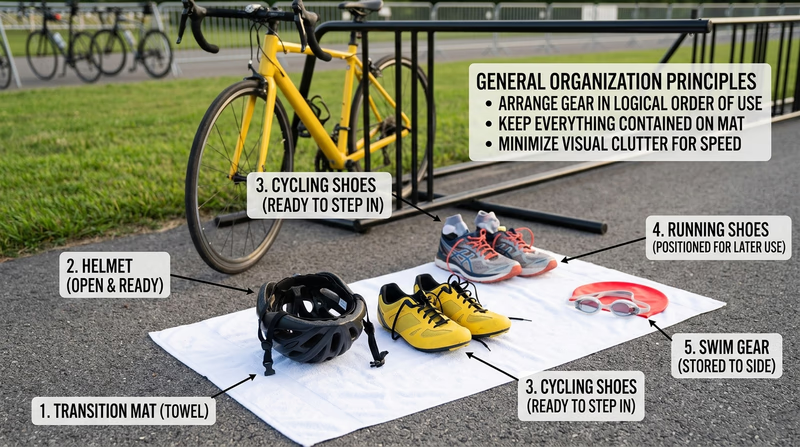
A messy transition area creates stress, confusion, and lost time. A good one feels simple. You should know where each item goes, what order you will use it in, and how to move through the area without rushing into mistakes.
What belongs in a transition area
Your setup depends on your format, but the basic idea is the same: place items in the order you will need them.
- Swim-to-bike: towel, helmet, shoes, bike, race belt if used
- Bike-to-run: running shoes, hat, water if needed
- Run-to-bike or bike-to-run in duathlon: keep the layout easy to scan quickly
How to set it up well
- Keep gear compact and organized
- Put safety items where they are impossible to miss
- Avoid clutter that could trip you or others
- Practice the same layout more than once so it becomes familiar
🎬 Video: Setting Up Your Transition Area (video) — https://www.youtube.com/watch?v=HvIq5NExAFU
Transition area basics
Build a setup you can use without panic- Bike placed securely in the assigned spot
- Helmet ready first for any bike leg
- Shoes opened and easy to step into
- Small towel or marker to help identify your spot
- No extra clutter that can catch feet or hands
The next requirement asks you to put your preparation together into a same-day multisport challenge that matches your chosen format.
Req 7 — Choose Your Race Simulation
You must choose exactly one option from this requirement. This page helps you decide which race simulation matches the format you selected earlier.
Your Options
- Req 7a — Triathlon Simulation: Complete a swim-bike-run sequence and experience the full three-discipline flow.
- Req 7b — Duathlon Simulation: Start with a run, move to the bike, then finish with another run while managing your pacing across two run legs.
- Req 7c — Aquathlon Simulation: Combine a swim and run with one key transition from water to land.
- Req 7d — Aquabike Simulation: Swim first, then settle into the bike leg and finish on wheels.
How to Choose
Choosing your race simulation
Compare the practical demands of each option- Triathlon: Requires confidence in all three disciplines and the most gear. You gain the fullest multisport experience.
- Duathlon: Best if you want to stay on land. You gain more pacing practice across two runs.
- Aquathlon: Simpler setup with swim-plus-run focus. You gain experience shifting from the water to running legs.
- Aquabike: Good if you prefer swimming and cycling without the final run. You gain endurance practice with lower impact than run-heavy formats.
A good choice is not the one that sounds toughest. It is the one that matches the branch you prepared for in Requirement 4 and lets you complete the sequence safely in one continuous effort.
The first option page covers the full swim-bike-run triathlon sequence.
Req 7a — Triathlon Simulation
This option gives you the full multisport experience. You will complete all three disciplines in order and show that you can transition smoothly without losing focus.
What success looks like
Success is not just finishing the distance. It also means:
- starting each leg under control
- following safety rules the whole time
- transitioning calmly
- pacing yourself so one strong leg does not ruin the next
A smart approach
Keep the swim relaxed enough that you leave the water ready to think clearly. In transition, get your helmet on before touching the bike. On the bike, stay controlled and save enough energy for the run. On the run, settle into a steady rhythm instead of sprinting out of transition.
Next is the duathlon option, which changes the rhythm by starting on the run instead of in the water.
Req 7b — Duathlon Simulation
Duathlon starts with a run, which means it is easy to go out too fast. Your goal is to control the first run well enough to keep the bike strong and the final run steady.
What to focus on
- Start controlled, not rushed
- Use transition to reset your brain before the bike leg
- Bike smoothly instead of trying to “make up time”
- Expect the last run to feel different because your legs are coming off the bike
Req 7c — Aquathlon Simulation
Aquathlon is simpler in gear but still demanding because you leave the water and begin running while your breathing and legs are adjusting.
Keys to doing this well
- keep the swim smooth enough that you can think clearly in transition
- move efficiently from wet feet to running form
- let your first running steps settle before you try to speed up
Req 7d — Aquabike Simulation
Aquabike trades the run finish for a longer feeling of sustained effort on the bike. The transition still matters, but once you are riding, your main job is to settle into a smooth, safe pace.
Keys to doing this well
- leave the water composed, not panicked
- put on your helmet before handling the bike
- build speed gradually instead of surging too early
- keep your focus all the way to the end because the bike is your finish line
The next requirement looks beyond this event and asks you to choose two ways to stay involved in multisport after the badge.
Req 8 — Pick Your Next Two Steps
You must choose exactly 2 options from this requirement. This page helps you compare the choices so you can pick the two that fit your interests, opportunities, and long-term goals.
Your Options
- Req 8a — Keep Participating: Find two realistic ways to stay involved in multisport after the badge.
- Req 8b — Study a Triathlete: Research an athlete and learn what their story can teach you.
- Req 8c — Lead a Training Group: Turn what you learned into leadership by organizing others.
- Req 8d — Enter a Sanctioned Event: Step into a real organized event in your area.
- Req 8e — Volunteer at an Event: Support athletes and organizers by helping behind the scenes.
🎬 Video: Example of a Multisport Event (video) — https://www.youtube.com/watch?v=4M7PdZ7wXW0
How to Choose
Choosing your final two options
Think about access, time, and what you want to gain- If you want to stay active yourself: 8a and 8d are strong choices.
- If you want to learn from role models and ideas: 8a and 8b fit well.
- If you want leadership experience: 8c and 8e give you chances to help others.
- If local events are hard to access: 8a, 8b, and 8c may be more realistic than 8d.
- What you will gain: Some choices build participation, some build inspiration, and some build service and leadership.
The first option looks at realistic ways to keep multisport part of your life after the badge ends.
Req 8a — Keep Participating
The point of this requirement is not just to name two ideas. It is to find two paths you could actually follow after the badge.
Good examples might include:
- joining a youth triathlon club or local training group
- entering beginner-friendly events during the season
- continuing with swim, bike, or run practices that support your chosen format
- volunteering first and then racing later to learn how events work
🎬 Video: Participating in Multisport (video) — https://www.youtube.com/watch?v=qt2a3m-yoy4%20
Pick two realistic next steps
Questions that help you choose- Can I get to the practices or events?
- Do I have the gear I need already?
- Would I rather join a group or keep training on my own?
- Which option would keep me excited for the longest time?
Next, you can learn from the story of a real athlete and think about what makes them inspiring.
Req 8b — Study a Triathlete
A good athlete profile is more than a list of medals. Look at how the person entered the sport, what obstacles they faced, what strengths defined them, and what lessons a Scout could learn from their story.
You might compare athletes by asking:
- How did they get started?
- What setbacks did they overcome?
- What skills or habits made them successful?
- What part of their character stands out most?
🎬 Video: Paralympic Triathlon (video) — https://www.youtube.com/watch?v=DtVyOewaX3Y%20
🎬 Video: Olympic Triathlon (video) — https://www.youtube.com/watch?v=r_8jcSU6kNc%20
Next, you can turn your own experience into leadership by helping others get started.
Req 8c — Lead a Training Group
Leadership here does not mean acting like an expert coach. It means organizing people, keeping the activity safe, and helping others learn something useful.
A simple way to lead a training group
- choose a clear purpose for the session
- pick one or two topics to teach
- keep the activity beginner-friendly
- explain safety rules before movement starts
- encourage everyone, not just the strongest athletes
🎬 Video: Training With a Club (video) — https://www.youtube.com/watch?v=ogogU_qZok8%20
Next, you can look at joining a real sanctioned event and seeing how official race structure works.
Req 8d — Enter a Sanctioned Event
A sanctioned event follows the rules and safety systems of an official governing body. That usually means clearer course support, better supervision, and stronger event standards than an informal race.
What to look for before you sign up
- age-appropriate distances
- beginner-friendly event descriptions
- clear safety rules
- registration deadlines and required waivers
- equipment expectations
The last option shows how volunteering can teach you a lot about the sport even before you race it yourself.
Req 8e — Volunteer at an Event
Volunteering teaches you how events work from the inside. You see how courses are managed, how athletes are supported, and how much planning goes into safety.
Volunteer roles you might see
- course marshal
- water station helper
- registration table worker
- finish-line support
- transition-area helper
- setup or cleanup crew
Each role matters because events depend on lots of people doing simple jobs well.
Challenged Athletes Foundation Explore adaptive sports programs and volunteer-minded opportunities that support athletes with physical disabilities. Link: Challenged Athletes Foundation — https://www.challengedathletes.org/ Special Olympics Find programs and events where athletes, coaches, and volunteers work together to make sports participation possible for more people. Link: Special Olympics — https://www.specialolympics.org/You have reached the end of the main requirements. The Extended Learning page points you toward ways to keep growing in the sport after the badge is complete.
Extended Learning
Congratulations
You have worked through the safety, training, transitions, and race-day thinking that make multisport unique. That is a real accomplishment. Multisport has a way of teaching more than fitness alone: it teaches planning, adaptability, patience, and the ability to stay calm while switching from one challenge to the next.
Training Beyond One Event
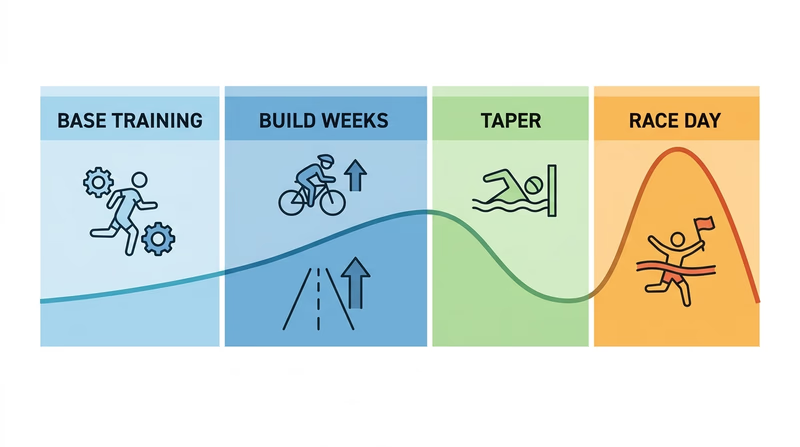
Many beginners train only for the next session or the next badge requirement. Stronger athletes learn to think in seasons. A season includes easier weeks, harder weeks, skill-focused periods, and recovery periods. That structure matters because the body improves between hard efforts, not only during them.
If you stay in multisport, you will hear athletes talk about base, build, and taper phases. Base work builds consistent endurance at manageable effort. Build phases add more challenge or more event-specific practice. A taper reduces training load before an event so you can arrive rested instead of worn out.
The Skill of Pacing
Pacing is one of the most important multisport skills because the event punishes early mistakes. Go too hard in the swim and your bike suffers. Push the bike recklessly and your run falls apart. Start the first run in a duathlon too fast and the final run feels much longer than the numbers suggest.
Good pacing means learning the difference between hard, steady, and unsustainable. That awareness takes practice. It is one reason multisport can be so satisfying: it rewards self-knowledge as much as strength.
Transitions as a Learnable Skill
Beginners often think transitions are just about speed. They are really about clarity. A good transition comes from a repeated routine: where your gear sits, what order you touch it, and what you do first every time.
Elite athletes practice transitions because they know small mistakes multiply under pressure. That is true for Scouts too. The more automatic your setup becomes, the more energy you save for the parts of the event that matter most.
Adaptive and Inclusive Multisport
One of the most encouraging things about modern multisport is how many paths into the sport now exist. Para-triathlon, unified events, and adaptive sports programs help more athletes participate using equipment, coaching, and event structures that meet real needs.
That matters because the best version of sport is not only about who finishes first. It is also about making challenge, movement, and community available to more people.
Real-World Experiences
Volunteer at a Local Triathlon or Youth Race
Attend a Beginner-Friendly Triathlon Clinic
Visit an Open-Water Swim Venue or Safe Community Pool Program
Watch a Collegiate, Elite, or Para-Triathlon Event
Join a Group Ride, Run Club, or Youth Endurance Program
Organizations
The national governing body for triathlon in the United States. Offers event information, youth resources, safety guidance, and pathways into the sport.
Organization: USA Triathlon — https://www.usatriathlon.org/
The international governing body for triathlon, para-triathlon, and related multisport disciplines. A strong place to explore athlete stories, results, and global competition formats.
Organization: World Triathlon — https://www.triathlon.org/
Supports athletes with physical disabilities through grants, programs, and adaptive sports opportunities. Useful for learning how inclusive multisport grows.
Organization: Challenged Athletes Foundation — https://www.challengedathletes.org/
Connects athletes, coaches, and volunteers through sports programs around the world. A valuable organization for seeing how participation and community grow together.
Organization: Special Olympics — https://www.specialolympics.org/