Req 1 — Hazards and First Aid
This requirement covers the two safety habits that support every other part of the badge:
- Spotting hazards before they become problems
- Handling common multisport injuries and illnesses
If you can recognize trouble early, you are much more likely to finish training safely and help a teammate when something goes wrong.
Requirement 1a
A multisport event can move you from a pool deck or shoreline to a bike course and then onto a run route. Each setting has its own risks. Good athletes do not just react to hazards. They look ahead and reduce risk before the starting horn ever sounds.
The hazards you are most likely to face
Heat and dehydration are common because training sessions often happen outdoors and last long enough for sweat loss to matter. The fix starts before the workout: drink water during the day, arrive hydrated, and adjust effort for hot or humid weather.
Cold water and weather changes matter most when swimming outdoors. Water pulls heat from your body much faster than air does. Wind after a swim can also make you cold quickly.
Falls and collisions on the bike happen when riders swerve, fail to signal, look down too long, or ride too close to others. Predictable riding and constant awareness prevent many crashes.
Overuse injuries build up when you increase distance or intensity too fast. Shin pain, sore knees, and tight calves are warning lights, not badges of honor.
Poor transitions create avoidable mistakes. A dropped helmet, twisted race belt, forgotten shoes, or hasty mount can cause both lost time and injuries.
Hazard Scan Before Training
Use this quick check before every multisport session
- Weather: Is heat, lightning, strong wind, or cold water a concern?
- Course: Are there traffic crossings, slippery surfaces, potholes, or crowded lanes?
- Gear: Does your helmet fit, your bike work, and your swim gear match the conditions?
- Body: Are you rested, hydrated, and healthy enough to train today?
- Plan: Do you know the route, supervision, emergency contact, and turnaround point?
Anticipate, prevent, mitigate, respond
A good way to explain this requirement is to organize each hazard using four verbs:
- Anticipate — notice what could go wrong
- Prevent — take steps that lower the chance of trouble
- Mitigate — reduce the seriousness if something starts going wrong
- Respond — act calmly and correctly when a real problem happens
For example, with heat illness you anticipate hot conditions, prevent by hydrating and pacing smartly, mitigate by taking shade and cooling breaks, and respond by stopping activity and treating symptoms right away.
🎬 Video: How To Avoid Injury When Triathlon Training (video) — https://youtu.be/LckcSB-O8UI
Requirement 1b
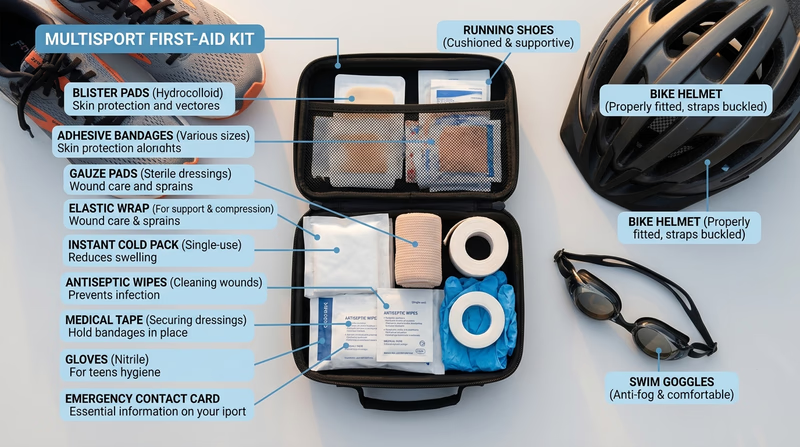
This is practical first aid. You are not expected to be a doctor. You are expected to recognize common problems, stop the activity when needed, and give smart basic care.
Skin injuries: abrasions and blisters
Abrasions are scrapes, often from a fall. Clean the area gently, remove dirt, control minor bleeding, and cover it with a clean dressing.
Blisters come from friction, especially during running. Prevent them with good shoe fit, dry socks, and early treatment of hot spots. A hot spot treated early is much easier than a full blister later.
🎬 Video: How To Avoid and Treat Foot Blisters (video) — https://youtu.be/H6xlECl9ZBg
Impact injuries: contusions and concussions
A contusion is a bruise caused by a direct blow. Rest, protect the area, and watch for swelling or pain that gets worse.
A concussion is more serious. After a fall or collision, warning signs include headache, confusion, dizziness, vomiting, memory trouble, or unusual behavior. If you suspect a concussion, stop activity immediately and get medical evaluation. Do not “shake it off.”
Temperature and fluid problems
Dehydration often starts with thirst, dry mouth, reduced performance, and dark urine. Mild dehydration may improve with rest, shade, and fluids.
Overheating can progress from heat cramps to heat exhaustion and then heat stroke. Heat stroke is an emergency.
Hypothermia happens when the body loses heat faster than it can make it. Wet clothing, wind, and cold water make it worse.
🎬 Video: Treating Heat Exhaustion and Heat Stroke (video) — https://youtu.be/5hSpMdlXZw0
Muscle and joint injuries
Sprains affect ligaments. Strains affect muscles or tendons. Both usually need activity stopped right away. Protect the area, rest, and use the kind of care your counselor may describe as RICE or POLICE depending on current guidance.
🎬 Video: R.I.C.E. Treatment for Sprains and Strains (video) — https://youtu.be/TZqDBgiEfL8
A simple way to remember your job
- Stop the activity
- Check for danger to the person and to you
- Assess the problem
- Give basic care within your training
- Get adult or medical help when needed
Before you can train hard, you need a body that is ready to train. Next, you will look at medical readiness, healthy habits, and nutrition.