Music Merit Badge — Complete Digital Resource Guide
https://merit-badge.university/merit-badges/music/guide/
Introduction & Overview
Music is organized sound, but it is also memory, teamwork, storytelling, and emotion. A bugle call can organize a camp, a hymn can unite a crowd, and a favorite song can take you back to one exact moment in your life.
The Music merit badge gives you more than one path into that world. You will perform, listen closely, compare styles, think about how instruments work, and explore how music can become a career or a lifelong hobby. Even if you are new to reading a score or talking about what you hear, this guide will help you listen with sharper ears and speak about music with more confidence.
Then and Now
Then
Long before recorded music, people made music together in person. Songs were used to pass on stories, celebrate victories, worship, dance, and mark important events. Instruments were built from what people had nearby: stretched animal skin for drums, hollow reeds for flutes, carved wood for lutes, and metal for bells or horns.
For centuries, hearing music usually meant being in the same room as the musicians. If you wanted to learn a piece, you heard it from another person or read it from written notation. That made live performance, memory, and practice incredibly important.
Now
Today, music is everywhere. You can stream a symphony, watch a jazz combo, learn a guitar riff from a video, or compose a beat on a laptop. At the same time, the basics have not changed: pitch still comes from vibration, rhythm still organizes time, and great musicians still depend on careful listening, steady practice, and expressive performance.
Modern music also crosses boundaries more easily than ever. A single playlist might include bluegrass, hip-hop, classical film music, gospel, and mariachi. That mix is part of what makes studying music exciting now.
Get Ready!
Come ready to use both your ears and your voice. Some parts of this badge ask you to perform. Others ask you to notice details, compare styles, explain ideas clearly, and reflect on what music means to you.
Kinds of Music
Vocal Music
Vocal music uses the human voice as the main instrument. That can mean a solo singer, a choir, a duet, or a whole group singing in harmony. Vocal music often puts extra focus on lyrics, breathing, diction, and phrasing because the words matter as much as the notes.
Instrumental Music
Instrumental music tells its story without words. A marching band, string quartet, fiddle tune, film score, or piano solo all fit here. When you listen to instrumental music, you often notice tone color, rhythm, tempo, and texture more clearly because there are no lyrics to guide you.
Ensemble Music
Ensemble music is made by a group working together. That could be a concert band, orchestra, rock band, jazz combo, choir, or drum circle. Ensemble playing teaches timing, listening, balance, and teamwork because your part only works when it fits with everyone else’s.
Traditional and Folk Music
Traditional music is passed from person to person and community to community. It often connects to dance, ceremonies, work, holidays, or local history. Studying traditional music reminds you that music is not only entertainment. It is also a record of who people are and what they value.
Composed and Recorded Music
Some music is written down in careful detail, and some is shaped in the studio through microphones, editing, and mixing. Modern musicians often move back and forth between live performance and recording, which is why this badge also asks you to think about intellectual property and proper sharing.
Library of Congress Explore recordings, sheet music, and historical collections that show how music has changed across time and cultures. Link: Library of Congress — https://www.loc.gov/Now that you have the big picture, it is time to make music yourself and read what is happening on the page.
Req 1 — Perform with Expression
A simple song can still be hard to perform well. The difference between “just getting through the notes” and making the music sound alive usually comes from five things: technique, phrasing, tone, rhythm, and dynamics.
What Your Counselor Is Really Listening For
Your counselor is not expecting a concert-hall performance. They are listening for whether you understand the basics and can apply them on purpose.
Technique
Technique means the physical way you make sound. Singers think about posture, breathing, vowel shape, and clear diction. Instrumentalists think about hand position, embouchure, bow hold, stick grip, finger placement, or airflow depending on the instrument.
Good technique helps everything else. If your posture collapses, your breathing gets shallow. If your grip is tense, your tone often turns harsh. Before you perform, ask yourself: am I using my body in a way that helps the music instead of fighting it?
Phrasing
A phrase is a musical idea, almost like a sentence. Good phrasing means shaping the line so it sounds connected and meaningful instead of choppy. Often that means deciding where the melody grows, where it relaxes, and where you should breathe.
Tone
Tone is the quality or color of the sound. Two players can play the same note at the same volume and still sound different. Warm, bright, airy, focused, and nasal are all words musicians use to describe tone.
Rhythm
Rhythm is how notes fit into time. Even a beautiful tone cannot rescue a performance that speeds up, drags, or loses the beat. Counting carefully and feeling the pulse matter as much as hitting the right pitches.
Dynamics
Dynamics are changes in loudness. They help create shape and emotion. A quiet entrance can feel calm or mysterious. A stronger sound can feel bold, joyful, or dramatic.
Before You Perform
Use this quick run-through before you sing or play for your counselor- Posture: Stand or sit tall so breathing and movement are easy.
- Starting pitch or position: Know exactly where your first note begins.
- Steady pulse: Count yourself in or feel the beat before the first sound.
- Marked score: Notice dynamics, repeats, tempo words, rests, and articulation.
- Ending: Finish cleanly and hold the final note or rest for its full value.
Reading the Score
The requirement also asks you to read all the signs and terms of the score. That means you should be able to notice what the page is telling you, not just copy what you heard from someone else.
Common markings include:
- Tempo words such as allegro, andante, or moderato
- Dynamic markings like p (soft), f (loud), mf (medium loud), and crescendos
- Articulation marks like slurs, accents, and staccato dots
- Repeats and endings that change the order of what you play
- Time signatures that tell you how beats are grouped
- Key signatures that tell you which notes are regularly sharp or flat
If you do not know a symbol, circle it before practice and ask. That is better than ignoring it.
🎬 Video: How to Read Music (video) — https://youtu.be/ZN41d7Txcq0?si=G50I4GaI0d62XHew
Practice in Small Pieces
One of the best ways to prepare is to divide the song into short sections. Work on one phrase at a time. Fix notes and rhythm first, then add tone, dynamics, and expression.
For singers, it often helps to speak the lyrics in rhythm before singing them. For instrumentalists, it often helps to clap the rhythm and finger the notes silently before playing.
Match the Music’s Character
Ask yourself what the song is supposed to sound like. Is it gentle, joyful, solemn, playful, or strong? Your technique should support that character.
The official videos below can help you listen for good tone and clear demonstration on different instruments.
🎬 Video: Violin Demonstration (video) — https://youtu.be/XbppMuZF3_8?si=c9BYdNXj6_VO4WEY
🎬 Video: Instrument Demonstration for Beginning Band (video) — https://youtu.be/CCTeSjpDsIs?si=NZkosauuFJR21A14
In Req 3c, you may choose to perform repeatedly for a group. The preparation habits you build here will help there too.
NAfME The National Association for Music Education offers articles and resources about music learning, practice, and performance. Link: NAfME — https://nafme.org/Once you know how to perform one piece well, the next step is understanding how instruments make their different sounds.
Req 2 — Instrument Families and Sound
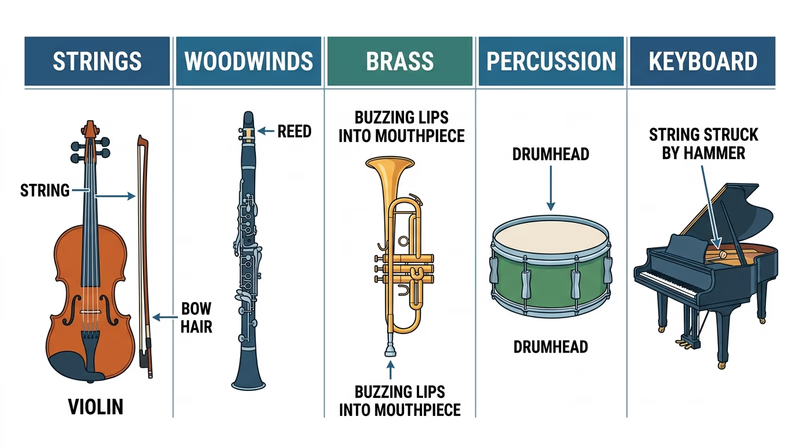
Every musical instrument starts with vibration. Something moves back and forth, pushes air, and creates sound waves that your ears can detect. The five general groups of instruments are really five different ways to make that vibration happen.
The Five General Groups
Strings
String instruments make sound when a string vibrates. You can bow it, pluck it, or strike it. Violins, guitars, cellos, basses, harps, and pianos all belong here. In a piano, the string is struck by a felt hammer. In a violin, the bow pulls the string sideways and releases it over and over.
Woodwinds
Woodwinds make sound when air vibrates inside a tube. Some use a reed, like clarinets and saxophones. Others, like flutes, use a stream of air split across an edge. Even though some modern woodwinds are made of metal, they still belong to the woodwind family because of how the sound is produced.
Brass
Brass instruments make sound when the player’s buzzing lips vibrate into a mouthpiece. Trumpets, trombones, tubas, euphoniums, and French horns all work this way. The tubing and valves or slide change the length of the air column and therefore the pitch.
Percussion
Percussion instruments make sound when they are struck, shaken, or scraped. Drums use vibrating membranes. Cymbals, triangles, xylophones, and marimbas use vibrating solid material. Some percussion instruments make definite pitches, while others create sounds without one clear pitch.
Keyboard
Keyboard is often treated as its own general group in school music because the keyboard layout controls many different sound-making systems. A piano uses strings. An organ uses moving air. A synthesizer uses electronics. The keys are the common feature.
How Tone Is Generated
When you create your illustration, show the exact thing that vibrates first.
What to Label in Your Illustration
Make the sound path easy to follow- The vibrating part: string, reed, lips, drumhead, bar, or air stream.
- What amplifies the sound: body of the violin, tube of a trumpet, shell of a drum, or soundboard of a piano.
- How pitch changes: finger position, valves, keys, slide length, or bar size.
- How the player controls expression: breath, bow speed, strike force, pedal use, or articulation.
A strong illustration does not need to be fancy. It just needs to be clear. Arrows, labels, and a simple cutaway drawing can explain more than an elaborate picture with no notes.
Sound Waves, Pitch, and Volume
All five families follow the same basic sound rules.
- Faster vibrations create higher pitches.
- Slower vibrations create lower pitches.
- Bigger vibrations usually create louder sounds.
- The material and shape affect tone color.
That means two instruments can play the same pitch but sound very different. A clarinet and a violin might both play concert A, but the vibrating reed and vibrating string create different tone colors.
The official videos below are useful because they let you see and hear several families side by side.
🎬 Video: Classification of Musical Instruments (video) — https://youtu.be/WencyslK76o
🎬 Video: Orchestral Instruments and How They Sound (video) — https://youtu.be/Sr-l2m8twX0?si=6Fj8mHWGIRqhrhwi
Req 1 asked you to think about tone and expression. This requirement helps you explain where that tone comes from in the first place.
The Metropolitan Museum of Art Explore instrument collections and learn how design, material, and culture shape musical sound. Link: The Metropolitan Museum of Art — https://www.metmuseum.org/Next you will reach one of the choose-your-own sections of this badge and decide which music experiences fit you best.
Req 3 — Choose Your Music Experiences
This requirement gives you four different ways to engage with music. You will choose exactly two options, so pick the pair that matches your interests, schedule, and access to performances or groups.
Your Options
- Req 3a — Listen and Describe: Attend a live performance or listen to three hours of music from two styles, then describe what you heard and how it affected you. This option builds listening vocabulary and helps you notice musical details.
- Req 3b — Family Music Interview: Compare your favorite music with a relative’s favorites from another generation. This option teaches you how music connects to memory, identity, and change over time.
- Req 3c — Ensemble or Solo Service: Commit to six months in a musical group or six public solo performances. This option builds discipline, teamwork, and stage confidence.
- Req 3d — Influential Americans in Music: Research five important Americans in music history and explain why they still matter. This option builds historical understanding and helps you connect people to lasting changes in music.
How to Choose
Choosing Your Two Options
Think about what you can realistically do well- Time available: Req 3c takes the longest because it unfolds over six months. Req 3a, 3b, and 3d can usually be completed more quickly.
- Access to events or people: Req 3a works best if you can attend a concert or easily find recordings. Req 3b depends on a willing adult family member. Req 3c depends on access to a group or public performance opportunities.
- Your strengths: If you love discussion and observation, start with 3a or 3b. If you like history and research, 3d may fit well. If you learn best by doing, 3c may be the strongest choice.
- What you will gain: Req 3a sharpens your ears, 3b deepens personal connection, 3c develops musicianship through repetition, and 3d shows how people reshape the country’s musical life.
A good pair often balances one reflective option with one active option. For example, 3a plus 3c combines listening with performance, while 3b plus 3d combines personal conversation with historical research.
Kennedy Center Education Educational resources and performance-based materials that can help you build stronger listening and discussion skills. Link: Kennedy Center Education — https://www.kennedy-center.org/education/Once you have chosen your two paths, start with the listening option first. Even if you choose different combinations, learning to describe what you hear will make the rest of the badge easier.
Req 3a — Listen and Describe
This requirement turns you into an active listener. Instead of letting music wash over you in the background, you will pay attention to style, instruments, mood, performers, and the way a setting changes what you hear.
Choose Two Styles on Purpose
Pick two styles that are clearly different. That makes your observations easier and more interesting.
For example:
- Jazz and classical let you compare improvisation with written tradition.
- Bluegrass and musical theater let you compare acoustic ensemble playing with story-driven performance.
- Gospel and opera let you compare vocal power, emotion, and audience expectations.
What to Notice While You Listen
Write down observations while the details are fresh- Sound: Smooth, bright, rough, warm, heavy, light, fast, quiet, layered, or sparse.
- Instruments or voices: What is carrying the melody? What supports the rhythm? What stands out?
- Creators: Composer or songwriter, performer, ensemble, and piece title.
- Structure: Solo sections, repeated choruses, call-and-response, improvisation, or dramatic build.
- Your reaction: What kept your attention? What surprised you? What would you hear differently the second time?
Live Performance vs. Recording
A live performance gives you details that a recording cannot. You can see how the musicians communicate, how the audience reacts, and how the room affects the sound. A recording gives you the chance to replay a section and listen more closely.
If you attend a live event, be ready to describe:
- the size of the room or venue
- whether the audience was quiet, energetic, or singing along
- how performers entered, interacted, and finished
- whether amplification, costumes, or staging changed the experience
Use Specific Words
“It was good” is honest, but it does not tell your counselor much. Try to be specific.
Instead of saying only that a piece was exciting, explain why: maybe the brass entered loudly, the tempo increased, or the soloist used a bright tone high in the instrument’s range. Instead of saying a piece sounded sad, mention the slower tempo, softer dynamics, or darker vocal color.
Build a Strong Discussion with Your Counselor
Your counselor will probably ask follow-up questions. Be ready to explain:
- which style was easier or harder to describe
- which instrument or voice you noticed most
- whether the performance matched what you expected
- what you would recommend to another Scout and why
This discussion skill connects strongly to Req 3b, where you compare reactions across generations, and to Req 3d, where you connect people and influence.
Kennedy Center Education Arts education resources that can help you think and talk more clearly about what you hear in performance. Link: Kennedy Center Education — https://www.kennedy-center.org/education/Listening well is one way to understand music. Next, you can compare music across generations by talking with someone in your own family.
Req 3b — Family Music Interview
A family conversation about music can reveal more than favorite songs. It can show how music is tied to age, culture, technology, memory, and important moments in a person’s life.
Ask Questions That Open the Door
Start with the basic requirement questions, then go a little deeper.
Helpful Interview Questions
Use these to move beyond one-word answers- What was popular when you were my age? Ask for artists, songs, and where people heard them.
- How did you discover music? Radio, records, tapes, CDs, streaming, concerts, church, family gatherings, or school?
- What music do you still love now? Ask what has stayed important and what has changed.
- What memories are attached to those songs? A dance, road trip, celebration, team event, or hard season?
- What do you notice in my favorite music? Melody, beat, lyrics, volume, emotion, or production style?
Listen for Context, Not Just Taste
One reason this requirement matters is that music does not exist by itself. It is shaped by the time and tools around it. A relative who grew up with radio countdowns or cassette mixtapes may have experienced music very differently from someone who grew up with streaming playlists and instant search.
That does not mean older music is automatically better or worse. It means the path to finding, sharing, and valuing music changes.
Compare Reactions Respectfully
When you listen to your relative’s three favorite tunes, notice your honest reaction, but stay curious. Maybe you love the storytelling in an older country song, the harmony in a gospel recording, or the orchestration in a film theme. Maybe one song feels unfamiliar at first but grows on you when you understand its context.
Then reverse the process when you share your own three songs. Explain why you chose them. Is it the beat, the lyrics, the singer’s tone, the emotional energy, or the memory attached to them?
A strong discussion includes both differences and overlap. You might discover that even if your styles are different, both of you care about strong rhythm, clear lyrics, emotional honesty, or catchy melody.
Take Good Notes
You do not need a full transcript, but you should keep enough notes to remember:
- the relative you interviewed
- what music was popular when they were your age
- three favorite tunes of theirs
- your reaction to those tunes
- three songs you shared
- their reaction to your choices
That note-taking habit will also help in Req 3a and Req 6b, where you reflect on how music fits into your life.
Library of Congress Use music collections and recordings to place favorite songs in a larger American history and culture context. Link: Library of Congress — https://www.loc.gov/After comparing family favorites, you may decide you want to move from talking about music to actually performing it over time.
Req 3c — Ensemble or Solo Service
This option is about consistency. Music gets stronger when you show up again and again, listen to feedback, and learn how to perform even when you are tired, nervous, or not yet perfect.
Two Different Paths
You can complete this requirement in one of two ways:
- Serve for six months in an organized musical group such as band, choir, orchestra, worship team, drumline, or another structured ensemble.
- Perform as a soloist in public six times.
Both paths build discipline, but they train slightly different skills. Ensemble work emphasizes teamwork and blend. Solo performance emphasizes independence and confidence.
What Counts as Strong Evidence
Keep track as you go instead of trying to remember later- Dates: Record rehearsals, performances, or public appearances.
- Role: Note your instrument, voice part, or solo type.
- What you worked on: New pieces, sight-reading, balance, memorization, or stage presence.
- What improved: Tone, timing, confidence, range, breathing, or accuracy.
- Who can confirm it: Director, leader, teacher, parent, or event organizer.
If You Choose the Group Path
Being part of a group means learning how your part fits the whole. Sometimes your job is to carry the melody. Other times your job is to support with harmony or rhythm. Either way, the group depends on everyone doing their piece reliably.
Key ensemble habits include:
- arriving prepared
- watching the director or leader
- counting rests carefully
- listening across the ensemble
- balancing your sound so you do not cover others
If You Choose the Solo Path
Public solo performances do not all have to be huge formal recitals. What matters is that you perform for other people in a real public setting. That could be a school concert, worship service, community event, talent show, or another approved setting.
Solo work teaches you to carry the full musical story by yourself. You must begin with confidence, recover from mistakes without stopping, and keep the listener engaged from first note to last.
Reflect on Growth
This requirement is stronger when you can explain how you changed over time. Maybe your tone became steadier. Maybe you learned to enter confidently. Maybe you became better at listening across the ensemble or better at calming yourself before a solo.
That reflection connects directly back to Req 1, where you focused on technique, phrasing, tone, rhythm, and dynamics. This option shows what happens when you practice those skills over months instead of days.
NAfME Music education resources that highlight ensemble learning, performance skills, and long-term musical growth. Link: NAfME — https://nafme.org/After looking at the performance path, the next option steps back and studies the people who shaped American music itself.
Req 3d — Influential Americans in Music
American music did not grow from one single style. It was shaped by composers, performers, inventors, arrangers, producers, educators, and culture-builders whose ideas spread far beyond their own lifetimes.
Build a Balanced List
The requirement gives you categories because your list should show range. Do not choose five people who all did the exact same thing.
A balanced list might include:
- a composer who wrote influential music
- a performer whose sound or stage presence changed audiences
- an innovator who changed technology, style, teaching, or access
- someone born more than 100 years ago to make sure your list reaches back in history
- one additional person who helps show another part of the story
Ask the Right Question: “What Changed Because of This Person?”
Your counselor is not just asking for names and dates. The real challenge is to explain influence.
Instead of saying only that someone was famous, explain what happened because of them:
- Did they create a new sound?
- Did they bring one musical tradition to a bigger audience?
- Did they invent or improve an instrument or recording method?
- Did they change how musicians were trained?
- Did later artists copy or build on their work?
Research Notes to Gather
Use these notes to make your discussion more convincing- Who they were: composer, performer, bandleader, inventor, producer, educator, or songwriter.
- When they lived: especially if they help satisfy the 100-years-ago requirement.
- What they are known for: songs, performances, inventions, teaching, or leadership.
- Why they matter now: influence on later artists, genres, technology, or culture.
- One example you can name: a song, recording, invention, ensemble, or project tied to them.
Look Across Different Parts of American Music
American music includes spirituals, gospel, jazz, blues, country, bluegrass, classical composition, Broadway, film scoring, marching traditions, folk revival, Latin influences, Indigenous traditions, and much more. A stronger list usually draws from more than one lane.
For example, one person may matter because of live performance. Another may matter because of recording innovation. Another may matter because their compositions became part of school ensembles or concert halls.
Explain Influence in Plain Language
You do not need to sound like a college lecture. A clear explanation is better.
Try frames like these:
- “This person mattered because…”
- “Later musicians copied this idea when…”
- “Without this person, American music would sound different because…”
That kind of explanation works well in a counselor discussion because it shows you understand the connection between the person and their lasting impact.
This research option pairs especially well with Req 3a, where you listen across styles, and Req 5, where you think about ownership and sharing in the modern music world.
Library of Congress Use historical recordings, composer materials, and archival collections to research influential figures in American music. Link: Library of Congress — https://www.loc.gov/Now the badge moves from choosing experiences to choosing a hands-on music project you will actually create, teach, or build.
Req 4 — Choose a Music Project
You must choose exactly one project for this requirement. Each option asks you to make music in a different way: by leading other people, by composing your own piece, or by building and playing an instrument.
Your Options
- Req 4a — Teach and Lead Songs: Teach three songs to a group and guide the singing with clear hand motions. This option builds leadership, memory, and confidence in front of others.
- Req 4b — Compose a 12-Measure Piece: Write your own short composition, notate it, and perform it. This option builds creativity and helps you think like a composer.
- Req 4c — Make and Play a Traditional Instrument: Build an instrument based on traditional design and learn how to play it. This option connects craftsmanship, culture, and sound.
How to Choose
| Option | Best If You Enjoy… | You Will Need… | What You Will Gain |
|---|---|---|---|
| 4a | Leading people and singing with others | A willing group and songs simple enough to teach | Leadership and communication |
| 4b | Writing ideas and solving musical puzzles | Basic notation skills and time to revise | Composition and score reading |
| 4c | Making things with your hands and exploring culture | Simple materials, build time, and practice time | Instrument design insight and hands-on learning |
A strong choice is the one you can complete well, not the one that sounds most impressive. If you already sing at campfires, 4a may fit naturally. If you enjoy making up melodies, 4b may be a fun stretch. If you like crafts and sound experiments, 4c may be perfect.
Before You Decide
Ask yourself these practical questions- Who can help me practice or give feedback?
- Do I have the materials or setting I need?
- Can I explain my choices to my counselor, not just show the finished result?
- Which option sounds exciting enough that I will actually want to finish it?
This project section builds on Req 1 and Req 2. You already thought about expressive performance and how sound is made. Now you will apply those ideas in a way that produces something real.
Choose your path and start with the first project option: teaching and leading songs for a group.
Req 4a — Teach and Lead Songs
Teaching songs is a different skill from simply knowing them yourself. You have to break the music into learnable pieces, keep the group together, and use clear gestures so people know when to start, stop, and sing with confidence.
Choose Songs the Group Can Succeed With
Pick songs with:
- melodies that are easy to remember
- words that are clear and repeat enough to learn quickly
- a comfortable vocal range for the group
- a steady beat
Camp songs, rounds, simple folk songs, and familiar hymns often work well. The goal is not to impress people with complexity. The goal is to help them sing well together.
Teaching Plan for Each Song
Keep the group moving instead of guessing- Introduce the song: Name it and give one sentence of context.
- Model it first: Sing or play the melody once so the group hears the shape.
- Teach in chunks: One line or phrase at a time works best.
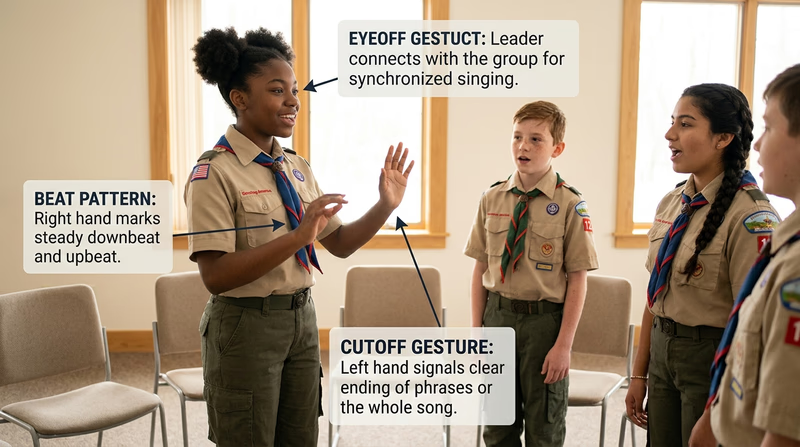
- Use hand motions clearly: Show beat, entries, cutoffs, and repeated sections.
- Run the full song: Put the parts together and keep the tempo steady.
What Hand Motions Should Do
Proper hand motions are not random waving. They communicate.
You might use gestures to:
- show the beat
- cue a section to begin
- signal louder or softer singing
- indicate a cutoff at the end
- help a round or echo song enter at the right moment
Even simple motions work if they are intentional and easy to follow.
Teach, Then Lead
A useful sequence is:
- teach the melody
- teach tricky words
- explain any actions or motion cues
- run a short section
- lead the whole song
If the group struggles, do not apologize endlessly or rush ahead. Slow down, isolate one phrase, and try again. That calm problem-solving is part of leadership.
This option shares skills with Req 3c. In both cases, steady tempo, calm leadership, and expressive communication matter more than flashy difficulty.
If teaching songs is not your choice, the next option shows a different creative route: composing your own piece from scratch.
Req 4b — Compose a 12-Measure Piece
Composing can feel intimidating until you remember that every big piece starts with a small idea. A short rhythm, a two-note pattern, or a melody that rises and falls in a satisfying way can become the seed of your whole piece.
Start with a Manageable Plan
Twelve measures is long enough to show shape, but short enough to control. Before writing notes, decide a few basics:
- your instrument
- a key that feels comfortable
- a time signature you can count confidently
- a mood or character
- whether the piece will repeat, contrast, or build toward an ending
Simple Composition Blueprint
Use this structure if you do not know where to begin- Measures 1–4: Introduce the main idea.
- Measures 5–8: Repeat it with a small change or answer phrase.
- Measures 9–12: Build toward a clear ending.
Write a Score Someone Else Could Follow
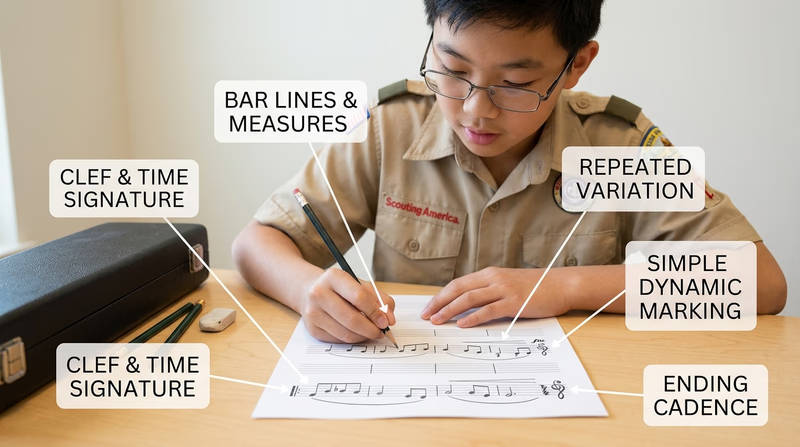
The score matters because it proves you can communicate your music on the page, not only from memory. Include the things a performer needs:
- clef
- key signature if needed
- time signature
- note values and rests
- bar lines
- tempo indication if helpful
- dynamics or phrasing marks if they matter to the piece
This connects directly to Req 1, where you learned to read signs and terms in a score. Now you are the one giving the instructions.
Think in Patterns
Many strong pieces use repetition with variation. That means you bring back a musical idea but change one feature so it still feels interesting.
You could vary:
- the ending note
- the rhythm
- the starting pitch
- the dynamic level
- the articulation
That way your piece feels connected instead of random.
Play What You Wrote
The last part of the requirement is important: you must play your composition. That performance will quickly reveal whether the music is comfortable, logical, and readable.
When you test it:
- listen for awkward jumps
- check whether rhythms feel natural
- make sure the ending sounds complete
- notice whether the dynamics help the shape
If you would rather build sound with your hands than invent it on staff paper, the next option takes you into traditional instrument making.
Req 4c — Make and Play a Traditional Instrument
This option puts music back into the world of materials and craftsmanship. When you build an instrument yourself, you notice something easy to miss when you only buy or borrow one: shape, tension, length, and material all change the sound.
Start with a Real Traditional Model
“Traditional” means the instrument should connect to an established musical tradition or culture, not just be a random noise-maker. That could include a simple drum, shaker, flute, string instrument, or other folk instrument built in a respectful, researched way.
A good first step is to learn:
- what the instrument is called
- where it comes from
- what materials are traditionally used
- how it is played
- what role it serves in its music
Questions to Answer Before You Build
Knowing the tradition helps you build with purpose- What culture or region is this instrument associated with?
- What actually vibrates to make the sound?
- What features control pitch, rhythm, or tone?
- What materials can you use safely for a Scout-built version?
- How will you demonstrate that you learned to play it?
Build for Function, Not Just Looks
A decorated instrument can be wonderful, but the first goal is sound. Your build should make it clear how the instrument works. A drum needs a surface that can vibrate. A flute-like instrument needs an air path that can split and resonate. A string instrument needs tension and a body that can support the sound.
Req 2 is a big help here because it taught you to think about what vibrates first and what amplifies that vibration.
Learn Enough to Demonstrate It Honestly
The requirement does not ask you to become an expert performer overnight. It asks you to learn to play the instrument. That means you should be able to produce a controlled sound and demonstrate a basic pattern, melody, or rhythm that shows you understand how the instrument is meant to work.
Respect the Culture Behind the Instrument
Traditional instruments come from real communities, not just craft projects on a table. Part of doing this option well is learning and acknowledging where the instrument comes from and what it means in its musical setting.
That does not mean you need an expert lecture. It means you should be able to say, in plain language, what tradition inspired your build and how the instrument is normally used.
Smithsonian Folkways Explore recordings and cultural context for traditional instruments and music from many communities around the world. Link: Smithsonian Folkways — https://folkways.si.edu/After making or sharing music yourself, the next requirement shifts to a modern question every musician needs to understand: who owns recorded music, and how should it be shared?
Req 5 — Intellectual Property and Sharing Music
The internet makes music easy to copy, send, clip, remix, and repost. That convenience is useful, but it also raises an important question: who owns creative work, and what counts as fair, legal sharing?
What Intellectual Property Means
Intellectual property is creative work that the law protects. In music, that can include:
- the song itself
- the lyrics
- a specific recording of that song
- album artwork or branding
- arrangements and other creative versions
When someone writes, records, performs, or produces music, they do not only create sound. They create work that can belong to them and can be licensed, sold, or protected.
Copyright and Recorded Music
The main IP idea you will probably discuss here is copyright. Copyright gives creators certain rights over how their work is copied, distributed, performed, or adapted. In music, different copyrights may apply to the composition and the sound recording.
That is why two versions of the same song can involve different rights. One group may own the written composition, while another company or artist owns a particular recording.
🎬 Video: What Are Intellectual Property Rights? (video) — https://youtu.be/UqZJPuyK9VY
Proper Ways to Obtain Recorded Music
Properly obtaining music means using legitimate sources. That can include:
- buying a physical recording
- purchasing a digital download from a legal store
- streaming through a licensed platform
- borrowing through a library service when available
- accessing music through a school or family subscription that permits it
Improper obtaining usually means downloading or copying music from unauthorized sources. If the artist or rights holder did not permit that distribution, it is not a proper source even if it is easy to find.
Questions to Ask About a Music Source
Use these when deciding whether access is proper- Is this source authorized to offer the music?
- Did someone pay for a license, subscription, or legal copy?
- Does the service explain how sharing and downloads work?
- Would the artist or rights holder expect the music to be distributed this way?
Proper Ways to Share Music
Sharing music properly depends on the situation.
Usually proper sharing means:
- sending a link to a legal streaming page instead of the actual file
- following the rules of the platform or subscription you use
- getting permission before reposting full recordings
- using legally purchased sheet music or recordings the way the license allows
- giving credit where it belongs
Improper sharing often includes:
- uploading copyrighted recordings without permission
- passing around copied files from one paid account
- posting full tracks in places where you do not have rights to post them
- treating “I found it online” as the same thing as “I may distribute it”
Ownership, Fairness, and Respect
This requirement is not only about staying out of trouble. It is also about respecting the work behind the music. Songwriters, performers, arrangers, engineers, and producers all contribute time and skill. Legal sharing helps make sure creative people can keep making music.
This connects naturally to Req 4b. Once you try composing something yourself, it becomes easier to understand why creators care about ownership and permission.
U.S. Copyright Office Official information about copyright, registration, and how creative works such as music are protected in the United States. Link: U.S. Copyright Office — https://copyright.gov/The badge ends with one more choice: think ahead to how music might shape your future as a career or a long-term hobby.
Req 6 — Choose Your Next Step
You must choose exactly one option here. Both choices ask you to think beyond the badge and imagine how music could stay part of your life after this merit badge is done.
Your Options
- Req 6a — Research a Music Career: Study one real career connected to music, including education, cost, job duties, advancement, and salary. This option helps you understand what professional life in music can actually look like.
- Req 6b — Turn Music into a Hobby: Explore how music knowledge and skills could grow into a long-term hobby, including goals, costs, training, and organizations. This option helps you build a realistic personal plan.
How to Choose
Choosing Between Career and Hobby
Pick the option that answers the question you are most curious about- Choose 6a if: you want to know how people earn a living in music and what preparation that path requires.
- Choose 6b if: you want to keep music in your life for enjoyment, service, creativity, or community without making it your job.
- Time and research: both options require real research, but 6a usually asks for more career-specific facts like salary and advancement.
- What you will gain: 6a builds career awareness and realistic expectations. 6b builds self-direction and a practical plan for continued involvement.
Some Scouts discover that music is something they love but do not want as a career. Others discover the opposite. Either result is useful. The purpose is to think carefully and honestly.
Req 3c and Req 4 can help you here. The experiences you enjoyed most in those sections often point toward the future path that fits you best.
National Association for Music Education A useful starting point for understanding music learning, careers, and ways to stay involved in music over time. Link: National Association for Music Education — https://nafme.org/To begin, look at the career option first and see how a music-related profession is researched in a practical way.
Req 6a — Research a Music Career
Music careers are much broader than “famous performer.” The field includes educators, composers, conductors, sound engineers, instrument repair technicians, arts administrators, music therapists, producers, church musicians, and many others.
Pick One Career to Study Closely
Choose a path that truly interests you. A few examples include:
- music teacher
- band or choir director
- performer
- songwriter or composer
- audio engineer
- music therapist
- instrument technician or luthier
- arts manager or booking professional
The goal is not to research every possibility. The goal is to understand one path well enough to explain what the work is really like.
🎬 Video: Careers in the Music Industry (video) — https://youtu.be/X9baGNtXjv4?si=thzzvSy24o1fR6gn
Gather the Facts Your Counselor Needs
This requirement names six important areas. Make sure your notes cover each one.
Career Research Notes
Do not leave any of these out- Training and education needed: certificates, college degrees, apprenticeships, auditions, or licensing.
- Costs: tuition, lessons, equipment, travel, software, or certification fees.
- Job prospects: whether jobs are common, competitive, local, seasonal, or growing.
- Salary: typical pay range or how income is earned.
- Job duties: what the person actually does each day or week.
- Career advancement: how someone grows from entry-level to more responsibility or recognition.
Use More Than One Source if You Can
An internet search can give you basic facts, but a conversation with a real person adds texture. If possible, combine sources.
For example, you might:
- read about the career online
- watch a short professional interview or workplace video
- visit a rehearsal space, studio, school, or performance venue
- talk to someone already doing the job
Pay Attention to Lifestyle, Not Just Salary
A music career may involve nights, weekends, travel, irregular income, long practice hours, or teaching in addition to performing. Some careers are stable but competitive. Others are flexible but less predictable.
That does not make them bad careers. It just means you should understand the whole picture.
Connect the Career to Your Own Interests
The requirement ends by asking what might make the profession interesting to you. That is your chance to be honest. Maybe you like the teaching side. Maybe the technical side of sound interests you more than performing. Maybe you enjoy the creativity but not the unpredictable schedule.
That kind of reflection makes your discussion stronger because it shows you are not only collecting facts. You are thinking about fit.
Bureau of Labor Statistics Occupational Outlook Handbook Use this career guide to look up job duties, pay, education, and outlook for music-related professions. Link: Bureau of Labor Statistics Occupational Outlook Handbook — https://www.bls.gov/ooh/If a job path feels too big or too uncertain right now, the next option lets you think about music as a long-term hobby instead.
Req 6b — Turn Music into a Hobby
Not every Scout wants music to become a job, but music can still become a powerful lifelong hobby. A hobby can bring friendship, stress relief, service opportunities, creative challenge, and a reason to keep learning for years.
Decide What Kind of Music Hobby Fits You
A music hobby can look many different ways. You might:
- sing in a choir
- play in a community band or small ensemble
- learn guitar or piano for personal enjoyment
- collect and study recordings from one style
- write songs
- produce tracks on a computer
- build a regular habit of attending live performances
The best hobby is one you can actually sustain with your schedule, budget, and interest.
🎬 Video: Music Hobbies (video) — https://youtu.be/2XdqwW4zDtE?si=DBqxq3JLiPrE1mG9
Think About Training, Cost, and Support
Even a hobby works better with a plan.
Training Needed
Some hobbies need formal lessons. Others can begin with group instruction, online tutorials, school ensembles, or regular self-practice. Be honest about what kind of guidance would help you improve.
Expenses
Common costs might include:
- instrument purchase or rental
- maintenance and repair
- books or sheet music
- lessons or classes
- software or recording tools
- tickets, travel, or club dues
Organizations and Community
A hobby often lasts longer when it connects you to other people. That support may come from school groups, community ensembles, houses of worship, arts centers, local clubs, or national music organizations.
Build a Realistic Hobby Plan
Use this to prepare for your counselor discussion- My hobby idea: What exactly do I want to do?
- How I will learn: lessons, self-study, group participation, or a mix.
- What it may cost: instrument, supplies, fees, or travel.
- Who can support it: teacher, parent, friend, director, or community group.
- What success looks like in three months and one year: specific, realistic goals.
Set Short-Term and Long-Term Goals
The requirement specifically asks for goals, so make them concrete.
Short-term goals might include:
- practice 20 minutes three times a week
- learn three complete songs
- attend one live performance
- join a school or community group
Long-term goals might include:
- perform with confidence for an audience
- build a repertoire of favorite pieces
- compose original music
- volunteer your music in your community
- stay active in music through high school and beyond
Hobbies Grow with Life Stages
One good thing about music is that it can change shape as your life changes. You might start in school choir, move into community theater, switch to home recording, and later return to ensemble playing as an adult. A music hobby does not need to stay in one exact form forever.
This option ties back to Req 3b, where you heard how music can stay meaningful across generations. It also connects to Req 6a, because the same research habits help you plan either a job path or a hobby path.
National Association for Music Education Find music-learning ideas, organizations, and resources that can help you keep music in your life long after the badge is finished. Link: National Association for Music Education — https://nafme.org/You have reached the end of the requirements. The next page looks beyond them and explores where music can take you next.
Extended Learning
Congratulations!
You finished a badge that asks you to do more than memorize facts. You performed, listened, reflected, and thought about how music fits into your life and the wider world. That combination is what makes music such a rich subject: it is both skill and human connection.
How Musicians Really Improve
One of the biggest lessons beyond this badge is that improvement usually comes from steady repetition, not giant bursts of inspiration. Musicians get better by listening back, correcting small habits, and returning to the same ideas with a little more control each time.
If you want to keep growing, try building a simple practice cycle:
- warm up
- work one specific weakness slowly
- play or sing something you already know well
- end with one full run-through
That routine works whether you are singing in a choir, learning guitar, writing songs, or practicing scales on trumpet.
Music as Teamwork
People often think of music as an individual talent, but many of the strongest musical experiences depend on cooperation. Bands, choirs, orchestras, pit ensembles, drum circles, praise teams, and musical theater casts all require trust, timing, and shared attention.
A great ensemble does not happen because one person is loudest. It happens because everyone listens, adjusts, and leaves room for the whole sound to work.
Music and Technology
Modern music is shaped by technology at every stage. Musicians use tuners, notation software, digital audio workstations, microphones, headphones, and streaming platforms. Technology can help you learn faster, but it also changes how music is shared and who gets heard.
A useful next question to explore is this: how does technology make music more accessible, and how does it sometimes make musicianship more complicated? That kind of thinking connects directly to the ownership questions you saw in Req 5.
Listening Across Cultures
One of the best ways to keep growing is to listen beyond what already feels familiar. Try one new style each month. Listen for what carries the rhythm, how the melody moves, what instruments are used, and what role the music seems to play in community life.
This habit builds respect as well as musical understanding. It reminds you that music is not one single system with one single standard. Different communities value different sounds, roles, scales, textures, and performance settings.
Real-World Experiences
Join a Community Ensemble
Look for a youth orchestra, community band, church choir, garage band, or local theater group. Playing with other people sharpens timing, listening, and responsibility in ways solo practice cannot.
Attend a Live Performance in a New Style
If you usually hear school band music, try jazz. If you usually hear pop or country, try choir, bluegrass, or opera. Live performance changes how you understand sound, energy, and audience response.
Visit a Recording or Rehearsal Space
A recording studio, school practice room, instrument repair shop, or theater pit can teach you a lot about what happens behind the scenes. If you can arrange a visit, ask how musicians prepare before anyone in the audience hears a single note.
Build a Personal Listening Journal
Keep a notebook or digital log of what you hear over time. Track styles, performers, favorite moments, and new vocabulary. This is a simple habit, but it builds the listening skill that supports every part of music study.
Organizations
National Association for Music Education
A major organization that supports music learning, teachers, and student musicians across the United States.
National Association for Music Education Resources, programs, and advocacy for music education and lifelong music participation. Link: National Association for Music Education — https://nafme.org/Library of Congress
A powerful place to explore recordings, sheet music, American music history, and archival collections.
Library of Congress Historical recordings, sheet music, and collections that connect music to American history and culture. Link: Library of Congress — https://www.loc.gov/Smithsonian Folkways
A nonprofit record label and archive focused on music traditions from around the world.
Smithsonian Folkways Recordings and cultural context for traditional, folk, and world music. Link: Smithsonian Folkways — https://folkways.si.edu/The Kennedy Center
A national arts center that offers performances, educational resources, and artist-focused learning opportunities.
The Kennedy Center Performances and arts education resources that can deepen your understanding of music and performance. Link: The Kennedy Center — https://www.kennedy-center.org/You have finished the main guide. If you want the whole guide in one printable page, open the complete print view next.