 Getting Started
Introduction & Overview
Nature is the study of living things, the places they live, and the connections that hold an ecosystem together. This merit badge trains you to slow down, notice details, ask better questions, and understand why a patch of woods, a pond edge, or even an empty field is full of clues.
You will look at nature the way a field scientist does: by observing, comparing, recording, and explaining. The more carefully you look, the more you start to see how plants, animals, soil, water, weather, and human choices all affect one another.
Then and Now
Then
Long before nature study became a school subject, people learned from the land because they depended on it. Hunters watched animal tracks, farmers read the soil, herbal healers identified useful plants, and Indigenous communities built deep knowledge of seasons, migration, and habitat over generations.
Later, naturalists began keeping notebooks, pressing plants, drawing birds, and organizing collections so they could compare species. Early nature study often focused on naming what was seen. That was useful, but it was only the start.
Now
Today, nature study still begins with careful observation, but it goes farther. Scientists use trail cameras, sound recorders, GPS maps, and community science apps to track changes in species, habitat, and climate. A Scout with a notebook, a phone camera, and good field habits can contribute real observations too.
Modern nature study is also more careful about ethics. Instead of collecting everything we find, we try to leave habitats healthy, reduce disturbance, and record what we see in ways that protect wild places.
Get Ready!
Bring your curiosity, not just your gear. A Scout who notices patterns, writes down good notes, and treats habitats with respect will learn far more than someone who rushes from one checklist item to the next.
Kinds of Nature Study
Plants and Habitats
Plants shape nearly every natural community. They provide food, oxygen, shelter, shade, and nesting material. Learning to notice plant forms, seeds, leaves, and growth patterns helps you understand why certain animals are found in certain places.
Animal Study
Nature study includes birds, mammals, reptiles, amphibians, fish, insects, spiders, mollusks, and crustaceans. Some are easiest to identify by sight. Others are better found by tracks, calls, eggs, shells, or feeding signs.
Ecology and Relationships
Ecology is the study of how living things interact with one another and with their environment. Food chains, succession, and habitat change all belong here. These big-picture ideas help explain why an ecosystem looks the way it does.
Field Observation
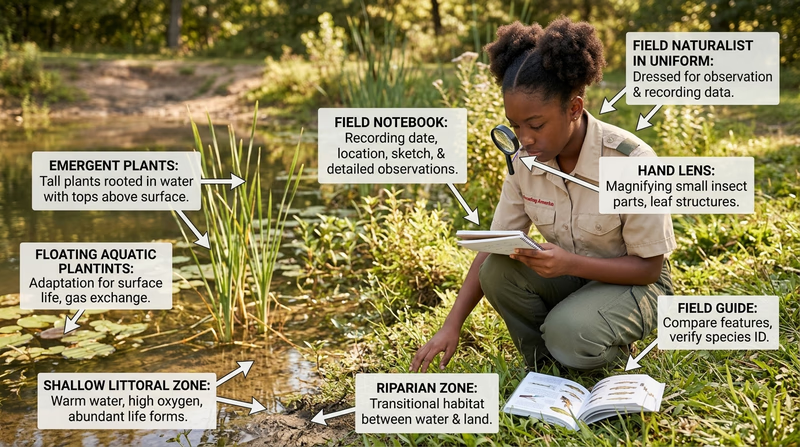
A big part of this badge happens outdoors. You will observe, identify, compare, and record. That means moving slowly, using all your senses, and keeping accurate notes.
Conservation and Stewardship
This badge is not only about what nature is. It is also about how people treat it. Outdoor ethics, habitat protection, and careful observation all help you become a better steward of the natural world.
Next Steps
You are ready to begin with one of the most important ideas in nature study: plants and animals depend on each other in ways that are easy to miss until you start looking closely.