Req 4c — Reptiles and Amphibians
Reptiles and amphibians are easy to overlook because many stay hidden, blend into their surroundings, or appear only in the right weather. This option teaches you to identify them safely by sight, sound, and field signs.
Requirement 4c1
Start with your own state or region. Do not try to memorize every venomous snake in North America. Learn the species that actually live near you, where they are found, and what markings, head shape, body pattern, and habitat clues can help you recognize them.
A strong answer includes more than “this one is dangerous.” Be ready to explain how you would avoid disturbing it, back away slowly, and leave it alone.
How to Tell if a Snake Is Venomous (website) A starter overview of features people use when learning to recognize venomous snakes, along with caution about not relying on myths. Link: How to Tell if a Snake Is Venomous (website) — https://urbanjunglewildliferemoval.com/blog/how-to-tell-venomous-snake/🎬 Video: Zoologist Explains Snake Venom - Poisonous vs Venomous (video) — https://youtu.be/KxXfWrI6bB4?si=6TMzt9gUfQdxCvWc
Requirement 4c2
Where to look for reptiles and amphibians
Turtles may bask on logs. Frogs gather near shallow water. Salamanders often stay under logs or rocks in damp places. Lizards may sun themselves on warm surfaces. Habitat is often your first clue.
What details help with identification
Look at body shape, skin texture, color pattern, tail shape, toes, and where the animal was found. Reptiles usually have dry scales. Amphibians usually have moist skin and stay closer to water or damp cover.
Reptiles of the United States (website) A searchable community-science reference that helps you compare reptiles by range and appearance. Link: Reptiles of the United States (website) — https://www.inaturalist.org/places/united-states#taxon=26036 Amphibians of the United States (website) A field-friendly way to compare amphibians reported in different regions and habitats. Link: Amphibians of the United States (website) — https://www.inaturalist.org/places/united-states#taxon=20978Requirement 4c3
Recognizing frogs and toads by voice
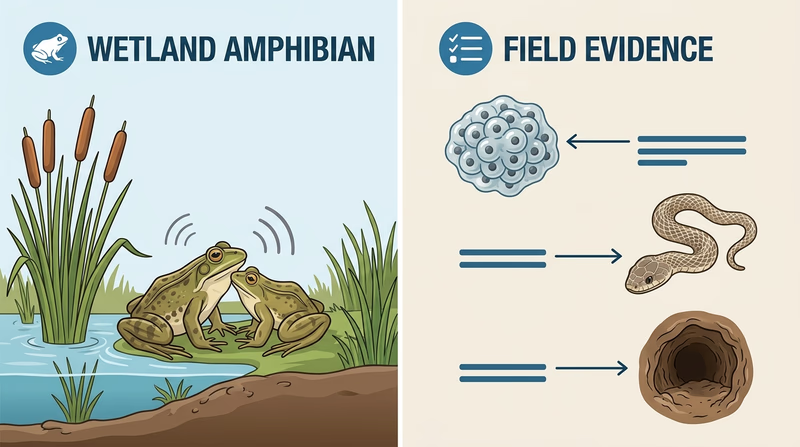
Spring evenings can sound like a giant orchestra of frogs. Focus on one common species first. Learn whether its call is a peep, trill, croak, or clucking sound, and connect that sound to wetland type and season.
Identifying reptiles or amphibians by signs
If you choose the sign option, look for egg masses in shallow water, turtle nests in sandy soil, snake sheds, basking spots, or burrows associated with known species. A good field note explains why you think the sign belongs to that animal.
🎬 Video: Reptiles vs. Amphibians (video) — https://www.youtube.com/watch?v=6MsTbQi19SA
🎬 Video: Frog Sounds: Why They Make Them (Examples) (video) — https://youtu.be/74-vaZv54s8?si=7ClcX_Akwhjh0A_T
This option sharpens your field senses. Next, move even smaller and study the busy world of insects and spiders.