Req 4g1 — Wild Plant Identification
This requirement rewards slow looking. Plants do not run away, but they can still be tricky because many change with the season, look different when young, or resemble close relatives.
Start with the whole plant
Before zooming in on tiny details, ask broad questions. Is it a tree, shrub, vine, grass, fern, or flowering plant? Is it growing in sun or shade? Dry soil or wet soil? Field edge or forest interior?
Look for reliable clues
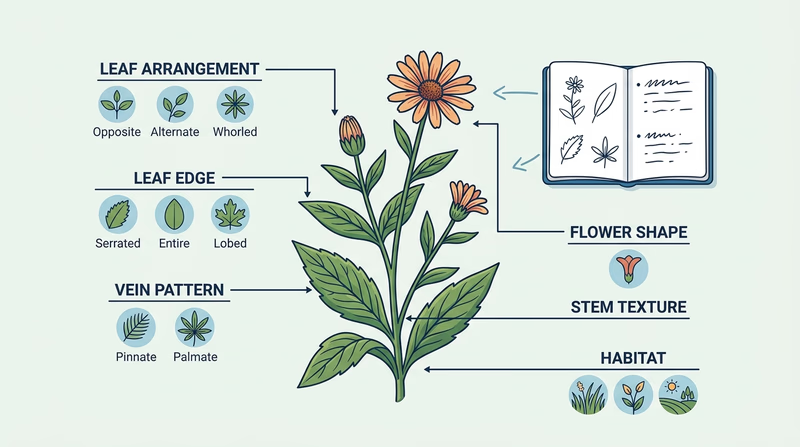
Leaves are useful, but not enough by themselves. Notice whether leaves are opposite or alternate on the stem, whether their edges are smooth or toothed, and whether the plant has flowers, fruit, cones, thorns, or a distinctive smell.
Use habitat as a clue
Some plants strongly prefer certain places. Cattails suggest shallow water. Pines often dominate dry, sunny ground. Mosses point to moisture and shade. Habitat does not prove identification by itself, but it helps you narrow the possibilities.
🎬 Video: How to Identify Wild Plants - A Guide To Botanical Terms (video) — https://www.youtube.com/watch?v=5Aj82u2he6s
What to record for each plant
Useful details for your notes
- Date and location
- Habitat type
- Growth form: tree, shrub, vine, forb, grass, fern, or other
- Leaf shape and arrangement
- Flowers, fruit, seeds, or bark if present
Once you can identify plants in the field, the next step is to organize plant evidence by either collecting labeled specimens or creating a photo catalog.