Req 4h — Soils and Rocks
Nature study is not only about living things. Soil and rock shape which plants can grow, how water moves, and what habitats develop. This option helps you read the ground beneath your feet.
Requirement 4h1
Recognizing sandy soil
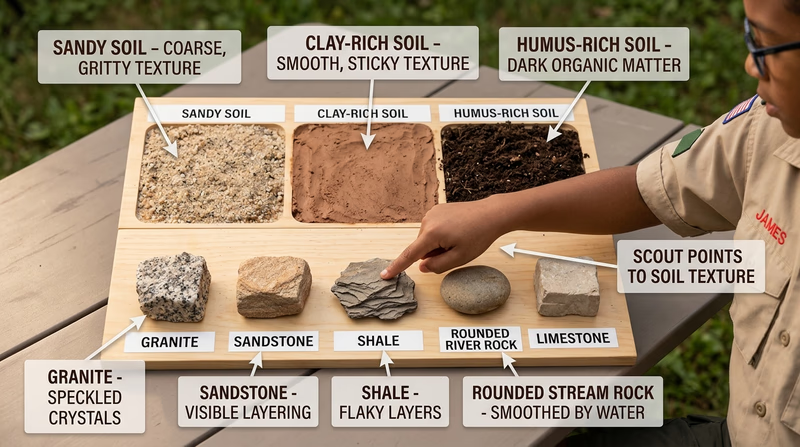
Sandy soil feels gritty. Water drains through it quickly, and it does not hold together well in your hand.
Recognizing clay-rich soil
Clay feels smooth and sticky when wet. It holds water longer and can be shaped or rolled more easily than sandy soil.
Recognizing humus-rich soil
Humus-rich soil is dark, crumbly, and full of decomposed organic matter. It often has an earthy smell and supports lots of life.
🎬 Video: Layers of Soil | Soil Profile Formation (video) — https://www.youtube.com/watch?v=VTuL5Pa0gC0
Simple soil comparison clues
What to note when you collect samples
- Color
- Texture
- How well it holds together
- How quickly water drains
- Organic matter such as roots or decomposed leaves
Requirement 4h2
Look at texture and grain
Some rocks have visible grains. Others are smooth and dense. Some break into layers, and some have crystals or holes. These details help you sort rocks into groups like igneous, sedimentary, and metamorphic.
Keep location with the rock
Where you found the rock matters. Stream rocks are often rounded by water. Road cuts may reveal local layers. Gravel piles may contain stones brought from somewhere else, so local natural sites usually make better evidence.
Use plain language if needed
If you cannot identify a rock to a very specific name, begin with what you can observe: color, grain size, hardness, layering, sparkle, or rounded edges. Careful observation is still part of good nature study.
🎬 Video: Rockhounding 101: What to Look for on Your Next Adventure! (video) — https://youtu.be/yORP1Ba-K4Q?si=iR3Lo66iW-dmFjno
🎬 Video: Rock & Mineral Identification | It Can Be Easier Than You Think (video) — https://www.youtube.com/watch?v=mgld5jeYR04
You have now finished the menu of field-study options. The next requirement turns from observation to outdoor ethics and how Scouts should behave in natural areas.