Req 7a — Catch & Identify Plankton
This option turns you into a field biologist. Instead of only reading about plankton, you collect a real sample and discover what tiny drifting life is present in your local water.
Build a Simple Net
A plankton net works by filtering a lot of water through fine mesh. You do not need professional equipment. A homemade net can work well enough for this requirement if it is sturdy and fine enough to trap small drifting organisms.
A simple design usually includes:
- a bottle or small collection cup at the narrow end
- fine mesh or nylon material shaped into a cone
- a ring or hoop to hold the mouth open
- string or cord for towing
🎬 Video: How to Make a Soda Bottle Plankton Net (video) — https://youtu.be/e-MYhWcWWXw
🎬 Video: Make Your Own Plankton Net! (video) — https://youtu.be/HBcuGbMc8cU?si=c6sGRZYkRXv9QDtE
Collecting Your Sample
Tow or hold the net in moving water for about 20 minutes. The goal is not speed. The goal is to let enough water pass through the mesh to trap organisms.
Good places include:
- a dock or pier
- shallow wading access
- a gentle current in a stream
- a slow tow from a rowboat
Examining the Sample
Pour a little of the collected material into a shallow clear container or onto a slide. Use a microscope if possible, but a high-power hand lens may help with larger plankton too.
Look for differences in:
- shape
- movement
- size
- color
- body parts such as spines, shells, or appendages
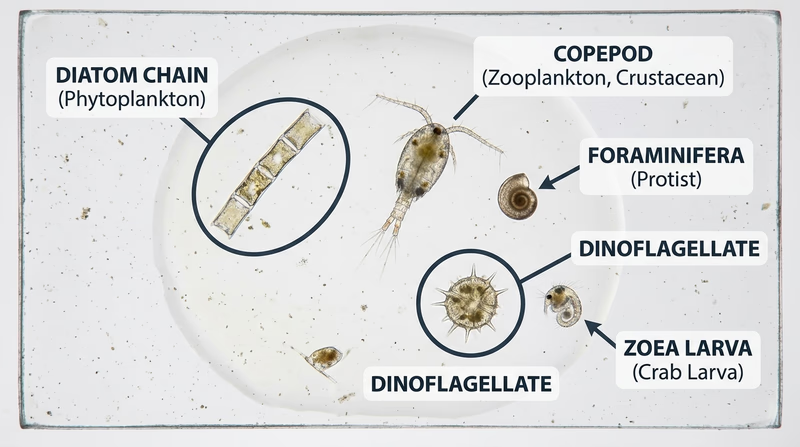
You may not identify each organism to an exact species, and that is okay. For this requirement, focus on the three most common types you see. For example, you might notice copepods, algae-like phytoplankton, or tiny larvae.
What to Bring to Your Counselor
Bring evidence that shows your process:
- a photo or sketch of your net
- notes on where and how you sampled
- a list or sketches of the three most common plankton types
- any photos taken through the microscope, if you have them
This page focused on drifting life. The next option shifts from tiny organisms to the long geologic story of coral reef formation.