Req 7d — Model Sediment Movement
Coastlines are always moving, even when they look still. This option helps you model how sand and sediment shift because of waves, tides, and currents.
What Your Model Should Demonstrate
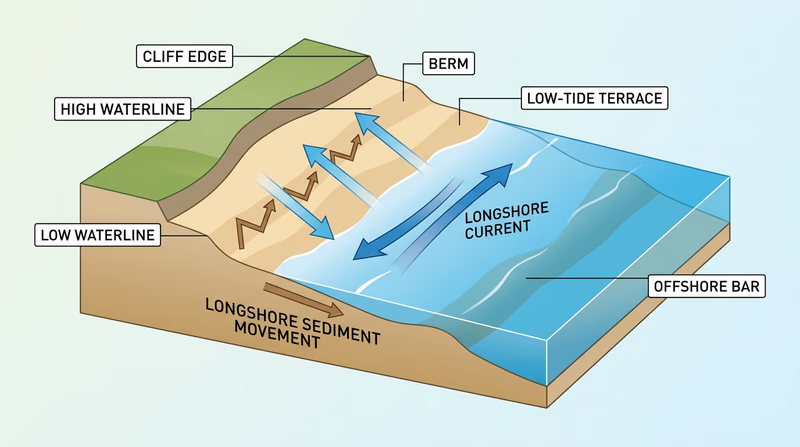
Your model should show that sediment is not fixed in one place. Waves move it up and down the shore. Littoral currents move it along the shore. Tides change where water reaches. Stormy conditions can tear down sandbars that calm conditions later rebuild.
Key features to include
- high waterline
- low waterline
- low-tide terrace
- berm
- coastal cliffs
- offshore bars
🎬 Video: Longshore Drift Model Demo (video) — https://youtu.be/bfzAeQXhSGk
Useful Terms
A littoral current moves parallel to the shore and can carry sand along the beach.
A berm is the raised ridge of sand or gravel built by wave action above the normal waterline.
A low-tide terrace is the flatter exposed area you may see at low tide.
An offshore bar is a ridge of sand built underwater or just offshore by waves and sediment transport.
Building the Model
A tray or shallow box works well. Use sand, clay, or damp soil for land and beach forms, and water to show how movement happens.
Try to build:
- a sloping beach
- one higher edge to represent a coastal cliff
- a low offshore sand ridge
- markers for high and low tide lines
Then use small waves or repeated pours to show how sediment can move.
What to Explain to Your Counselor
Do not only show the finished model. Explain the processes:
- how waves push and pull sediment
- how an angled wave approach can move sand downshore
- how tides change where erosion and deposition happen
- how offshore bars can build up during some conditions and be torn down during others
The next option keeps the water-motion theme but switches to a focused wave experiment.