Req 1 — Safety and First Aid
You are a quarter-mile into the woods, racing to your next control point, when your foot catches a root and you skid across a rocky slope. Your knee is bleeding, your palms are scraped, and the nearest road is 20 minutes away. What you do in the next 60 seconds determines whether this is a minor setback or a trip to the emergency room.
Orienteering takes you off-trail and into terrain where help is not immediate. That is exactly what makes it exciting — and exactly why first aid knowledge is Requirement 1.
Cuts, Scratches, and Scrapes
Branches, thorns, and rocky ground are part of every orienteering course. For minor cuts and scratches:
- Stop the bleeding by applying direct pressure with a clean cloth or gauze.
- Clean the wound with clean water. Remove any visible dirt or debris.
- Apply antibiotic ointment and cover with an adhesive bandage or sterile dressing.
- Monitor for infection — redness, swelling, warmth, or pus in the following days means you need medical attention.
For deeper cuts that will not stop bleeding after 10 minutes of direct pressure, or wounds with embedded objects, seek medical help.
Blisters
A blister the size of a dime can turn a 3-kilometer course into agony. Prevention is everything:
- Wear broken-in shoes — never race in new footwear.
- Use moisture-wicking socks and consider liner socks to reduce friction.
- Address hot spots immediately. If you feel rubbing, stop and apply moleskin or athletic tape before a blister forms.
If a blister does form, do not pop it — the skin acts as a natural bandage. Cover it with a donut-shaped piece of moleskin to relieve pressure, and cushion it for the rest of your course.
Snakebite
Most snakes want nothing to do with you. But when you are crashing through underbrush and stepping over logs, surprise encounters happen. If bitten by a snake:
- Move away from the snake to avoid a second bite.
- Stay calm and still. Elevated heart rate speeds venom circulation.
- Remove rings, watches, and tight clothing near the bite — swelling will come.
- Keep the bitten limb at or below heart level.
- Get to medical help as quickly as possible. Call 911 or have your buddy go for help.
Insect Stings and Tick Bites
Insect stings (bees, wasps, hornets): Remove the stinger by scraping it sideways with a flat edge — do not squeeze with tweezers, which can inject more venom. Clean the area, apply a cold pack to reduce swelling, and take an antihistamine if available. Watch for signs of a severe allergic reaction (anaphylaxis): difficulty breathing, swelling of the face or throat, dizziness, or rapid pulse. Anyone with a known allergy should carry an epinephrine auto-injector.
Tick bites: Ticks are a serious concern for orienteers because you spend time in exactly the habitat ticks love — tall grass, leaf litter, and brushy areas. After every event, do a full tick check. To remove an attached tick:
- Use fine-tipped tweezers to grasp the tick as close to your skin as possible.
- Pull straight up with steady, even pressure — no twisting.
- Clean the bite area with rubbing alcohol or soap and water.
- Save the tick in a sealed bag with the date, in case symptoms develop later.
Heat and Cold Reactions
Orienteering happens in all weather, which means you need to recognize both heat and cold emergencies.
Heat Reactions
| Condition | Signs | Response |
|---|---|---|
| Sunburn | Red, painful, warm skin | Cool compresses, aloe vera, stay hydrated. Prevent with sunscreen (SPF 30+) and a hat. |
| Heat exhaustion | Heavy sweating, weakness, cold/clammy skin, nausea, fast pulse | Move to shade, loosen clothing, cool with wet cloths, sip water. Seek medical help if symptoms worsen. |
| Heatstroke | Hot/red/dry skin, temperature above 103°F, confusion, loss of consciousness | Call 911 immediately. Cool the person rapidly — ice packs on neck, armpits, and groin. This is life-threatening. |
Cold Reactions
Hypothermia occurs when your body loses heat faster than it can produce it. This can happen even in mild temperatures (50–60°F) if you are wet and exposed to wind. Signs progress from shivering and confusion to slurred speech and loss of coordination. Treatment: get the person out of wind and wet clothing, insulate them from the ground, wrap them in warm layers or a sleeping bag, and give warm (not hot) drinks if they are alert. Severe hypothermia requires professional medical care.
Dehydration
You lose water through sweat, breathing, and exertion — all of which are amplified during orienteering. Signs of dehydration include dark urine, dry mouth, headache, dizziness, and fatigue. Drink water before, during, and after your event. A good rule: if you are thirsty, you are already behind on hydration.
Poisonous Plants and Animals
Your counselor will ask you to explain why identifying local hazards matters. The answer is practical: on an orienteering course, you are choosing your own route through unmarked terrain. You might push through a thicket of poison ivy, step near a copperhead’s hiding spot under a log, or brush against stinging nettle. Knowing what is dangerous in your area — and what it looks like — lets you make smart route choices and avoid problems before they start.
Before your first event, learn to identify:
- Poisonous plants in your region (poison ivy, poison oak, poison sumac, stinging nettle)
- Venomous snakes (copperhead, rattlesnake, cottonmouth, coral snake — distribution varies by state)
- Dangerous insects and arachnids (black widow, brown recluse, fire ants, scorpions)
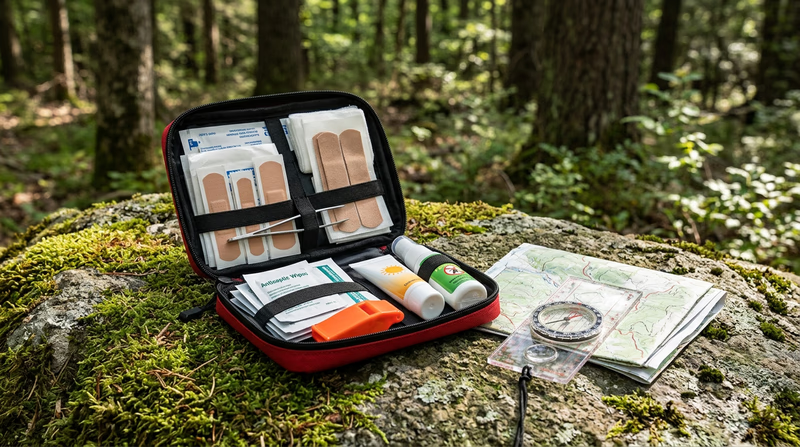
Orienteering First Aid Kit
Essentials to carry on every course
- Adhesive bandages (assorted sizes): For cuts, scrapes, and small wounds.
- Moleskin and athletic tape: Blister prevention and treatment.
- Gauze pads and roller bandage: For larger wounds requiring pressure.
- Antiseptic wipes: Wound cleaning in the field.
- Tweezers (fine-tipped): Tick and splinter removal.
- Antihistamine tablets: For insect sting reactions.
- Sunscreen (SPF 30+): Apply before the event and reapply.
- Insect repellent: Especially in tick-prone areas.
- Emergency whistle: Three blasts is the universal distress signal.