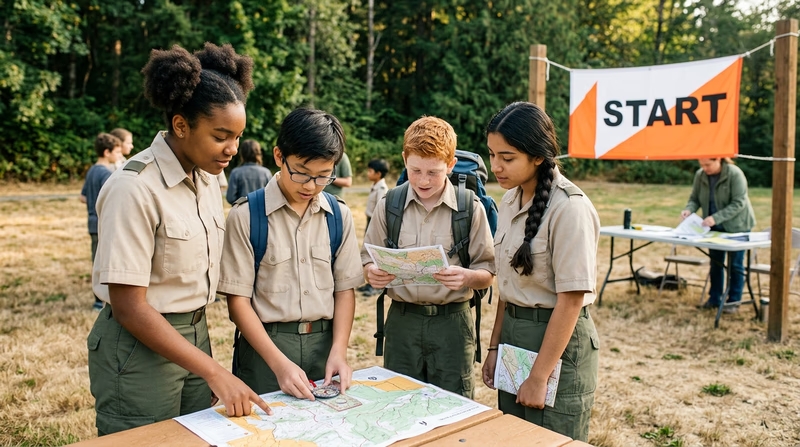
Req 7a — Orienteering Events
All the map reading, compass work, and technique study you have done so far leads to this: getting out into the woods and putting your skills to the test on a real course. Three events. At least one cross-country. It is time to compete.
Finding Events Near You
Orienteering events happen more often than most people realize. Here is where to find them:
- Orienteering USA (OUSA) maintains an event calendar listing events nationwide. This is the best starting point.
- Local orienteering clubs run monthly events in parks, forests, and recreation areas. Most clubs welcome beginners with open arms and often provide instruction at the start.
- Scouting district or council events — some councils organize orienteering meets specifically for Scouts working on this badge.
- State and regional parks sometimes host orienteering events, especially in the fall and spring.
If there is no local club near you, talk to your merit badge counselor. You may be able to set up your own course (which also helps with Req 8) and have your troop run it as an event.
What to Expect at Your First Event
Before the Event
- Register in advance if required. Most events have online registration.
- Choose your course difficulty. Events typically offer courses at different levels: white (very easy), yellow (easy), orange (intermediate), and green/red/blue (advanced). Start with white or yellow for your first event.
- Gear up. Bring your compass, a watch, a whistle, water, appropriate clothing, and your first aid kit. Wear shoes with good traction — trail runners or light hiking boots work well. Long pants protect against thorns and brush.
At the Event
- Check in at the registration table. You will receive your map (face-down until your start time), a control description sheet, and a punch card or electronic timing device (e-punch or SI card).
- Study the map during your allocated start time.
- Go. At your signal, flip your map and begin navigating.
- At each control, verify the code number matches your description sheet, then punch your card or tap your e-punch.
- Finish by crossing the finish line and turning in your card.
After the Event
- Check results. Your time and any missed controls will be posted.
- Walk the course with experienced orienteers. Many events offer a “walk-through” or informal discussion afterward where you can compare routes and learn from others.
Event Day Checklist
Pack and verify before each event
- Orienteering compass: Charged or calibrated, with a working needle.
- Watch: For time management, especially in score events.
- Whistle: Three blasts = distress signal.
- Water bottle: At least 500 mL for short courses, more for longer ones.
- First aid kit: The pocket-sized version from Req 1.
- Long pants and long sleeves: Protection from brush, thorns, and ticks.
- Trail-appropriate shoes: Good traction, ankle support optional.
- Snack: An energy bar or trail mix for longer events.
- Red pen or pencil: For marking your route on the map afterward.
The Three Events
Your three events should give you a range of experience:
Cross-country event (required) — The classic format. You visit controls in a set order, navigating freely between them. This tests every skill: compass bearings, map reading, pace counting, route choice, and the navigation techniques from Req 6c.
Score event — Consider making one of your three events a score orienteering format. The time-limited, choose-your-own-order format develops different skills: time management, risk assessment, and rapid route planning.
Any format — Sprint, night, or another cross-country. Each format teaches something different.