 Getting Started
Introduction & Overview
Your body is the only piece of gear you will carry on every adventure for the rest of your life. Personal fitness is about learning how to take care of it — not just your muscles and endurance, but your mind, your emotions, and your connections with other people. This Eagle-required merit badge challenges you to understand what fitness really means and to build habits that will serve you for decades.
Personal fitness is not about being the fastest runner or the strongest lifter. It is about finding your own baseline, setting goals, and making steady progress. Whether you play sports, hike with your troop, or just want more energy during the school day, this badge will give you the knowledge and the plan to get there.
Then and Now
Then — Fitness as a Way of Life
In ancient Greece, physical training was not optional — it was a core part of being a citizen. Young men trained in the gymnasium (the word comes from the Greek gymnos, meaning “to exercise”) to prepare for both athletics and military service. The original Olympic Games, starting in 776 BCE, celebrated the ideal of a strong body and a sharp mind working together.
For centuries after that, physical fitness was something people got naturally — through farming, building, walking, and manual labor. There was no need for a gym because daily life was the workout.
- Purpose: Survival, military readiness, civic duty
- Mindset: Fitness was built into everyday work and life
Now — Fitness by Design
Today, most people do not get enough physical activity from daily life alone. We sit in classrooms, ride in cars, and spend hours looking at screens. That means we have to be intentional about staying fit. Modern science has given us an incredible understanding of how exercise, nutrition, and sleep affect our bodies and brains. We know more than any generation before us about how to be healthy — the challenge is putting that knowledge into action.
- Purpose: Health, performance, mental well-being, disease prevention
- Mindset: Build fitness into your routine with a plan, track your progress, and keep improving
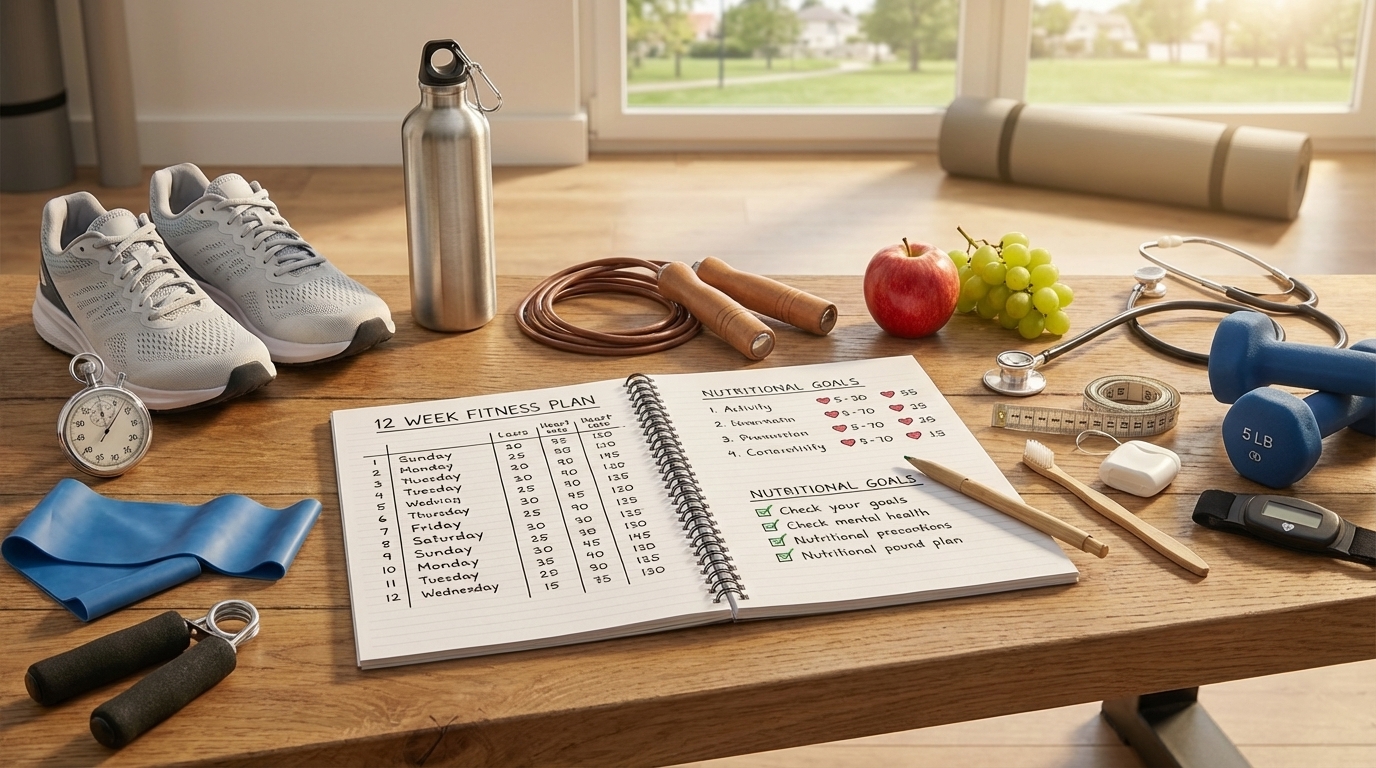
Get Ready! This badge is a 12-week commitment that will change how you think about your body and your health. You will test yourself, build a plan, follow through, and see real results. Let’s get started!
Kinds of Fitness
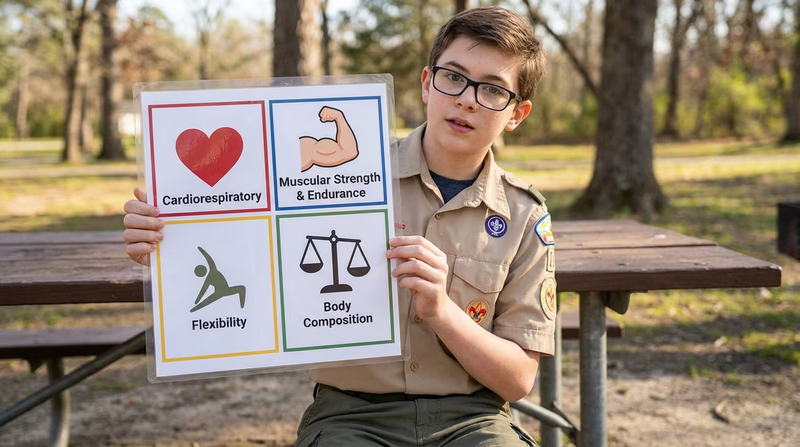
Fitness is not just one thing. Your body and mind have several different systems that all need attention. Understanding these categories will help you see the bigger picture of what it means to be truly fit.
Cardiorespiratory (Aerobic) Fitness
This is how well your heart and lungs deliver oxygen to your muscles during sustained activity. Running, swimming, cycling, and brisk walking all build aerobic fitness. A strong cardiovascular system gives you endurance — the ability to keep going when things get tough.
Muscular Strength and Endurance
Strength is how much force your muscles can produce in a single effort — like lifting a heavy pack. Endurance is how many times your muscles can repeat an action — like doing push-ups. You need both. Strength helps you carry gear on a backpacking trip, and endurance keeps you going mile after mile.
Flexibility
Flexibility is your ability to move your joints through their full range of motion. Stretching, yoga, and dynamic warm-ups all improve flexibility. Good flexibility helps prevent injuries, reduces muscle soreness, and makes everyday movements easier.
Body Composition
Body composition refers to the ratio of muscle, bone, water, and fat in your body. It is not about what the scale says — two people can weigh the same but have very different levels of fitness. Regular exercise and good nutrition work together to build a healthy body composition over time.
Mental and Emotional Fitness
A strong body is only part of the picture. Mental fitness means being able to handle stress, solve problems, and stay focused. Emotional fitness means understanding your feelings and managing them in healthy ways. Exercise is one of the most powerful tools for improving both — it releases chemicals in your brain that reduce stress and boost your mood.
Social Fitness
Humans are built for connection. Social fitness means maintaining healthy relationships with family, friends, and your community. Spending quality time with the people you care about, contributing to your household, and being a good teammate all strengthen your social fitness. Scouting itself is one of the best examples of social fitness in action.
Now let’s dive into the first requirement and explore what it means to be personally fit.