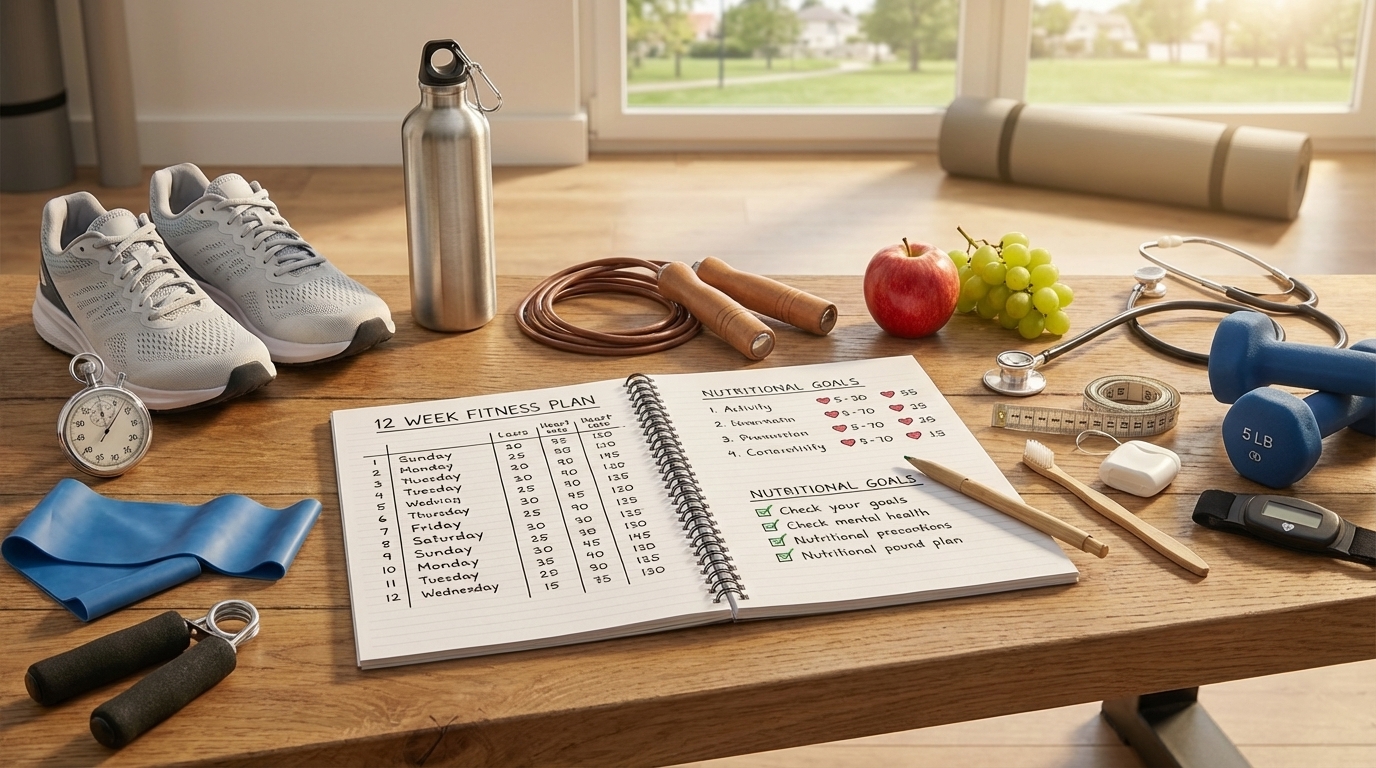
Personal Fitness Merit Badge — Complete Digital Resource Guide
https://merit-badge.university/merit-badges/personal-fitness/guide/
Introduction & Overview
Your body is the only piece of gear you will carry on every adventure for the rest of your life. Personal fitness is about learning how to take care of it — not just your muscles and endurance, but your mind, your emotions, and your connections with other people. This Eagle-required merit badge challenges you to understand what fitness really means and to build habits that will serve you for decades.
Personal fitness is not about being the fastest runner or the strongest lifter. It is about finding your own baseline, setting goals, and making steady progress. Whether you play sports, hike with your troop, or just want more energy during the school day, this badge will give you the knowledge and the plan to get there.
Then and Now
Then — Fitness as a Way of Life
In ancient Greece, physical training was not optional — it was a core part of being a citizen. Young men trained in the gymnasium (the word comes from the Greek gymnos, meaning “to exercise”) to prepare for both athletics and military service. The original Olympic Games, starting in 776 BCE, celebrated the ideal of a strong body and a sharp mind working together.
For centuries after that, physical fitness was something people got naturally — through farming, building, walking, and manual labor. There was no need for a gym because daily life was the workout.
- Purpose: Survival, military readiness, civic duty
- Mindset: Fitness was built into everyday work and life
Now — Fitness by Design
Today, most people do not get enough physical activity from daily life alone. We sit in classrooms, ride in cars, and spend hours looking at screens. That means we have to be intentional about staying fit. Modern science has given us an incredible understanding of how exercise, nutrition, and sleep affect our bodies and brains. We know more than any generation before us about how to be healthy — the challenge is putting that knowledge into action.
- Purpose: Health, performance, mental well-being, disease prevention
- Mindset: Build fitness into your routine with a plan, track your progress, and keep improving
Get Ready! This badge is a 12-week commitment that will change how you think about your body and your health. You will test yourself, build a plan, follow through, and see real results. Let’s get started!
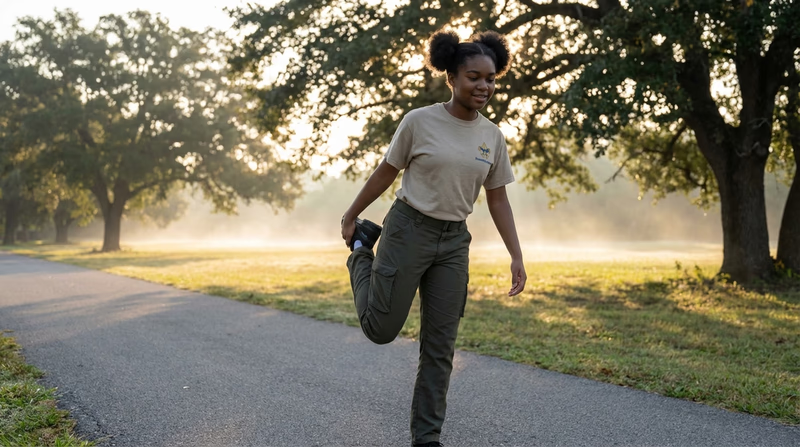
Kinds of Fitness
Fitness is not just one thing. Your body and mind have several different systems that all need attention. Understanding these categories will help you see the bigger picture of what it means to be truly fit.
Cardiorespiratory (Aerobic) Fitness
This is how well your heart and lungs deliver oxygen to your muscles during sustained activity. Running, swimming, cycling, and brisk walking all build aerobic fitness. A strong cardiovascular system gives you endurance — the ability to keep going when things get tough.
Muscular Strength and Endurance
Strength is how much force your muscles can produce in a single effort — like lifting a heavy pack. Endurance is how many times your muscles can repeat an action — like doing push-ups. You need both. Strength helps you carry gear on a backpacking trip, and endurance keeps you going mile after mile.
Flexibility
Flexibility is your ability to move your joints through their full range of motion. Stretching, yoga, and dynamic warm-ups all improve flexibility. Good flexibility helps prevent injuries, reduces muscle soreness, and makes everyday movements easier.
Body Composition
Body composition refers to the ratio of muscle, bone, water, and fat in your body. It is not about what the scale says — two people can weigh the same but have very different levels of fitness. Regular exercise and good nutrition work together to build a healthy body composition over time.
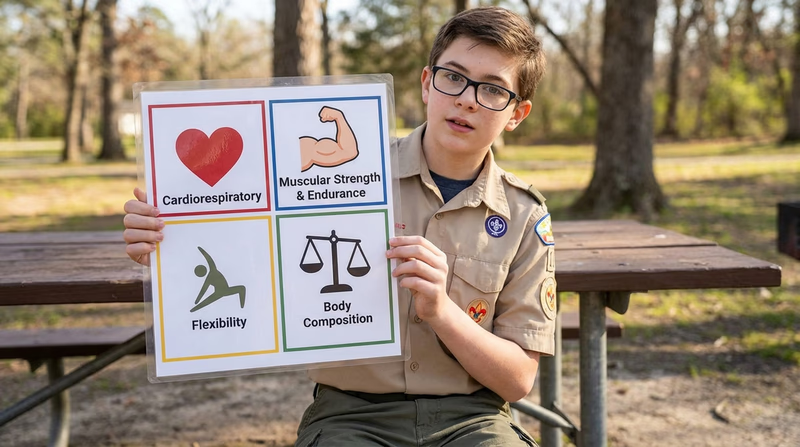
Mental and Emotional Fitness
A strong body is only part of the picture. Mental fitness means being able to handle stress, solve problems, and stay focused. Emotional fitness means understanding your feelings and managing them in healthy ways. Exercise is one of the most powerful tools for improving both — it releases chemicals in your brain that reduce stress and boost your mood.
Social Fitness
Humans are built for connection. Social fitness means maintaining healthy relationships with family, friends, and your community. Spending quality time with the people you care about, contributing to your household, and being a good teammate all strengthen your social fitness. Scouting itself is one of the best examples of social fitness in action.
Now let’s dive into the first requirement and explore what it means to be personally fit.
Req 1a — Physical Fitness
What does it mean to be physically fit? You might picture a professional athlete or a bodybuilder, but physical fitness is not about extremes. A physically fit person is someone whose body works well for the life they lead. They have the energy, strength, and endurance to handle daily activities and still have something left for fun, emergencies, and unexpected challenges.
The Four Pillars of Physical Fitness
When experts talk about physical fitness, they break it down into four measurable components. A truly fit person has a healthy balance of all four.
Cardiorespiratory endurance is your body’s ability to supply oxygen to your muscles during sustained physical activity. If you can jog for 20 minutes without feeling like you are going to collapse, your cardiorespiratory system is doing its job. Activities like running, swimming, cycling, and even brisk walking build this kind of fitness.
Muscular strength is the maximum force a muscle or muscle group can produce in a single effort. Think of lifting a heavy backpack off the ground or pulling yourself up onto a ledge. You do not need to bench press 200 pounds — you just need enough strength for the demands of your life.
Muscular endurance is the ability of a muscle to keep working over time without giving out. Push-ups, sit-ups, and holding a plank are all tests of endurance. On a long hike, it is your leg endurance that keeps you moving mile after mile.
Flexibility is how far your joints can move through their full range of motion. Touching your toes, reaching behind your back, and rotating your trunk all depend on flexibility. Good flexibility reduces your risk of injury and helps you move more efficiently.
What Physical Fitness Looks Like in Real Life
A physically fit person does not have to look a certain way. Fitness shows up in how you feel and what you can do:
- You can carry groceries up the stairs without getting winded.
- You can play a full game of basketball, soccer, or ultimate frisbee and still walk home.
- You recover quickly after hard physical effort.
- You sleep well and wake up feeling rested.
- You can handle an unexpected physical challenge — like running to catch a bus or helping move furniture — without getting hurt.
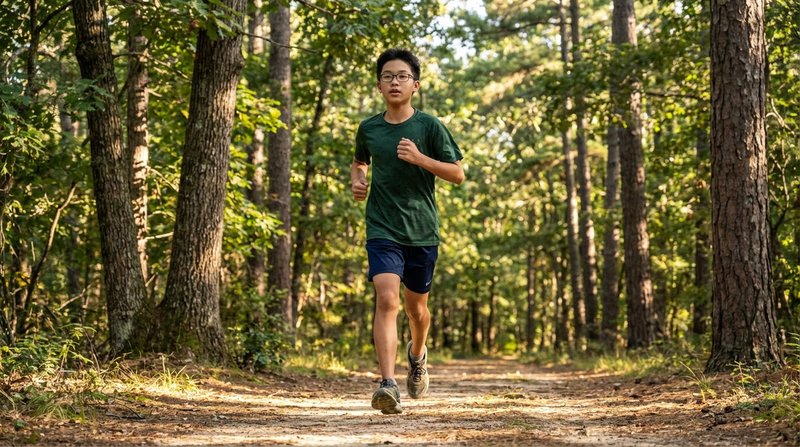
Body Composition — The Fifth Factor
Some fitness experts include body composition as a fifth component. Body composition is the ratio of lean tissue (muscle, bone, organs) to fat in your body. A healthy body composition means you have enough muscle to support your activities and enough body fat to protect your organs and provide energy reserves — but not so much that it slows you down or puts stress on your heart.
Body composition is influenced by genetics, diet, and activity level. It is not something you can change overnight, but regular exercise and balanced nutrition will move it in a healthy direction over time.
Explore More
Being Physically Fit (PDF) A resource from Scouting America that explores what it means to be physically fit. Link: Being Physically Fit (PDF) — https://filestore.scouting.org/filestore/Merit_Badge_ReqandRes/Requirement%20Resources/Personal%20Fitness/physically_fit_people.pdf CDC — Physical Activity for Youth The CDC recommends at least 60 minutes of moderate-to-vigorous physical activity every day for young people ages 6 to 17. Link: CDC — Physical Activity for Youth — https://www.cdc.gov/physical-activity-basics/guidelines/children-and-adolescents.htmlReq 1b — Mental, Emotional & Social Fitness
Physical fitness gets a lot of attention, but there is a whole other side of being fit that happens above your shoulders. Mental, emotional, and social fitness are about how well your mind works, how you handle your feelings, and how you connect with other people. These three areas are deeply linked — when one is strong, it supports the others.
Mental Fitness
A mentally fit person can think clearly, learn new things, solve problems, and make good decisions. Mental fitness is not about being the smartest person in the room — it is about having a mind that is sharp, focused, and ready to take on challenges.
Here is what mental fitness looks like in everyday life:
- Focus: You can concentrate on a task — homework, a merit badge project, a conversation — without constantly getting distracted.
- Problem-solving: When something goes wrong, you think through your options instead of freezing up or giving up.
- Learning: You are curious and open to new ideas. You can absorb new information and apply it.
- Adaptability: When plans change, you adjust. You do not fall apart when things do not go your way.
Emotional Fitness
Emotional fitness is your ability to understand, express, and manage your feelings in healthy ways. Everyone experiences a full range of emotions — happiness, anger, fear, sadness, excitement, frustration. Being emotionally fit does not mean you never feel bad. It means you know what you are feeling, why you are feeling it, and how to respond without hurting yourself or others.
Signs of emotional fitness include:
- Self-awareness: You can name what you are feeling. “I’m frustrated” is more useful than “I’m fine” when you are clearly not fine.
- Self-regulation: You can feel angry without lashing out. You can feel sad without shutting down.
- Resilience: When you face a setback — a failed test, a lost game, a disagreement with a friend — you bounce back. You learn from it and move forward.
- Empathy: You can understand how other people feel, even when their experience is different from yours.

Social Fitness
Social fitness is about the quality of your relationships and your ability to interact well with others. A socially fit person can communicate clearly, work as part of a team, resolve conflicts, and build meaningful connections with family, friends, and community.
Key aspects of social fitness:
- Communication: You can express your thoughts and listen to others. Good communication is a two-way street.
- Teamwork: You contribute to a group and support others. Scouting is one of the best training grounds for this skill.
- Conflict resolution: Disagreements happen. A socially fit person can work through them without destroying the relationship.
- Community involvement: You contribute to the groups you belong to — your family, your troop, your school, your neighborhood.
How They All Connect
Mental, emotional, and social fitness are not separate buckets — they flow into each other. When you are mentally sharp, you make better decisions in your relationships. When you are emotionally grounded, you can think more clearly under pressure. When you have strong social connections, your mental and emotional health improves.
And here is the powerful part: physical exercise directly boosts all three. A 30-minute run releases brain chemicals (endorphins and serotonin) that improve your mood, sharpen your focus, and make you more pleasant to be around. Fitness is truly a whole-person project.
Explore More
🎬 Video: Being Mentally, Emotionally, and Socially Fit — https://www.pbs.org/video/wellness-mind-frame-7um7lc/
Req 1c — Spiritual Fitness
Spiritual fitness is the dimension of personal fitness that deals with your sense of purpose, values, and connection to something bigger than yourself. It is not limited to any one religion or belief system. Spiritual fitness is about knowing what you stand for, finding meaning in your life, and living in a way that aligns with your deepest values.
What Spiritual Fitness Looks Like
A spiritually fit person has a strong inner compass. They know the difference between right and wrong, and they act on it — even when it is hard. Here are some signs of spiritual fitness:
- Purpose: You have a sense of why you are here and what matters to you. You set goals that reflect your values, not just what is popular or easy.
- Gratitude: You appreciate what you have. You notice the good in your life and express thanks for it.
- Integrity: Your actions match your beliefs. When no one is watching, you still do the right thing.
- Compassion: You care about the well-being of others. You are willing to help, serve, and sacrifice for people in need.
- Inner peace: Even when life is stressful or uncertain, you have a foundation of calm that helps you stay grounded.

Paths to Spiritual Fitness
People build spiritual fitness in many different ways. There is no single “right” way — what matters is that you are intentional about it. Some common paths include:
Faith and worship. For many Scouts, spiritual fitness is rooted in their faith tradition. Attending services, praying, studying sacred texts, and participating in a faith community all nourish spiritual health.
Service to others. Volunteering, helping a neighbor, or completing a service project can give you a powerful sense of purpose and connection. When you lift someone else up, you often feel lifted too.
Time in nature. Many people find spiritual renewal in the outdoors. The quiet of a forest, the vastness of a starry sky, or the rhythm of waves on a shore can help you feel connected to something larger than yourself.
Reflection and meditation. Taking time to think quietly about your life, your values, and your goals builds self-awareness. Journaling, meditation, or simply sitting in silence for a few minutes each day can strengthen your spiritual core.
Acts of gratitude. Regularly noticing and expressing gratitude — for your family, your health, your opportunities — rewires your brain to focus on the positive and builds resilience against stress.
Spiritual Fitness in Scouting
Scouting has always recognized the importance of spiritual fitness. The twelfth point of the Scout Law — “A Scout is reverent” — calls on you to be faithful in your duty to God, to be faithful in your religious duties, and to respect the beliefs of others. The Scout Oath includes the promise to do your “duty to God.”
This does not mean every Scout must follow the same spiritual path. Scouting welcomes Scouts of all faiths and encourages each person to grow spiritually in the way that is meaningful to them. What matters is that you take this dimension of fitness seriously and make it part of your life.
Explore More
🎬 Video: Being Spiritually Fit — https://youtu.be/8gZ_JbDgERs
Req 1d — Why Fitness Matters
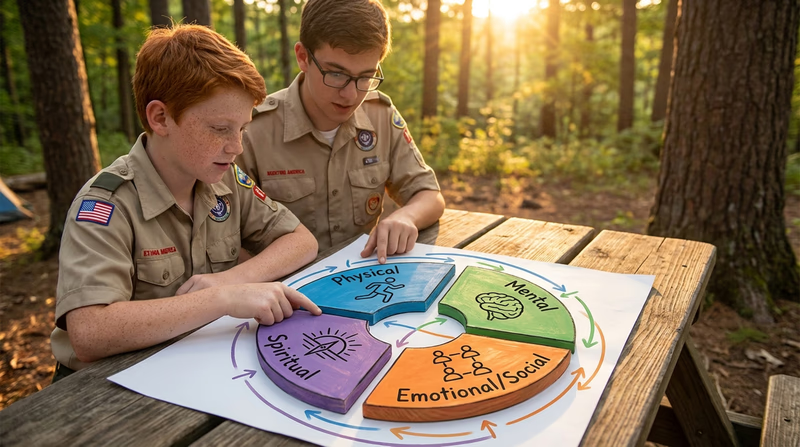
You have explored four dimensions of fitness — physical, mental, emotional/social, and spiritual. Each one matters on its own, but the real power comes when they work together. Think of personal fitness as a table with four legs. If one leg is shorter than the others, the table wobbles. If one leg is missing entirely, the table falls over.
The Whole-Person Connection
Your body, mind, emotions, and spirit are not separate systems that operate independently. They are deeply connected, and what happens in one area ripples into all the others.
Physical fitness fuels everything else. When you exercise regularly, your brain gets more oxygen and nutrients. That improves your ability to concentrate, learn, and remember. Exercise also releases endorphins — natural chemicals that boost your mood and reduce anxiety. A physically active person is better equipped to handle stress, sleep well, and show up as a good friend and family member.
Mental fitness helps you make better choices. A clear, focused mind helps you plan your workouts, resist temptation, and stick with your goals when things get hard. Mental fitness also helps you evaluate information — like knowing the difference between a legitimate nutrition plan and a fad diet.
Emotional fitness keeps you on track. Everyone hits rough patches. The Scout who is emotionally fit can handle a bad day without giving up on their fitness program. They can manage frustration during a tough workout and bounce back from setbacks without spiraling.
Spiritual fitness gives you purpose. When you know why you are doing something — not just what — you are far more likely to follow through. A strong sense of purpose keeps you motivated during the hard middle weeks of a 12-week fitness program when the excitement of starting has worn off.
What Happens When One Area Falls Behind
Imagine a Scout who is incredibly strong and fast but cannot manage their anger. Their physical fitness is impressive, but their emotional fitness is holding them back — and it affects their friendships, their troop experience, and their ability to lead.
Now imagine a Scout who is kind, thoughtful, and well-liked, but they never exercise and eat junk food every day. Their social and emotional fitness is excellent, but their physical health is heading in a dangerous direction that could catch up with them in adulthood.
The goal is not perfection in every area. The goal is balance — paying attention to all four dimensions and working to improve in each one.
Long-Term Benefits
Being fit in all four areas does not just help you today. It sets you up for a healthier, more fulfilling life as an adult. Here is what the research tells us:
- Physically fit teens are far less likely to develop heart disease, type 2 diabetes, and certain cancers as adults.
- Mentally fit young people perform better in school and careers, and are better at managing money, time, and relationships.
- Emotionally resilient teens are less likely to struggle with substance abuse and are better equipped to handle the pressures of adulthood.
- Spiritually grounded young people report higher levels of life satisfaction and a stronger sense of meaning and purpose throughout their lives.
The habits you build now — during your Scout years — create the foundation for the adult you will become. That is why this merit badge asks you to commit to a 12-week program. Twelve weeks is enough time to build real habits, not just temporary motivation.
Explore More
🎬 Video: Being Fit Overall — https://kcts9.pbslearningmedia.org/resource/wellness-video/mind-frame/?student=true&focus=true
Req 1e — Scout Oath and Law
The Scout Oath and Scout Law are not just words you recite at meetings. They are a framework for living — and personal fitness connects to them in ways you might not have considered. Let’s break down the connections.
The Scout Oath
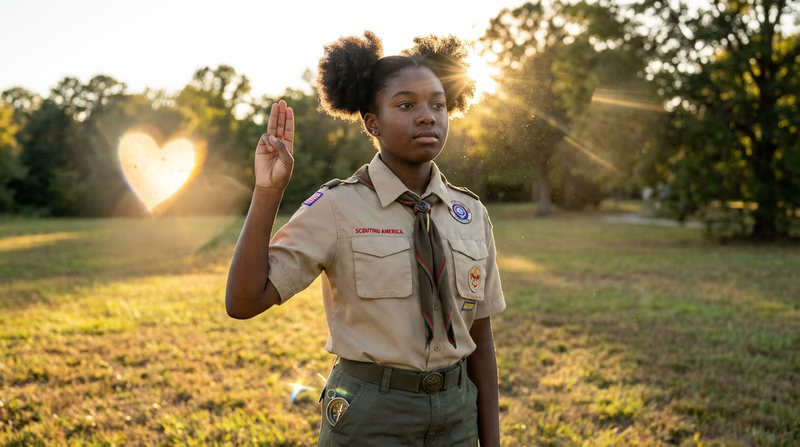
On my honor I will do my best to do my duty to God and my country and to obey the Scout Law; to help other people at all times; to keep myself physically strong, mentally awake, and morally straight.
Look at that last line. The Scout Oath directly calls out three dimensions of personal fitness:
Physically strong — This is your commitment to take care of your body. Eat well, exercise, get enough sleep, and avoid substances that harm you. A Scout who is physically strong can do more — carry heavier packs, hike longer trails, help in emergencies, and serve others without burning out.
Mentally awake — This means keeping your mind sharp and engaged. A mentally awake Scout pays attention, thinks critically, and keeps learning. Mental fitness helps you make good decisions on the trail, in school, and in life.
Morally straight — This connects to both emotional and spiritual fitness. A morally straight Scout knows right from wrong and has the courage to act on it. This requires emotional self-control (managing anger, resisting peer pressure) and spiritual grounding (having values that guide your choices).
The Scout Law and Fitness
Each point of the Scout Law connects to one or more aspects of personal fitness. Here are some of the strongest connections:
Scout Law & Fitness Connections
How the 12 points relate to being personally fit- Trustworthy: Keeping commitments to your fitness program builds trust — with your counselor, your family, and yourself.
- Loyal: Staying loyal to your health goals, even when it is easier to quit.
- Helpful: Physical fitness gives you the strength and energy to help others when they need it most.
- Friendly: Social fitness means building genuine connections and treating everyone with warmth.
- Courteous: Emotional fitness helps you stay respectful and considerate, even when you are tired or frustrated.
- Kind: Compassion — a key part of spiritual fitness — drives acts of kindness toward others.
- Obedient: Following your fitness plan, listening to your counselor, and respecting safety rules all require discipline.
- Cheerful: Regular exercise boosts your mood naturally, making it easier to stay positive.
- Thrifty: Taking care of your health now saves enormous costs in medical bills and lost productivity later in life.
- Brave: It takes courage to push through a hard workout, to say no to harmful substances, and to ask for help when you are struggling emotionally.
- Clean: A clean body, clean habits, and a clean mind are all part of personal fitness.
- Reverent: Spiritual fitness — duty to God, respect for others’ beliefs, and a sense of gratitude — is the foundation of reverence.
Putting It All Together
When your counselor asks you to discuss how fitness relates to the Scout Oath and Law, they are looking for you to make genuine connections — not just recite definitions. Think about your own experience:
- How has being physically active helped you be a better Scout?
- When has mental toughness helped you keep a promise?
- How does emotional fitness help you be a better patrol member or leader?
- How do your values guide your choices about health and fitness?
The Big Picture
The Scout Oath and Law describe the kind of person Scouting is designed to help you become. Personal fitness is the engine that powers that transformation. When you are physically strong, you can serve. When you are mentally awake, you can lead. When you are emotionally grounded, you can connect. When you are spiritually fit, you can inspire.
This merit badge is not just about passing a fitness test. It is about becoming the kind of person the Scout Oath and Law describe.
Explore More
🎬 Video: The Scout Oath — https://youtu.be/1_aUAbUs2Ts?si=gG4-nTpX5qeSmQE1
Req 2a — Physical Examinations
An annual physical examination is like a tune-up for your body. Just like you would not drive a car for years without checking the oil, brakes, and tires, you should not go year after year without having a healthcare provider take a close look at how your body is doing.
Why Annual Checkups Matter
Most of the time, you feel fine. That is great — but “feeling fine” does not always mean everything is working perfectly. Some health issues develop slowly and silently. High blood pressure, early signs of diabetes, vision changes, and even heart conditions can be present without any obvious symptoms. A physical exam can catch these problems early, when they are easiest to treat.
Annual checkups also give your doctor or healthcare provider a baseline — a record of what is normal for you. If something changes next year, they can compare it to this year’s results and spot the difference. Without that baseline, small changes can go unnoticed until they become big problems.
What Happens During a Physical Exam
A typical physical examination for a young person covers several key areas:
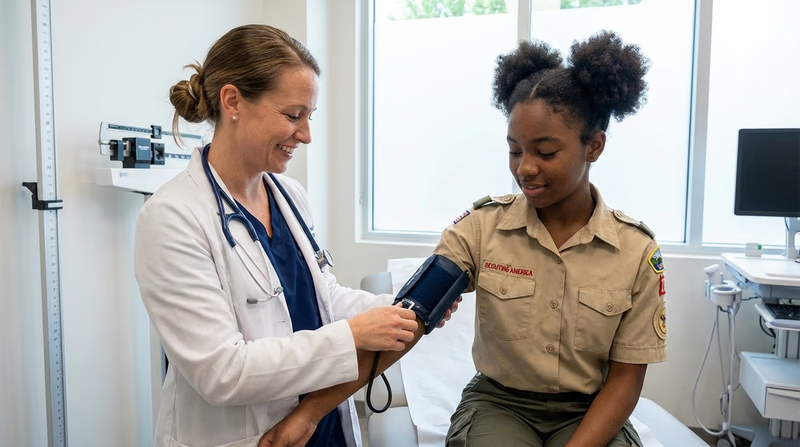
Overall health check. Your provider measures your height, weight, blood pressure, and heart rate. They listen to your heart and lungs, check your reflexes, and examine your eyes, ears, nose, and throat. These basic checks can reveal a surprising amount about your health.
Immunization review. Your provider checks your vaccination records to make sure you are up to date. Vaccines protect you from serious diseases like tetanus, measles, meningitis, and HPV. If you are behind on any shots, your provider can get you caught up.
Medication review. If you take any medications — prescription or over-the-counter — your provider reviews them to make sure they are still appropriate and that the doses are correct. They also check for potential interactions between medications.
Allergy assessment. Knowing your allergies is critical, especially for outdoor activities. Your provider documents any allergies to medications, foods, insect stings, or environmental triggers so that this information is available in an emergency.
Medical history update. Your provider reviews your family medical history (conditions that run in your family, like heart disease or diabetes) and your personal medical history (past surgeries, injuries, chronic conditions). This helps them understand your risk factors and tailor their advice to you.
Why This Matters for Your Fitness Program
This merit badge requires you to design and complete a 12-week fitness program. A physical exam before you start is important because your provider can:
- Confirm that you are healthy enough for vigorous exercise
- Identify any conditions that might require modifications to your plan
- Give you personalized advice on nutrition, sleep, and activity levels
- Provide a medical baseline to compare against after your 12-week program
Explore More
Scouting America — Annual Health and Medical Record Information about the Annual Health and Medical Record required for Scouting events, including the forms and instructions. Link: Scouting America — Annual Health and Medical Record — https://www.scouting.org/health-and-safety/ahmr/ KidsHealth — Going to the Doctor A teen-friendly guide to what happens during a physical exam and why it matters. Link: KidsHealth — Going to the Doctor — https://kidshealth.org/en/teens/checkups.htmlReq 2b — Dental Health
Your mouth is the gateway to your body, and dental health is far more connected to your overall fitness than most people realize. A routine dental exam is not just about avoiding cavities — it is about protecting your whole-body health.
Why Dental Exams Matter
Dentists recommend a checkup every six months. During these visits, your dentist does much more than just look for holes in your teeth:
- Early detection: Cavities, gum disease, and even oral cancers are easiest to treat when caught early. By the time a tooth hurts, the problem has usually been developing for months.
- Professional cleaning: Even if you brush and floss perfectly (and most people don’t), tartar — hardened plaque — can only be removed by a dental professional. Left in place, tartar irritates your gums and leads to gum disease.
- Bite and alignment check: Your dentist monitors how your teeth fit together and whether your jaw is developing properly. Catching alignment issues early can prevent bigger problems later.
- X-rays: Dental X-rays reveal problems hidden beneath the surface — cavities between teeth, impacted wisdom teeth, bone loss, and infections at the root of a tooth.
Preventive Treatments Your Dentist Can Provide
Prevention is always better (and cheaper) than repair. Your dentist has several tools to help keep your teeth healthy before problems start:
- Fluoride treatments: Fluoride strengthens tooth enamel and makes it more resistant to acid attacks from bacteria. Your dentist may apply a concentrated fluoride varnish or gel during your visit.
- Dental sealants: A thin, protective coating applied to the chewing surfaces of your back teeth (molars). Sealants fill in the tiny grooves where food and bacteria love to hide, reducing your cavity risk significantly.
- Custom mouthguards: If you play sports, your dentist can create a custom-fitted mouthguard that protects your teeth far better than a store-bought one. A knocked-out tooth is a dental emergency that is entirely preventable.
- Orthodontic referrals: If your teeth are crowded or misaligned, your dentist may refer you to an orthodontist for braces or other treatments.

Corrective Treatments
When prevention is not enough, your dentist can fix problems:
- Fillings: Repair cavities by removing decayed material and filling the space with a durable material.
- Crowns: Cover and protect a damaged or weakened tooth.
- Root canals: Save a tooth that has become infected deep inside by removing the infected tissue and sealing the tooth.
- Extractions: Remove a tooth that is too damaged to save or a wisdom tooth that is causing problems.
Daily Oral Care — Your Most Important Tool
Your dentist can only see you a few times a year. What you do every day at home is what really determines your dental health.
Daily Oral Care Routine
Your teeth will thank you- Brush twice a day: Use a soft-bristled toothbrush and fluoride toothpaste. Brush for at least two minutes — most people rush through it in under a minute.
- Floss once a day: Flossing removes food and plaque from between your teeth where your toothbrush cannot reach. If you skip flossing, you are missing about 40% of your tooth surfaces.
- Limit sugary foods and drinks: Sugar feeds the bacteria that produce acid, and acid causes cavities. Water is always the best choice for hydration.
- Replace your toothbrush: Get a new toothbrush (or brush head) every three to four months, or sooner if the bristles are frayed.
- Wear a mouthguard for sports: Protect your teeth during any activity where a hit to the face is possible.
Explore More
🎬 Video: Dental Health — https://youtu.be/7_MioRw-5QU
🎬 Video: Here's What Happens if You Stopped Brushing Your Teeth — https://youtu.be/4kXrUXDZKuM?si=eXa9NCBLsJKFM_Bu
Req 3a — Exercise & the Four Components
This requirement asks you to take an honest look at your current exercise habits. Not what you wish you did, or what you plan to do someday — what you actually do right now. Let’s break down the four components so you can figure out where you stand.
The Four Components, Reviewed
You learned about these in Requirement 1a, but now it is time to apply them to your own life.
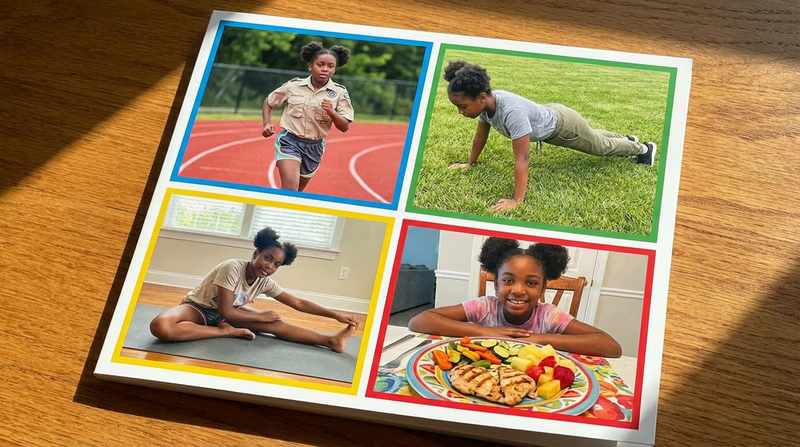
1. Cardiorespiratory (aerobic) fitness — activities that raise your heart rate and keep it elevated for an extended period. Running, swimming, cycling, playing basketball, hiking, and dancing all count. The CDC recommends at least 60 minutes of moderate-to-vigorous aerobic activity every day for young people ages 6–17.
2. Muscular strength and endurance — activities that make your muscles work against resistance. Push-ups, pull-ups, squats, lifting weights, climbing, and carrying heavy loads all build strength and endurance. You should include muscle-strengthening activities at least three days per week.
3. Flexibility — activities that stretch your muscles and increase your range of motion. Stretching after a workout, yoga, gymnastics, and martial arts all improve flexibility. Flexibility work should happen at least three days per week.
4. Body composition — this is not a type of exercise, but rather the result of your exercise and nutrition habits combined. A healthy body composition (good ratio of lean mass to fat) comes from regular activity and balanced eating over time.
Do Your Habits Cover All Four?
Many Scouts find that their current routine is strong in one or two areas but weak in others. Here are some common patterns:
- The Athlete: Plays a sport three to five times a week (great for cardio and some strength) but never stretches (low flexibility).
- The Gamer: Gets very little physical activity of any kind. All four components need attention.
- The Casual Mover: Walks the dog, bikes to school, and plays pickup games. Good baseline, but may lack structured strength training or flexibility work.
- The Gym Regular: Lifts weights and does cardio, but skips flexibility and does not play any sports or outdoor activities (missing variety and fun).
There is no judgment here — the point is to know where you are so you can build a plan to get where you want to be.
Exercise and Cardiovascular Disease
Here is where this gets serious. Cardiovascular disease (CVD) — which includes heart attacks, strokes, and other problems with your heart and blood vessels — is the leading cause of death in the United States. And the habits that lead to CVD start in your teen years.
Habits that increase your risk:
- Sitting for long periods without moving (sedentary lifestyle)
- Eating a diet high in processed foods, sugar, and saturated fats
- Not getting regular aerobic exercise
- Using tobacco or vaping products
- Being chronically stressed without healthy outlets
Habits that decrease your risk:
- Getting at least 60 minutes of moderate-to-vigorous physical activity daily
- Eating a balanced diet rich in fruits, vegetables, whole grains, and lean proteins
- Maintaining a healthy body composition
- Avoiding tobacco and other harmful substances
- Managing stress through exercise, sleep, and social connection
Explore More
🎬 Video: Benefits of Exercise — https://youtu.be/dwMMn2FdBFQ?si=vaYCckwx-xqsUky-
Req 3b — Avoiding Harmful Substances
One of the most important fitness decisions you make every day is what you choose not to put into your body. Avoiding harmful substances is not about following rules for the sake of rules — it is about protecting the body and brain you are still building.
Why This Matters Right Now
Your body is still developing. Your brain will not finish maturing until your mid-twenties. The substances that are dangerous for adults are even more dangerous for you because they can permanently alter how your body and brain grow. Choosing to avoid harmful substances during your teen years is one of the single most impactful things you can do for your long-term health.
Substances to Consciously Avoid
Tobacco and nicotine products. This includes cigarettes, cigars, chewing tobacco, and — increasingly — vaping devices (e-cigarettes). Nicotine is highly addictive. It rewires the reward circuits in your developing brain, making it harder to concentrate, learn, and control impulses. Tobacco smoke damages your lungs and cardiovascular system, directly undermining the aerobic fitness you are working to build.
Alcohol. Alcohol impairs judgment, slows reflexes, and damages your liver. For a developing brain, alcohol is especially harmful — it can interfere with memory formation, decision-making ability, and emotional regulation. Even occasional use during your teen years has been linked to long-term changes in brain structure.
Illegal drugs. Marijuana, opioids, stimulants, and other drugs carry serious risks including addiction, overdose, impaired brain development, and legal consequences. Even marijuana, which is legal for adults in some states, can harm the developing teen brain and reduce motivation, memory, and learning ability.
Misused prescription and over-the-counter medications. Taking someone else’s prescription, using more than the recommended dose, or using medication for purposes other than intended is drug misuse. This includes painkillers, stimulants (like medications for ADHD), and even cough and cold medicines.
Performance-enhancing substances. Anabolic steroids and other performance-enhancing drugs can seem tempting if you want to get stronger faster. But the risks are severe: liver damage, heart problems, hormonal disruption, stunted growth, and mood disorders (“roid rage”). There are no shortcuts to fitness that do not come with a heavy price.
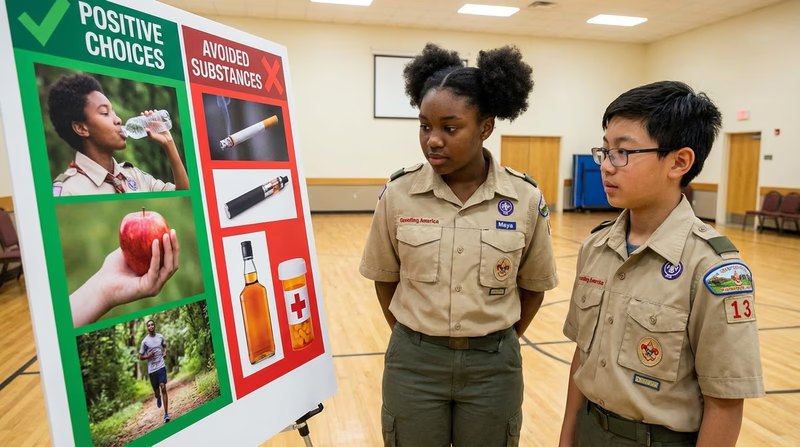
How Avoiding Substances Affects Your Risk Factors
Every substance you avoid reduces your risk of serious health problems — both now and decades from now:
| Substance Avoided | Risk Reduced |
|---|---|
| Tobacco/nicotine | Lung cancer, heart disease, stroke, chronic lung disease, addiction |
| Alcohol | Liver disease, brain damage, accidents, addiction, impaired development |
| Illegal drugs | Addiction, overdose, brain damage, legal consequences |
| Steroids | Heart failure, liver damage, hormonal problems, stunted growth |
Peer Pressure and How to Handle It
Knowing the facts is important, but the hardest part is often saying “no” when everyone around you seems to be saying “yes.” Here are strategies that work:
- Have a ready response. Practice a simple, confident “No thanks, I’m good.” You do not owe anyone an explanation.
- Choose your crew wisely. Surround yourself with people who share your values. The friends who pressure you to do things you are uncomfortable with are not your best friends.
- Leave the situation. If the pressure is intense, it is always okay to leave. Text a parent or trusted adult to pick you up. No party or gathering is worth your health.
- Know your “why.” When you have a strong reason — like your fitness goals, your Scout values, or your future plans — saying no gets easier.
Explore More
🎬 Video: Substance Use and Abuse — https://youtu.be/6fmhLcYSn-Y?si=rRPr6HRcv5dSrVgG
Req 3c — Vaccinations
Vaccines are one of the most powerful tools in the history of medicine. They have saved hundreds of millions of lives and eliminated or dramatically reduced diseases that once killed or disabled huge numbers of people — including children. Understanding how vaccines work and which ones you need is an important part of personal fitness.
How Vaccines Work
Your immune system is your body’s defense against germs — bacteria and viruses that cause disease. When you get sick, your immune system learns to recognize the specific germ and fight it. After you recover, your body “remembers” that germ and can fight it off much faster if it shows up again.
A vaccine teaches your immune system to recognize a specific germ without making you sick. It introduces a harmless piece of the germ (or a weakened version of it) so your body can build defenses in advance. If you are ever exposed to the real disease, your immune system is ready to fight it off before it can make you seriously ill.
Common Diseases Prevented by Vaccines
Here are some of the diseases that vaccines protect you against:
- Tetanus — caused by bacteria found in soil, dust, and animal waste. It causes severe muscle stiffness and spasms. Particularly relevant for Scouts who spend time outdoors.
- Diphtheria — a bacterial infection that can cause a thick coating in the throat, making it hard to breathe.
- Pertussis (whooping cough) — causes violent, uncontrollable coughing that can last for weeks and is especially dangerous for infants.
- Measles — a highly contagious virus that causes fever, rash, and can lead to serious complications including brain inflammation.
- Mumps — causes swelling of the salivary glands and can lead to deafness and other complications.
- Rubella (German measles) — usually mild, but extremely dangerous for unborn babies if a pregnant woman is infected.
- Polio — a virus that can cause permanent paralysis. Before the vaccine, polio paralyzed tens of thousands of children every year in the United States.
- Meningococcal disease — bacterial meningitis that can cause brain damage and death within hours. The vaccine is especially important for teens.
- HPV (Human Papillomavirus) — the most common sexually transmitted infection, which can cause several types of cancer. The vaccine is recommended for preteens.
- Influenza (flu) — a viral infection that causes fever, body aches, and respiratory symptoms. The flu vaccine is updated annually.

Your Vaccination Schedule
The CDC publishes a recommended immunization schedule for children and teens. By the time you are working on this merit badge, you have likely already received most of your childhood vaccines. However, there are several that are specifically recommended for preteens and teens:
Recommended Teen Vaccines
Talk to your healthcare provider about these- Tdap booster: Protects against tetanus, diphtheria, and pertussis. Usually given at age 11–12.
- Meningococcal vaccine: First dose at 11–12, booster at 16. Protects against bacterial meningitis.
- HPV vaccine: Usually given at 11–12. Prevents several types of cancer later in life.
- Annual flu vaccine: Recommended every year for everyone 6 months and older.
- COVID-19 vaccine: Recommended based on current CDC guidance.
Why Vaccination Matters for Fitness
Being vaccinated is a form of preventive health care — just like exercising and eating well. Vaccines protect you from diseases that could sideline you for days, weeks, or even permanently. For a Scout who is about to begin a 12-week fitness program, getting sick with a preventable disease could derail your entire plan.
Vaccines also protect the people around you. Some people — very young children, elderly adults, and people with weakened immune systems — cannot be vaccinated. When you are vaccinated, you help create a shield of protection around those vulnerable people. This concept is called community immunity (sometimes called “herd immunity”).
Explore More
🎬 Video: How Do Vaccines Work? — https://youtu.be/rb7TVW77ZCs
Req 3d — Nutrition
Food is fuel. Everything your body does — from pumping blood to solving math problems to running a mile — requires energy, and that energy comes from what you eat. Good nutrition is not a separate topic from fitness; it is the foundation that makes all other fitness possible.
How Nutrition Connects to Each Component
Cardiorespiratory fitness and nutrition. Your heart and lungs need the right fuel to perform. Complex carbohydrates (whole grains, fruits, vegetables) provide steady energy for aerobic activities. Without enough fuel, your endurance drops and your workouts suffer. Hydration is equally critical — even mild dehydration reduces your cardiovascular performance.
Muscular strength and endurance. Muscles are built and repaired with protein. After a workout, your muscles need protein (from sources like chicken, fish, beans, eggs, nuts, or dairy) to recover and grow stronger. Without adequate protein, you will not see the strength gains you are working toward.
Flexibility and nutrition. Proper hydration keeps your muscles and connective tissues supple. Nutrients like vitamin C (found in citrus fruits and bell peppers) support collagen production, which keeps your tendons and ligaments healthy and flexible.
Body composition. This is where nutrition has its most direct impact. Your body composition is shaped by the balance between what you eat and how much energy you burn. A diet heavy in processed foods, sugary drinks, and fast food contributes to excess body fat, while a balanced diet supports lean muscle growth.
Mental and emotional fitness. Your brain consumes about 20% of your daily calories. It needs glucose from carbohydrates to function, omega-3 fatty acids (from fish, walnuts, and flaxseed) for brain health, and a steady supply of vitamins and minerals to regulate mood. Studies show that a poor diet is linked to higher rates of depression and anxiety.
What a Balanced Diet Looks Like
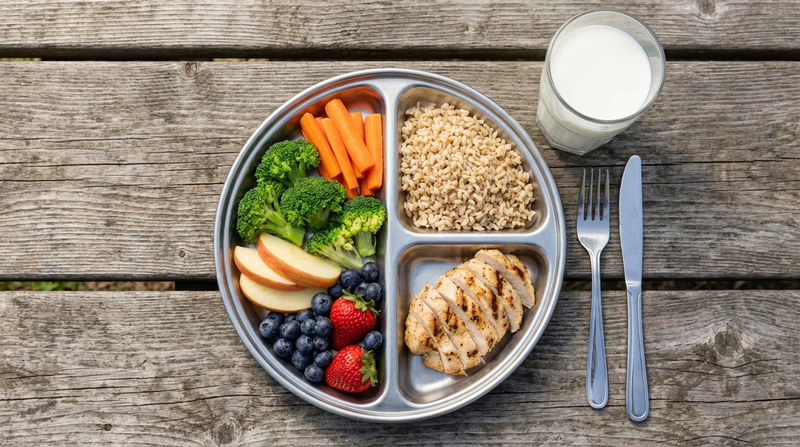
The USDA’s MyPlate model is a simple, visual guide to balanced eating. It divides your plate into five food groups:
- Fruits — Whole fruits are better than juice. Aim for variety and color.
- Vegetables — The more, the better. Dark greens, red and orange vegetables, beans, and peas are especially nutritious.
- Grains — Make at least half your grains whole grains (whole wheat bread, brown rice, oatmeal).
- Protein — Vary your sources: lean meats, poultry, fish, beans, peas, nuts, seeds, and eggs.
- Dairy — Milk, yogurt, and cheese provide calcium for strong bones. Choose low-fat options when possible.
Common Nutrition Mistakes
Even Scouts with good intentions can fall into these traps:
- Skipping breakfast. Your body has been fasting all night. Breakfast restarts your metabolism and gives your brain the fuel it needs to focus at school. Even something simple — a banana with peanut butter, or a bowl of oatmeal — makes a difference.
- Drinking your calories. Soda, energy drinks, sports drinks, and sweetened coffee drinks are loaded with sugar and provide almost no nutritional value. Water is your best hydration source for most activities.
- Relying on processed foods. Chips, fast food, and packaged snacks are convenient but often high in sodium, sugar, and unhealthy fats. They fill you up without giving your body what it actually needs.
- Not eating enough. Active teens need significantly more calories than sedentary ones. If you are exercising regularly and feel constantly tired, you may not be eating enough to fuel your activity level.
Explore More
🎬 Video: How the Food You Eat Affects Your Brain — https://youtu.be/xyQY8a-ng6g
Req 3e — Healthy Weight
“Healthy weight” is one of those terms that sounds simple but is actually more nuanced than most people think. It is not a single number on a scale. A healthy weight depends on your age, height, body type, muscle mass, and stage of development. What is healthy for you may be very different from what is healthy for your friend — and that is completely normal.
What Healthy Weight Really Means
A healthy weight is a range — not a single number — where your body functions well. At a healthy weight, you have enough energy for daily activities, your organs are well-supported, and your risk of weight-related health problems is low.
For teens, healthy weight is especially tricky to pin down because your body is still growing. You may gain weight as you grow taller, develop more muscle, or go through puberty. These are natural and healthy changes.
Tools for Understanding Your Weight
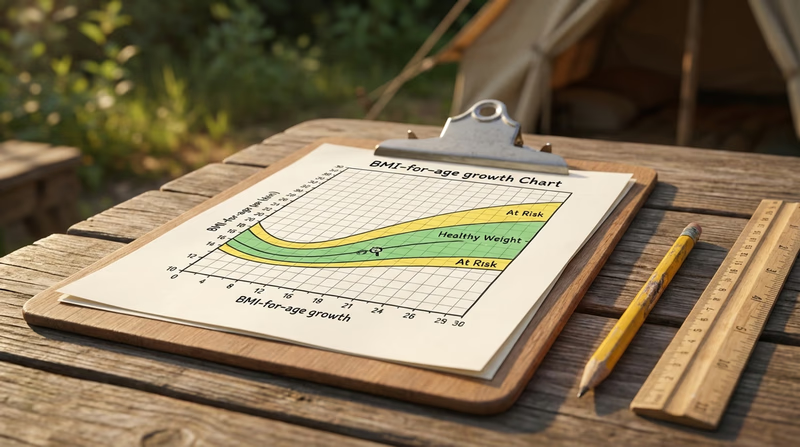
Body Mass Index (BMI) is the most commonly used screening tool. It uses your height and weight to calculate a number that falls into categories (underweight, healthy weight, overweight, or obese). For children and teens, BMI is plotted on a growth chart that accounts for your age and sex, giving you a BMI-for-age percentile.
Important limitations of BMI:
- It does not distinguish between muscle and fat. A very muscular person can have a high BMI and be perfectly healthy.
- It does not account for body type. Some people are naturally broader or more slender.
- It does not measure fitness. A person with a “healthy” BMI can still be out of shape.
Your healthcare provider uses BMI along with other factors — your medical history, physical exam, diet, activity level, and family history — to determine if your weight is healthy for you.
Maintaining a Healthy Weight
Maintaining a healthy weight is not about dieting or restricting food. It is about building sustainable habits that keep your body in balance:
Healthy Weight Habits
Daily choices that add up over time- Stay active: Regular physical activity — at least 60 minutes a day — is the most effective way to maintain a healthy weight.
- Eat balanced meals: Follow the MyPlate guidelines you learned about in the nutrition requirement.
- Drink water: Replace sugary drinks with water. This single change can make a significant difference.
- Watch portion sizes: Serve yourself reasonable portions and eat slowly enough to notice when you are full.
- Limit screen time: Extended sitting — whether gaming, watching videos, or scrolling — reduces your daily calorie burn and is often paired with mindless snacking.
- Get enough sleep: Sleep deprivation increases hunger hormones and cravings for high-calorie foods. More on this in the next requirement.
A Word About Body Image
As a teenager, it is normal to have complicated feelings about your body. You are surrounded by images — on social media, in movies, in advertising — that show unrealistic body standards. Many of those images are edited, filtered, or achieved through unhealthy means.
A healthy body comes in many shapes and sizes. The goal of personal fitness is not to look like someone else — it is to become the healthiest, strongest, most capable version of yourself.
Explore More
CDC — BMI Calculator for Children and Teens Calculate your BMI-for-age percentile using the CDC's official tool. Link: CDC — BMI Calculator for Children and Teens — https://www.cdc.gov/bmi/child-teen-calculator/index.html🎬 Video: Your Body Composition — https://youtu.be/Yk3UkkJk474?si=MIO8KBdqsszMGPRo
Req 3f — Sleep
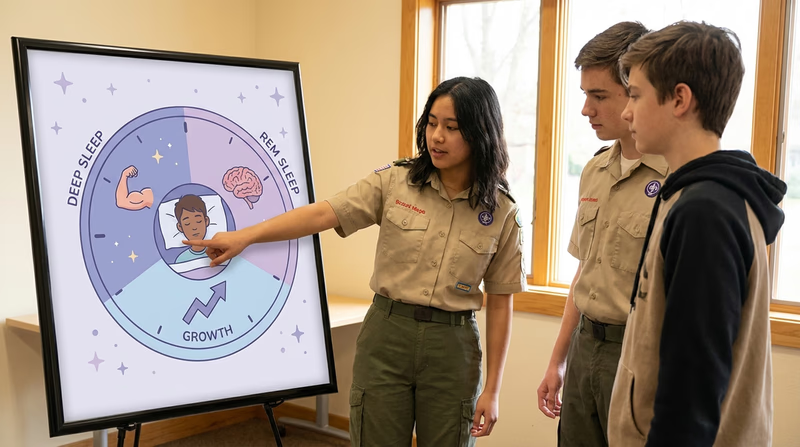
Sleep is the hidden superpower of personal fitness. While you are sleeping, your body is doing some of its most important work — repairing muscles, consolidating memories, regulating hormones, and recharging your brain. Cutting your sleep short is like trying to charge your phone to 30% and expecting it to last all day.
How Much Sleep Do You Need?
The American Academy of Sleep Medicine recommends that teenagers (ages 13–18) get 8 to 10 hours of sleep per night. Not 6. Not 7. Eight to ten.
Most teens do not come close. Studies show that more than 70% of high school students get less than 8 hours on school nights. The result? A generation of chronically sleep-deprived young people who struggle with focus, mood, and physical performance.
Why Sleep Matters for Every Dimension of Fitness
Physical fitness. Sleep is when your muscles repair and rebuild after exercise. Without adequate sleep, you recover more slowly, perform worse, and are more likely to get injured. Studies show that athletes who get less than 8 hours of sleep are nearly twice as likely to get injured compared to those who sleep 8 or more hours.
Mental fitness. While you sleep, your brain processes and consolidates everything you learned during the day. Sleep-deprived students perform significantly worse on tests, have slower reaction times, and make more errors. Getting enough sleep before a test is more effective than staying up late to study.
Emotional fitness. Sleep deprivation makes you more irritable, more anxious, and less able to manage your emotions. If you have ever been short-tempered after a bad night of sleep, you have experienced this firsthand. Chronic sleep loss is strongly linked to depression and anxiety.
Body composition. Lack of sleep disrupts the hormones that control hunger. It increases ghrelin (the hormone that makes you feel hungry) and decreases leptin (the hormone that makes you feel full). The result: you eat more, crave junkier foods, and store more fat.
Building Better Sleep Habits
Good sleep does not happen by accident. It takes intention — just like a workout routine.
Sleep Hygiene Checklist
Habits that lead to better sleep- Set a consistent bedtime: Go to bed and wake up at the same time every day — even on weekends. Your body’s internal clock works best with a predictable schedule.
- Create a screen-free wind-down: Stop using phones, tablets, and computers at least 30 minutes before bed. The blue light from screens suppresses melatonin, the hormone that tells your brain it is time to sleep.
- Keep your room dark, cool, and quiet: Darkness signals your brain to produce melatonin. A cool room (around 65°F / 18°C) promotes deeper sleep.
- Avoid caffeine after early afternoon: Caffeine stays in your system for hours. That afternoon energy drink can still be affecting you at midnight.
- Exercise regularly — but not right before bed: Physical activity improves sleep quality, but intense exercise within two hours of bedtime can make it harder to fall asleep.
- Skip late-night heavy meals: A big meal close to bedtime can cause discomfort and disrupt sleep. If you are hungry, have a light snack.
The Truth About “Catching Up”
Many teens sleep 5–6 hours on school nights and try to “catch up” by sleeping 12 hours on Saturday. While extra sleep on weekends is better than nothing, it does not fully undo the damage. Chronic sleep debt affects your body in ways that a single long sleep cannot fix. The only real solution is consistent, adequate sleep every night.
Explore More
🎬 Video: Tips for Getting Enough Sleep — https://youtu.be/qWb5ggc_-rs?si=hdgaGxZwyiEnzftt
Req 3g — Social & Family Time
Personal fitness is not just about what you do alone in a gym or on a trail. It is also about the people in your life and the relationships you build with them. Social fitness — the quality of your connections with family and friends — is a powerful contributor to your overall health and well-being.
Why Social Connection Matters for Fitness
Humans are social creatures. We evolved to live in groups, and our bodies and brains are wired to benefit from strong relationships. Research consistently shows that people with strong social connections:
- Have lower rates of anxiety and depression
- Have stronger immune systems
- Recover faster from illness and injury
- Live longer, healthier lives
- Are more likely to maintain healthy habits (including exercise and good nutrition)
On the flip side, loneliness and social isolation are serious health risks. Studies have found that chronic loneliness is as harmful to your health as smoking 15 cigarettes a day. For teens, social disconnection can lead to depression, poor academic performance, and risky behaviors.
Quality Time vs. Screen Time
There is a difference between being in the same room as someone and actually connecting with them. Quality time means being present — engaged, listening, participating — not just physically nearby while everyone stares at their own device.
Examples of quality time include:
- Playing a board game, card game, or sport together
- Cooking a meal as a family
- Going for a walk, hike, or bike ride with friends
- Having a real conversation at dinner (no phones at the table)
- Working on a project together — building something, cleaning up the yard, or volunteering
- Attending a sibling’s game, recital, or event to show support

Contributing to a Good Home Life
This requirement also asks you to think about how you contribute to your household. A “good home life” does not mean a perfect family — every family has challenges. It means a home where people feel safe, supported, and valued.
Here are ways you can actively contribute:
Contributing to Your Home
Small actions that make a big difference- Do your part with chores: Take responsibility for tasks without being asked. Washing dishes, taking out trash, cleaning your room, and helping with laundry are all contributions.
- Be present at meals: Sit down with your family when you can. Mealtime is one of the best opportunities for connection.
- Communicate respectfully: Disagree without being disrespectful. Listen before you respond. Say “please” and “thank you.”
- Support your siblings: Cheer them on, help with homework, or just be kind. Sibling relationships are some of the longest relationships you will have.
- Show appreciation: Tell the people in your home that you appreciate what they do. A simple “thanks for dinner” or “I appreciate you driving me” goes a long way.
- Manage your own responsibilities: Keeping up with schoolwork, managing your own schedule, and being where you say you will be reduces stress for everyone in the house.
Social Fitness and Scouting
Scouting is one of the best environments for building social fitness. Patrols, troop meetings, campouts, and service projects all give you practice in teamwork, communication, leadership, and conflict resolution. Every time you work with your patrol to plan a meal, navigate a trail, or complete a service project, you are exercising your social fitness muscles.
Explore More
🎬 Video: Spending Time With Family — https://youtu.be/d4_rFMo7lCo?si=OkbtRuJzRNoVysV1
Req 4 — Fitness Assessments
Before you can improve, you need to know where you stand. This requirement asks you to choose the specific tests you will use to measure your fitness — and you will take these same tests three more times throughout your 12-week program to track your progress.
Think of these assessments as your fitness “scorecard.” They give you hard numbers that tell the truth about your current condition, and they will show you exactly how much you have improved when you are done.
Fitness Assessment Record Resource: Fitness Assessment Record — /merit-badges/personal-fitness/guide/fitness-assessment-record/4a — Cardiorespiratory (Aerobic) Fitness
The one-mile walk/run is a classic test of aerobic fitness. It is simple, requires no equipment, and produces a clear, measurable result — your time.
How to do it:
- Find a measured course. A standard 400-meter track (four laps = one mile) is ideal. You can also use a pre-measured route or a GPS device.
- Warm up with 5 minutes of easy walking or jogging.
- When ready, start your timer and go. Walk or run (or a combination) as fast as you safely can.
- Record your time when you finish.
Alternative assessments: If running or walking is not possible due to a disability, work with your counselor to choose an alternative that provides a similar aerobic challenge. Examples might include a timed swim, a wheelchair-based distance challenge, or a cycling test.
4b — Muscular Strength and Endurance
You need two tests here — one for your core and one for your upper body.
Core test — choose one:
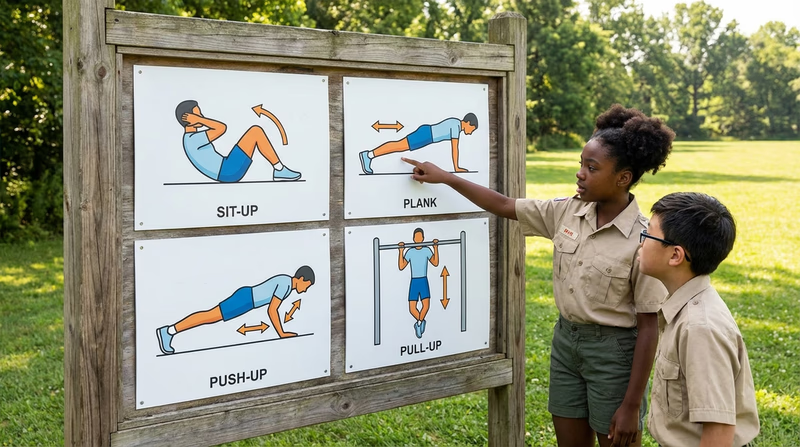
- Sit-ups in 60 seconds: Lie on your back with knees bent, feet flat on the floor, and arms crossed over your chest. A partner holds your feet. Count how many full sit-ups you complete in one minute.
- Plank hold: Get into a push-up position but rest on your forearms instead of your hands. Keep your body in a straight line from head to heels. Time how long you can hold the position with good form.
Upper body test — choose one:
- Push-ups in 60 seconds: Start in a plank position with hands shoulder-width apart. Lower your chest to the floor and push back up. Count how many you complete with good form in one minute.
- Pull-ups in 60 seconds: Hang from a bar with palms facing away from you, arms fully extended. Pull yourself up until your chin is above the bar. Count how many you complete in one minute.
4c — Flexibility
Back-saver sit-and-reach: Sit on the floor with one leg extended and the other bent with the foot flat against the inner thigh of the straight leg. Reach forward along the extended leg as far as you can. Measure the distance. Repeat with the other leg.
Back scratch test (shoulder flexibility): Reach one hand over your shoulder and down your back. Reach the other hand behind your back and up. Try to touch or overlap your fingers. Measure the distance between your fingertips (or how much they overlap).
Choosing Your Nutrition Assessment
In addition to physical tests, you will track your diet. The specific nutrition assessment is straightforward: a 3-day food and drink log that you will complete at three points during your program (before, during week 8, and during week 12).
Measures of Physical Fitness (fillable PDF) Resource: Measures of Physical Fitness (fillable PDF) — https://filestore.scouting.org/filestore/Merit_Badge_ReqandRes/Requirement%20Resources/Personal%20Fitness/measures_of_physical_fitness%20%28fillable%29.pdfExplore More
🎬 Video: Sit-Up — https://youtu.be/pCX65Mtc_Kk
🎬 Video: Plank — https://youtu.be/yeKv5oX_6GY
🎬 Video: Push-Up — https://youtu.be/YopP5mCAMSI
🎬 Video: Pull-Up — https://youtu.be/mohJShUxbdI
Req 5 — Baseline Testing
This is where theory meets reality. You have learned about the components of fitness, chosen your assessments, and now it is time to test yourself. Your pre-assessment results will serve as the starting line for your 12-week journey.
5a — Complete Your Assessments
Take each test you chose in Requirement 4 and record your results carefully. These numbers are your baseline — the “before” picture that you will compare against during and after your program.
Pre-Assessment Day Checklist
Set yourself up for accurate results- Get a good night’s sleep the night before.
- Eat a balanced meal 2–3 hours before testing.
- Drink plenty of water throughout the day.
- Warm up for 5–10 minutes with light movement before starting.
- Have a partner or your counselor present to verify your form and count your reps.
- Record everything: the date, the exact test, your result, and any notes about conditions.
5b — Identify Strengths and Weaknesses
Look at your results across all three areas — cardiorespiratory, muscular strength/endurance, and flexibility. Compare them to age-appropriate benchmarks (your counselor can help with this, or use the comparison PDFs from Scouting America).
Ask yourself:
- Which test felt easiest? That is likely your strongest area.
- Which test felt hardest or produced the lowest comparative result? That is likely your weakest area.
- Which area do you most want to improve? This becomes your target area for the 12-week program.
Your target area does not have to be your absolute weakest area — it should be the area where improvement will make the biggest difference for you. If you are already a strong runner but cannot touch your toes, flexibility might be your best target. If you struggle with endurance activities, cardio might be the focus.

5c — Three-Day Food Log
For three consecutive days (ideally two weekdays and one weekend day), write down everything you eat and drink. Include:
- What you ate or drank
- How much (estimate portion sizes)
- When you ate it
- Where you were (home, school, restaurant, car)
Be honest. This log is for you and your counselor — it only helps if it reflects what you actually eat, not what you wish you ate.
3-Day Food and Drink Log (fillable PDF) Resource: 3-Day Food and Drink Log (fillable PDF) — https://filestore.scouting.org/filestore/Merit_Badge_ReqandRes/Requirement%20Resources/Personal%20Fitness/3-Day%20Food%20and%20Drink%20Log%20%28fillable%29.pdf5d — Set Nutrition Goals
Review your food log and look for patterns. Then choose at least two specific, achievable goals for improvement. Good goals are:
- Specific: “Eat a piece of fruit with breakfast every day” is better than “eat healthier.”
- Measurable: “Drink 6 glasses of water per day” lets you track your progress.
- Achievable: Do not try to overhaul your entire diet overnight. Pick changes you can actually stick with.
Here are examples of nutrition goals based on common patterns:
Sample Nutrition Goals
Choose goals that address your specific patterns- Replace sugary drinks: Switch from soda or juice to water for at least two meals per day.
- Add vegetables: Include at least one serving of vegetables at lunch and dinner.
- Eat breakfast: Have a balanced breakfast every school day instead of skipping it.
- Reduce processed snacks: Replace chips or candy with whole foods (fruit, nuts, cheese) for afternoon snacks.
- Control portions: Use a plate instead of eating from the bag or box.
- Increase protein: Add a protein source (eggs, yogurt, nuts) to breakfast to improve satiety and energy.
Explore More
🎬 Video: Food Groups and MyPlate — https://youtu.be/L7QOUiQCb5E?si=aSUG980t0c5bQt0p
Req 6 — The 12-Week Program
This is the blueprint for your transformation. Your 12-week program is a structured plan that combines all the fitness knowledge you have gathered into a concrete, week-by-week routine. You will design it with your counselor to make sure it is challenging enough to produce results — but realistic enough that you can actually complete it.
The Six Required Elements
Your program must include all six of the following components. Let’s break each one down.
6a — Warm-Up
Every workout should begin with a warm-up. A good warm-up gradually increases your heart rate, loosens your joints, and prepares your muscles for the work ahead. It also reduces your risk of injury.
A warm-up should last 5–10 minutes and can include:
- Light jogging or brisk walking
- Jumping jacks
- Arm circles and leg swings
- Dynamic stretches (lunges with a twist, high knees, butt kicks)
6b — Cardiorespiratory (Aerobic) Element
This is the heart of your program (literally). Choose activities you enjoy — you are much more likely to stick with something you find fun.
Great aerobic activities include:
- Running or jogging
- Cycling (outdoor or stationary)
- Swimming
- Brisk walking or hiking
- Playing basketball, soccer, or other active sports
- Jump rope
- Dancing
Your aerobic sessions should last 15–30 minutes and happen at least three times per week. Start at a level you can sustain and gradually increase the duration or intensity as your fitness improves.
6c — Muscular Strength and Endurance Element
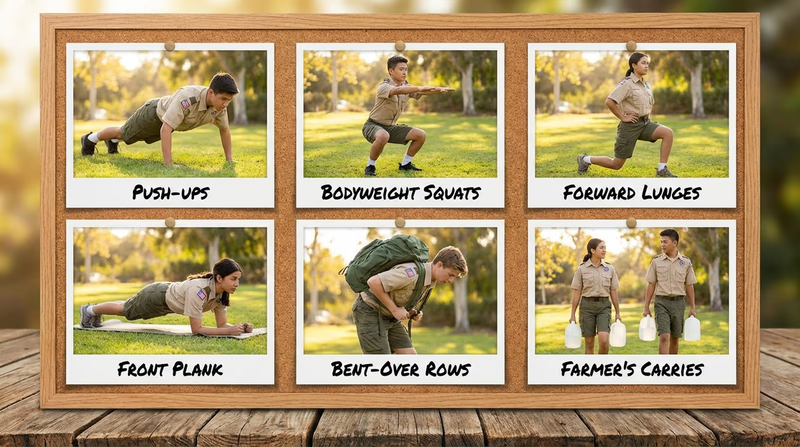
Strength training does not require a gym membership or expensive equipment. Many effective exercises use just your body weight.
Upper body exercises:
- Push-ups (regular, wide, narrow, incline)
- Pull-ups or chin-ups (use a bar at a park or playground)
- Rows (use a backpack loaded with books)
Core exercises:
- Planks (front and side)
- Sit-ups or crunches
- Bicycle crunches
- Dead bugs
Lower body exercises:
- Squats (bodyweight or loaded)
- Lunges (forward, reverse, walking)
- Calf raises
- Wall sits
6d — Flexibility Element
Flexibility work should happen after your muscles are warm — either during your cool-down or as a separate session. Hold each stretch for 15–30 seconds without bouncing.
Key stretches to include:
- Hamstring stretch: Sit on the floor with one leg extended. Reach toward your toes.
- Quad stretch: Stand on one leg and pull your other heel toward your glute.
- Back extension: Lie face-down and gently press up, arching your back.
- Trunk rotation: Sit with legs crossed and twist your upper body to each side.
- Shoulder stretch: Reach one arm across your chest and hold it with the other hand.
- Hip flexor stretch: Kneel on one knee in a lunge position and gently push your hips forward.
6e — Cool-Down
Your cool-down brings your heart rate back to normal gradually and helps prevent muscle cramps and soreness. It should last 5–10 minutes and include:
- Slow walking or easy pedaling
- Gentle, static stretching (this is the ideal time for your flexibility work)
- Deep breathing
6f — Nutrition Plan
Take the two nutrition goals you set in Requirement 5d and turn them into a week-by-week plan. Your nutrition plan should be specific enough that you know exactly what to do each week.
Example: If your goal is “drink more water,” your plan might be:
- Weeks 1–4: Carry a water bottle to school every day. Drink at least 4 glasses of water daily.
- Weeks 5–8: Increase to 6 glasses daily. Replace one sugary drink per day with water.
- Weeks 9–12: Maintain 6+ glasses daily. Sugary drinks are the exception, not the rule.
Putting It All Together
A typical week in your 12-week program might look like this:
| Day | Activity |
|---|---|
| Monday | Warm-up → 20 min run → Strength (upper body) → Cool-down/stretch |
| Tuesday | Rest or light activity (walk, easy bike ride) |
| Wednesday | Warm-up → 25 min cycling → Strength (core + legs) → Cool-down/stretch |
| Thursday | Rest or flexibility session |
| Friday | Warm-up → 20 min swim → Strength (full body circuit) → Cool-down/stretch |
| Saturday | Active recreation (hike, sports, play) |
| Sunday | Rest, stretching, family time |
Explore More
🎬 Video: Sample Full Workout — https://youtu.be/WpIFlh5whcs?si=khfLv9X7TNHJ3kqF
🎬 Video: Sample Short Workout — Core Strength — https://youtu.be/jYfda_ccTjc?si=iATnjRp8ZHz6uy6a
🎬 Video: Sample Short Workout — Variety — https://youtu.be/bhsu24pEgVY?si=_4LBRA_N3sWjx777
Req 7 — Execute & Track
This is it — the main event. You have learned the knowledge, chosen your assessments, taken your baseline, and designed your program. Now you do the work. Twelve weeks of consistent effort will change your body, sharpen your mind, and build habits that can last a lifetime.
7a — Keep Your Log
Your log is the proof of your commitment. Every workout, every meal, every rest day — write it down. A good log includes:
- Date and day of the week
- What you did: The specific exercises, duration, and intensity
- How you felt: Energy level, mood, any soreness or discomfort
- Nutrition notes: How well you followed your nutrition goals that day
What if life gets in the way? The requirement allows for interruptions of less than two weeks due to illness or unavoidable conflicts. If you get sick or have a family emergency, do not panic. Resume your program where you left off and add the missed days at the end. Just document what happened and when you resumed.

7b — Mid-Program and Final Assessments
You will take the same fitness tests at four points:
| When | Purpose |
|---|---|
| Before week 1 (Req 5a) | Baseline — your starting point |
| Week 4 | First check-in — are you making progress? |
| Week 8 | Second check-in — are you on track? |
| Within 2 weeks after week 12 | Final assessment — show your improvement |
What if you do not improve in every area? That is okay. The requirement says to “show improvement” — and most Scouts who follow their program consistently will see improvement in their target areas. If one area plateaus, discuss it with your counselor. They can help you adjust your training to break through.
7c — Follow-Up Food Logs
You will repeat the 3-day food log twice more — once during week 8 and once during week 12. Compare these logs to your original baseline log from Requirement 5c. Look for evidence that your two nutrition goals are working:
- Are you drinking more water?
- Are you eating more vegetables?
- Have you cut back on sugary drinks or processed snacks?
- Are you eating breakfast more consistently?
The goal is progress, not perfection. If your diet has genuinely improved compared to your baseline, you are on track.
7d — Reflect on Your Journey
After your final assessment, meet with your counselor to talk about the full 12-week experience. Come prepared to discuss:
- Results: What improved? By how much? What stayed the same?
- Insights: What did you learn about yourself? What surprised you?
- Challenges: What was the hardest part? How did you handle setbacks?
- Habits: Which habits from the program will you keep? Which ones are you likely to drop?
- Next steps: What fitness goals do you want to pursue now that the badge is complete?
Explore More
🎬 Video: Home Exercise Hacks — https://youtube.com/playlist?list=PLhh_lxc4bmz8TPeX-dOu-I2K3O2x3_weX&si=4issEYVe10iMDjtZ
🎬 Video: How to Make Your Own Exercise Equipment — https://youtu.be/IAmnLlwNloU
Req 8 — Future Career or Lifestyle
You have spent 12 weeks building your fitness and learning about your body. Now it is time to look ahead. This final requirement asks you to explore how personal fitness can shape your future — either through a career or through a lifelong hobby. Choose ONE of the two options below.
Option A — Explore Fitness Careers
The fitness and health industry is one of the fastest-growing sectors in the economy. If you enjoy helping people get healthier and stronger, there are many career paths to explore. Here are some to consider:
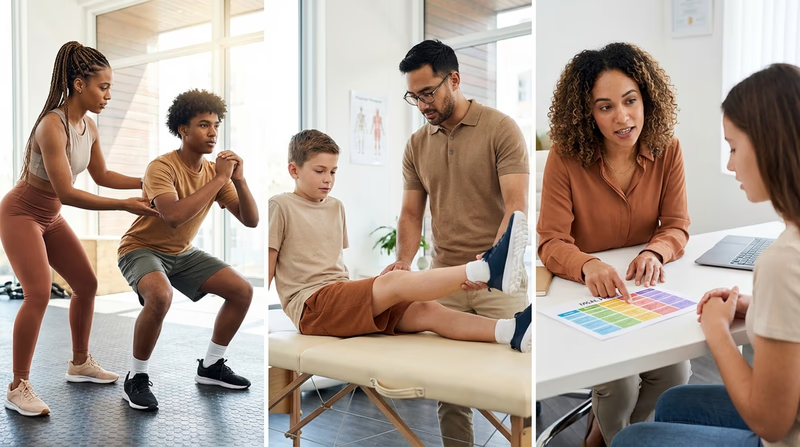
Personal trainer / Fitness coach. Personal trainers design exercise programs for clients and guide them through workouts. They work in gyms, studios, homes, or online. Certification programs (like ACE, NASM, or ACSM) are required, and many trainers have a degree in exercise science or kinesiology.
Physical therapist. Physical therapists help people recover from injuries, surgeries, and chronic conditions through targeted exercise and movement. This career requires a Doctor of Physical Therapy (DPT) degree — typically 7 years of college. It is a highly respected and well-compensated field.
Registered dietitian / Nutritionist. Dietitians help people make informed food choices to improve their health, manage diseases, and optimize performance. A bachelor’s degree in nutrition or dietetics plus supervised practice is required.
Athletic trainer. Athletic trainers work with athletes to prevent, diagnose, and treat injuries. They are found in schools, colleges, professional sports, clinics, and military settings. A master’s degree in athletic training is typically required.
Exercise physiologist. Exercise physiologists study how the body responds to physical activity. They design fitness programs for people with chronic diseases, work in cardiac rehabilitation, and conduct research. A bachelor’s or master’s degree in exercise science is common.
Sports medicine physician. These doctors specialize in preventing and treating sports-related injuries. They complete medical school followed by a residency and fellowship. It is a long road, but the work is rewarding.
Recreation and fitness facility manager. These professionals manage gyms, community centers, parks, and sports facilities. They oversee staff, programming, and budgets. A degree in recreation management, sports management, or business is typical.
Option B — Explore Fitness as a Lifestyle
Not everyone will pursue a fitness career — but everyone benefits from making fitness part of their lifestyle. This option asks you to explore a specific activity that could become a lifelong source of health and enjoyment.
Think about what you enjoyed most during your 12-week program and explore how to take it further:
Running and road races. From local 5K fun runs to half-marathons and beyond, the running community is welcoming and well-organized. Entry fees range from free to $50+ for larger events. Running clubs are a great way to meet people and stay motivated.
Cycling. Road biking, mountain biking, or gravel riding can be a solo escape or a social activity. Bikes range from a few hundred to several thousand dollars, but a solid entry-level bike is affordable. Many communities have cycling clubs and organized rides.
Martial arts. Karate, taekwondo, judo, jiu-jitsu, and other martial arts build strength, flexibility, discipline, and confidence. Monthly gym fees typically range from $50–$150. Many studios offer youth and family discounts.
Rock climbing. Indoor climbing gyms have made this sport accessible to everyone. Climbing builds incredible upper body and core strength while also challenging your problem-solving skills. Memberships typically cost $40–$80/month.
Swimming. One of the best full-body, low-impact activities available. Community pools, YMCA facilities, and swim clubs make it accessible year-round. Competitive and recreational options exist at every level.
Yoga. Yoga combines flexibility, strength, balance, and mindfulness in a single practice. Classes are available at studios, community centers, and online. It is adaptable to any fitness level and can be practiced for a lifetime.
Adaptive sports and fitness. For Scouts with physical disabilities, there is a growing world of adaptive sports — wheelchair basketball, sit-skiing, handcycling, adaptive yoga, and more. Organizations like the Adaptive Sports Center and Move United connect people with resources and opportunities.
Explore More
🎬 Video: Careers Related to Personal Fitness — https://youtu.be/9a9XU7D0DIo?si=BTdpODHe1FhUa-Sq
🎬 Video: Seated Wheelchair Workout — https://youtu.be/d6x-A0CmI-I?si=BlRXUSzEPxx22VYv
🎬 Video: Seated Cardio Workout — https://youtu.be/hHiSWTU9xNk?si=6MgZZKv2n3RN-fVl
Extended Learning
A. Introduction
Congratulations — you have earned the Personal Fitness merit badge! You have tested yourself, built a plan, followed through for 12 weeks, and come out stronger on the other side. But earning the badge is not the finish line. The knowledge and habits you have built are meant to last a lifetime. Here are some ways to keep growing.
B. Deep Dive: Building a Year-Round Fitness Routine
Your 12-week program was a structured introduction to regular exercise. The next step is turning that structure into a sustainable year-round habit. Here is how to make fitness a permanent part of your life.
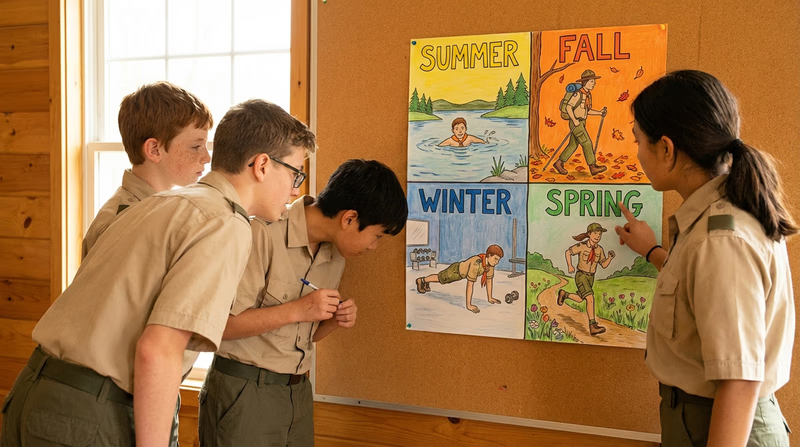
Periodization is the practice of varying your training throughout the year to avoid burnout and continue making progress. Athletes and coaches break the year into phases:
- Base phase (4–8 weeks): Build a foundation of aerobic fitness and general strength at moderate intensity.
- Build phase (4–6 weeks): Increase intensity and volume. Push harder and train more specifically for your goals.
- Peak phase (2–4 weeks): Train at your highest intensity. This is when you perform your best.
- Recovery phase (1–2 weeks): Reduce intensity and volume significantly. Let your body rest, heal, and adapt.
You do not need a coach to use periodization. Simply alternate between harder and easier weeks, and take a planned “easy week” every 4–6 weeks. Your body will thank you.
C. Deep Dive: Nutrition for Performance
Now that you understand the basics of balanced eating, here are some next-level nutrition concepts for the active Scout:
Pre-workout nutrition. Eat a small meal or snack 1–2 hours before exercise. Focus on easily digestible carbohydrates with a little protein. Examples: a banana with peanut butter, a granola bar, or toast with honey.
Post-workout nutrition. Within 30–60 minutes after exercise, eat a combination of protein and carbohydrates to help your muscles recover. Examples: chocolate milk (surprisingly effective), a turkey sandwich, or yogurt with fruit.
Hydration strategies. For workouts under an hour, water is all you need. For longer sessions (90+ minutes), especially in heat, a sports drink can help replace electrolytes lost through sweat. Learn to monitor your hydration by checking the color of your urine — pale yellow means well-hydrated, dark yellow means you need more water.
D. Deep Dive: Mental Health and Exercise
The connection between exercise and mental health is one of the most exciting areas of modern science. Regular physical activity has been shown to:
- Reduce symptoms of depression and anxiety as effectively as some medications
- Improve sleep quality
- Boost self-esteem and body image
- Enhance cognitive function and academic performance
- Build resilience against stress
If you ever feel overwhelmed, anxious, or down, one of the most immediate things you can do is move your body. A 20-minute walk, a set of push-ups, or a bike ride around the block can shift your brain chemistry in a matter of minutes.
This does not mean exercise replaces professional help. If you are struggling with your mental health, talk to a trusted adult and seek support from a counselor or therapist. But exercise is a powerful complement to any mental health strategy.
E. Real-World Experiences
Ready to take your fitness beyond the backyard? These events and programs offer challenge, community, and adventure.
Scouting High Adventure Bases
Local 5K / Fun Run Events
YMCA Youth Fitness Programs
Spartan Race / Obstacle Course Racing
Community Sports Leagues
F. Organizations
These organizations support youth fitness, health education, and active lifestyles.
Funds research and promotes cardiovascular health through education, advocacy, and community programs.
Organization: American Heart Association — https://www.heart.org/
Promotes physical activity, fitness, sports participation, and good nutrition for all Americans.
Organization: President's Council on Sports, Fitness & Nutrition — https://odphp.health.gov/our-work/nutrition-physical-activity/presidents-council
Community-based organization offering youth fitness programs, swimming, sports, and leadership development.
Organization: YMCA of the USA — https://www.ymca.org/
Advances parks, recreation, and conservation for the health and well-being of all people.
Organization: National Recreation and Park Association — https://www.nrpa.org/
Provides adaptive sports and recreation opportunities for people with disabilities across the country.
Organization: Move United — https://www.moveunitedsport.org/
The world’s largest organization of food and nutrition professionals, offering resources for healthy eating.
Organization: Academy of Nutrition and Dietetics — https://www.eatright.org/