Req 1e — Scout Oath and Law
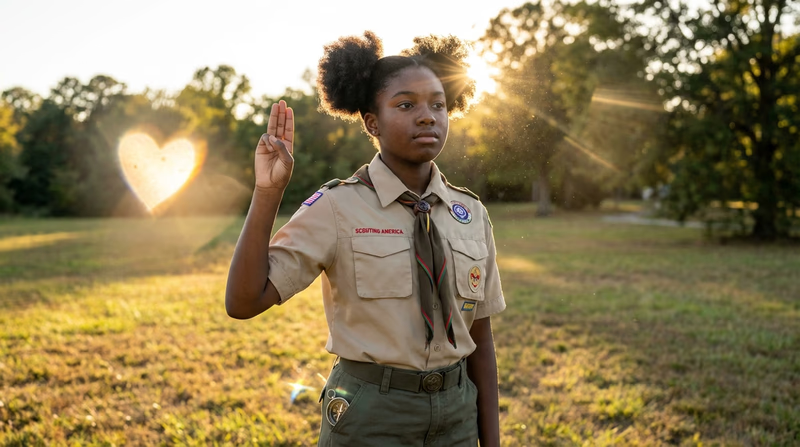
The Scout Oath and Scout Law are not just words you recite at meetings. They are a framework for living — and personal fitness connects to them in ways you might not have considered. Let’s break down the connections.
The Scout Oath
On my honor I will do my best to do my duty to God and my country and to obey the Scout Law; to help other people at all times; to keep myself physically strong, mentally awake, and morally straight.
Look at that last line. The Scout Oath directly calls out three dimensions of personal fitness:
Physically strong — This is your commitment to take care of your body. Eat well, exercise, get enough sleep, and avoid substances that harm you. A Scout who is physically strong can do more — carry heavier packs, hike longer trails, help in emergencies, and serve others without burning out.
Mentally awake — This means keeping your mind sharp and engaged. A mentally awake Scout pays attention, thinks critically, and keeps learning. Mental fitness helps you make good decisions on the trail, in school, and in life.
Morally straight — This connects to both emotional and spiritual fitness. A morally straight Scout knows right from wrong and has the courage to act on it. This requires emotional self-control (managing anger, resisting peer pressure) and spiritual grounding (having values that guide your choices).
The Scout Law and Fitness
Each point of the Scout Law connects to one or more aspects of personal fitness. Here are some of the strongest connections:
Scout Law & Fitness Connections
How the 12 points relate to being personally fit
- Trustworthy: Keeping commitments to your fitness program builds trust — with your counselor, your family, and yourself.
- Loyal: Staying loyal to your health goals, even when it is easier to quit.
- Helpful: Physical fitness gives you the strength and energy to help others when they need it most.
- Friendly: Social fitness means building genuine connections and treating everyone with warmth.
- Courteous: Emotional fitness helps you stay respectful and considerate, even when you are tired or frustrated.
- Kind: Compassion — a key part of spiritual fitness — drives acts of kindness toward others.
- Obedient: Following your fitness plan, listening to your counselor, and respecting safety rules all require discipline.
- Cheerful: Regular exercise boosts your mood naturally, making it easier to stay positive.
- Thrifty: Taking care of your health now saves enormous costs in medical bills and lost productivity later in life.
- Brave: It takes courage to push through a hard workout, to say no to harmful substances, and to ask for help when you are struggling emotionally.
- Clean: A clean body, clean habits, and a clean mind are all part of personal fitness.
- Reverent: Spiritual fitness — duty to God, respect for others’ beliefs, and a sense of gratitude — is the foundation of reverence.
Putting It All Together
When your counselor asks you to discuss how fitness relates to the Scout Oath and Law, they are looking for you to make genuine connections — not just recite definitions. Think about your own experience:
- How has being physically active helped you be a better Scout?
- When has mental toughness helped you keep a promise?
- How does emotional fitness help you be a better patrol member or leader?
- How do your values guide your choices about health and fitness?
The Big Picture
The Scout Oath and Law describe the kind of person Scouting is designed to help you become. Personal fitness is the engine that powers that transformation. When you are physically strong, you can serve. When you are mentally awake, you can lead. When you are emotionally grounded, you can connect. When you are spiritually fit, you can inspire.
This merit badge is not just about passing a fitness test. It is about becoming the kind of person the Scout Oath and Law describe.