Req 3e — Healthy Weight
“Healthy weight” is one of those terms that sounds simple but is actually more nuanced than most people think. It is not a single number on a scale. A healthy weight depends on your age, height, body type, muscle mass, and stage of development. What is healthy for you may be very different from what is healthy for your friend — and that is completely normal.
What Healthy Weight Really Means
A healthy weight is a range — not a single number — where your body functions well. At a healthy weight, you have enough energy for daily activities, your organs are well-supported, and your risk of weight-related health problems is low.
For teens, healthy weight is especially tricky to pin down because your body is still growing. You may gain weight as you grow taller, develop more muscle, or go through puberty. These are natural and healthy changes.
Tools for Understanding Your Weight
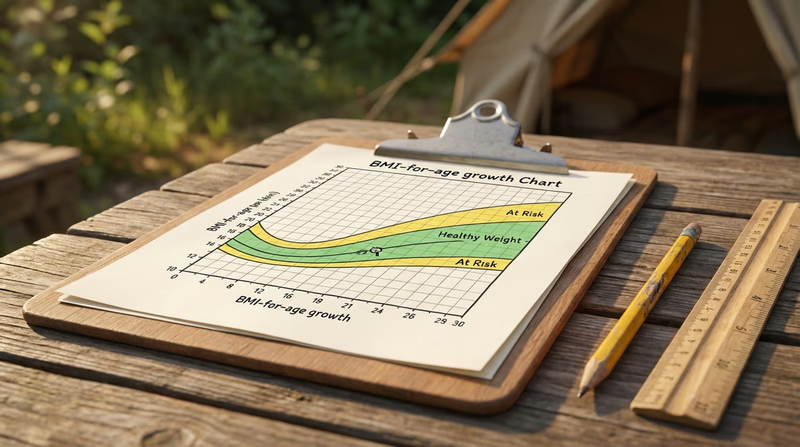
Body Mass Index (BMI) is the most commonly used screening tool. It uses your height and weight to calculate a number that falls into categories (underweight, healthy weight, overweight, or obese). For children and teens, BMI is plotted on a growth chart that accounts for your age and sex, giving you a BMI-for-age percentile.
Important limitations of BMI:
- It does not distinguish between muscle and fat. A very muscular person can have a high BMI and be perfectly healthy.
- It does not account for body type. Some people are naturally broader or more slender.
- It does not measure fitness. A person with a “healthy” BMI can still be out of shape.
Your healthcare provider uses BMI along with other factors — your medical history, physical exam, diet, activity level, and family history — to determine if your weight is healthy for you.
Maintaining a Healthy Weight
Maintaining a healthy weight is not about dieting or restricting food. It is about building sustainable habits that keep your body in balance:
Healthy Weight Habits
Daily choices that add up over time
- Stay active: Regular physical activity — at least 60 minutes a day — is the most effective way to maintain a healthy weight.
- Eat balanced meals: Follow the MyPlate guidelines you learned about in the nutrition requirement.
- Drink water: Replace sugary drinks with water. This single change can make a significant difference.
- Watch portion sizes: Serve yourself reasonable portions and eat slowly enough to notice when you are full.
- Limit screen time: Extended sitting — whether gaming, watching videos, or scrolling — reduces your daily calorie burn and is often paired with mindless snacking.
- Get enough sleep: Sleep deprivation increases hunger hormones and cravings for high-calorie foods. More on this in the next requirement.
A Word About Body Image
As a teenager, it is normal to have complicated feelings about your body. You are surrounded by images — on social media, in movies, in advertising — that show unrealistic body standards. Many of those images are edited, filtered, or achieved through unhealthy means.
A healthy body comes in many shapes and sizes. The goal of personal fitness is not to look like someone else — it is to become the healthiest, strongest, most capable version of yourself.