Req 3f — Sleep
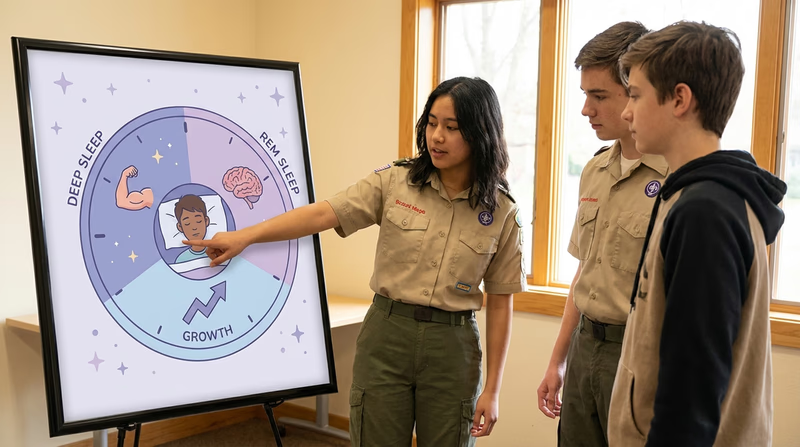
Sleep is the hidden superpower of personal fitness. While you are sleeping, your body is doing some of its most important work — repairing muscles, consolidating memories, regulating hormones, and recharging your brain. Cutting your sleep short is like trying to charge your phone to 30% and expecting it to last all day.
How Much Sleep Do You Need?
The American Academy of Sleep Medicine recommends that teenagers (ages 13–18) get 8 to 10 hours of sleep per night. Not 6. Not 7. Eight to ten.
Most teens do not come close. Studies show that more than 70% of high school students get less than 8 hours on school nights. The result? A generation of chronically sleep-deprived young people who struggle with focus, mood, and physical performance.
Why Sleep Matters for Every Dimension of Fitness
Physical fitness. Sleep is when your muscles repair and rebuild after exercise. Without adequate sleep, you recover more slowly, perform worse, and are more likely to get injured. Studies show that athletes who get less than 8 hours of sleep are nearly twice as likely to get injured compared to those who sleep 8 or more hours.
Mental fitness. While you sleep, your brain processes and consolidates everything you learned during the day. Sleep-deprived students perform significantly worse on tests, have slower reaction times, and make more errors. Getting enough sleep before a test is more effective than staying up late to study.
Emotional fitness. Sleep deprivation makes you more irritable, more anxious, and less able to manage your emotions. If you have ever been short-tempered after a bad night of sleep, you have experienced this firsthand. Chronic sleep loss is strongly linked to depression and anxiety.
Body composition. Lack of sleep disrupts the hormones that control hunger. It increases ghrelin (the hormone that makes you feel hungry) and decreases leptin (the hormone that makes you feel full). The result: you eat more, crave junkier foods, and store more fat.
Building Better Sleep Habits
Good sleep does not happen by accident. It takes intention — just like a workout routine.
Sleep Hygiene Checklist
Habits that lead to better sleep
- Set a consistent bedtime: Go to bed and wake up at the same time every day — even on weekends. Your body’s internal clock works best with a predictable schedule.
- Create a screen-free wind-down: Stop using phones, tablets, and computers at least 30 minutes before bed. The blue light from screens suppresses melatonin, the hormone that tells your brain it is time to sleep.
- Keep your room dark, cool, and quiet: Darkness signals your brain to produce melatonin. A cool room (around 65°F / 18°C) promotes deeper sleep.
- Avoid caffeine after early afternoon: Caffeine stays in your system for hours. That afternoon energy drink can still be affecting you at midnight.
- Exercise regularly — but not right before bed: Physical activity improves sleep quality, but intense exercise within two hours of bedtime can make it harder to fall asleep.
- Skip late-night heavy meals: A big meal close to bedtime can cause discomfort and disrupt sleep. If you are hungry, have a light snack.
The Truth About “Catching Up”
Many teens sleep 5–6 hours on school nights and try to “catch up” by sleeping 12 hours on Saturday. While extra sleep on weekends is better than nothing, it does not fully undo the damage. Chronic sleep debt affects your body in ways that a single long sleep cannot fix. The only real solution is consistent, adequate sleep every night.