Req 8 — Future Career or Lifestyle
You have spent 12 weeks building your fitness and learning about your body. Now it is time to look ahead. This final requirement asks you to explore how personal fitness can shape your future — either through a career or through a lifelong hobby. Choose ONE of the two options below.
Option A — Explore Fitness Careers
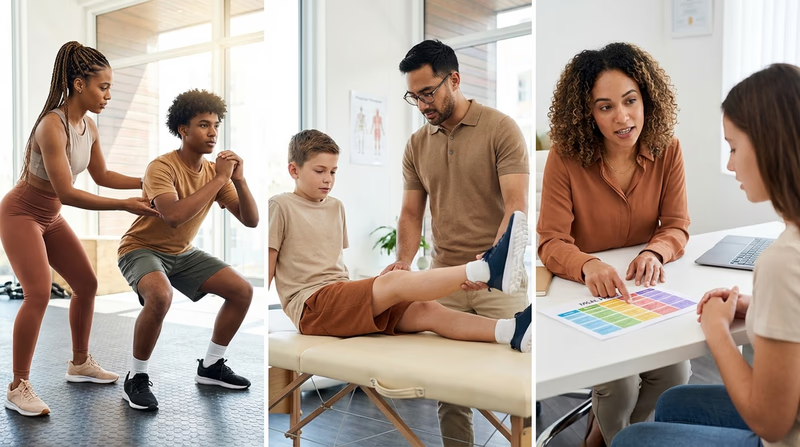
The fitness and health industry is one of the fastest-growing sectors in the economy. If you enjoy helping people get healthier and stronger, there are many career paths to explore. Here are some to consider:
Personal trainer / Fitness coach. Personal trainers design exercise programs for clients and guide them through workouts. They work in gyms, studios, homes, or online. Certification programs (like ACE, NASM, or ACSM) are required, and many trainers have a degree in exercise science or kinesiology.
Physical therapist. Physical therapists help people recover from injuries, surgeries, and chronic conditions through targeted exercise and movement. This career requires a Doctor of Physical Therapy (DPT) degree — typically 7 years of college. It is a highly respected and well-compensated field.
Registered dietitian / Nutritionist. Dietitians help people make informed food choices to improve their health, manage diseases, and optimize performance. A bachelor’s degree in nutrition or dietetics plus supervised practice is required.
Athletic trainer. Athletic trainers work with athletes to prevent, diagnose, and treat injuries. They are found in schools, colleges, professional sports, clinics, and military settings. A master’s degree in athletic training is typically required.
Exercise physiologist. Exercise physiologists study how the body responds to physical activity. They design fitness programs for people with chronic diseases, work in cardiac rehabilitation, and conduct research. A bachelor’s or master’s degree in exercise science is common.
Sports medicine physician. These doctors specialize in preventing and treating sports-related injuries. They complete medical school followed by a residency and fellowship. It is a long road, but the work is rewarding.
Recreation and fitness facility manager. These professionals manage gyms, community centers, parks, and sports facilities. They oversee staff, programming, and budgets. A degree in recreation management, sports management, or business is typical.
Option B — Explore Fitness as a Lifestyle
Not everyone will pursue a fitness career — but everyone benefits from making fitness part of their lifestyle. This option asks you to explore a specific activity that could become a lifelong source of health and enjoyment.
Think about what you enjoyed most during your 12-week program and explore how to take it further:
Running and road races. From local 5K fun runs to half-marathons and beyond, the running community is welcoming and well-organized. Entry fees range from free to $50+ for larger events. Running clubs are a great way to meet people and stay motivated.
Cycling. Road biking, mountain biking, or gravel riding can be a solo escape or a social activity. Bikes range from a few hundred to several thousand dollars, but a solid entry-level bike is affordable. Many communities have cycling clubs and organized rides.
Martial arts. Karate, taekwondo, judo, jiu-jitsu, and other martial arts build strength, flexibility, discipline, and confidence. Monthly gym fees typically range from $50–$150. Many studios offer youth and family discounts.
Rock climbing. Indoor climbing gyms have made this sport accessible to everyone. Climbing builds incredible upper body and core strength while also challenging your problem-solving skills. Memberships typically cost $40–$80/month.
Swimming. One of the best full-body, low-impact activities available. Community pools, YMCA facilities, and swim clubs make it accessible year-round. Competitive and recreational options exist at every level.
Yoga. Yoga combines flexibility, strength, balance, and mindfulness in a single practice. Classes are available at studios, community centers, and online. It is adaptable to any fitness level and can be practiced for a lifetime.
Adaptive sports and fitness. For Scouts with physical disabilities, there is a growing world of adaptive sports — wheelchair basketball, sit-skiing, handcycling, adaptive yoga, and more. Organizations like the Adaptive Sports Center and Move United connect people with resources and opportunities.