Req 1b — Creating a Savings Plan
Write a plan that tells how your family would save money for the purchase identified in requirement 1(a).
- Discuss the plan with your counselor.
- Discuss the plan with your family.
- Discuss how other family needs must be considered in this plan.
Building Your Savings Plan
A savings plan is a roadmap that tells you how to get from where you are now to where you want to be — with the money to buy that major purchase you identified in Requirement 1a. A good plan answers three questions: How much do you need? How long will it take? Where will the money come from?
Step 1: Set Your Target Amount
Start with the approximate cost of the item. If you are not sure of the exact price yet (you will research that more in Requirement 1c), use your best estimate. Do not forget to account for extras like sales tax, delivery fees, or accessories.
For example, if you are saving for a laptop that costs $800:
- Sales tax (about 7%): $56
- A protective case: $30
- Total target: $886
Step 2: Determine Your Timeline
How soon does your family need or want this item? A shorter timeline means saving more per week or month. A longer timeline gives you more flexibility but requires patience.
Step 3: Identify Where the Money Will Come From
This is the creative part. Where can your family find extra money each week or month? Here are common strategies:
- Reduce spending: Cut back on eating out, subscription services, or impulse buys
- Increase income: Extra chores, part-time work, selling items you no longer need
- Redirect savings: Temporarily pause saving for a less urgent goal
- Dedicated savings account: Set up an account specifically for this purchase so the money does not get mixed in with everyday spending
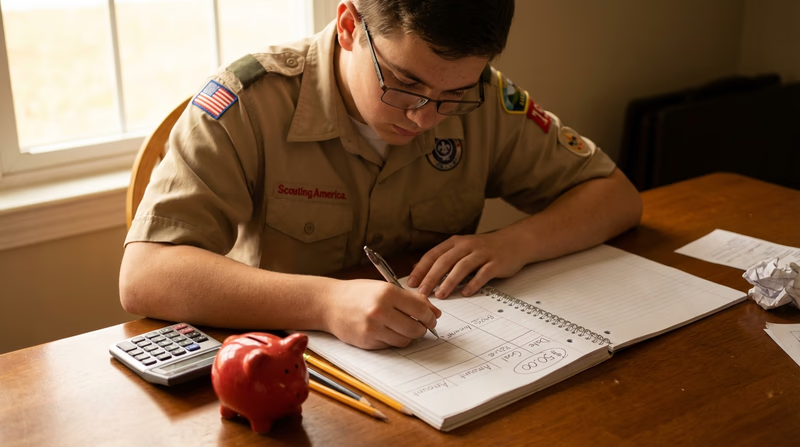
Step 4: Write It Down
Your written plan should include:
Savings Plan Components
Include each of these in your written plan
- Target purchase: What you are saving for and why
- Total amount needed: Including tax and extras
- Timeline: Start date and target date
- Weekly or monthly savings amount: How much you need to set aside
- Sources of savings: Where the money will come from
- Tracking method: How you will keep track of progress
Considering Other Family Needs
This is the most important part of your plan — and the part many Scouts overlook. Your family does not exist to save for one item. There are bills, groceries, medical expenses, and other obligations that come first.
When you discuss your plan with your family, ask questions like:
- “Are there any upcoming expenses that might affect our ability to save?”
- “Is there a better time of year to make this purchase?”
- “Would it make sense to save a little less each month and take longer to reach our goal?”
Having the Conversations
This requirement asks you to discuss the plan with both your counselor and your family. These are not just check-the-box conversations — they are opportunities to get feedback and improve your plan.
With your counselor, focus on whether the plan is realistic and well-structured. Your counselor can point out things you might have missed.
With your family, focus on whether the plan works for everyone. Your family knows their budget better than anyone and can help you adjust the timeline or savings amount.
MyMoney.gov — Saving & Investing The U.S. government's resource on saving strategies, setting financial goals, and building a savings habit.