Req 2d — Budget Review
Budget vs. Reality
This is the payoff. After 13 weeks of tracking, you now have two sets of numbers: what you planned to happen and what actually happened. Comparing them is where the real learning takes place.
Almost nobody’s budget matches reality perfectly. That is not a failure — it is completely normal. The goal is to understand why they differed and what you would change next time.
How to Compare
Go through your records week by week and look at three things:
- Income: Did you earn what you expected? More? Less?
- Expenses: Did you spend what you planned in each category?
- Savings: Did you save as much as you intended?
For each area, calculate the difference:
Actual amount - Budgeted amount = Variance
A positive variance in income means you earned more than expected. A positive variance in expenses means you spent more than planned (not great). A positive variance in savings means you saved more than planned (awesome).
Common Patterns You Might Discover
You underestimated “small” expenses. That $3 snack three times a week? That is $117 over 13 weeks. Small, frequent expenses are the most commonly underestimated category.
Irregular expenses threw you off. A birthday party gift, a school field trip fee, or replacing something that broke — these one-time costs are hard to predict.
Your income was less consistent than expected. Maybe your babysitting gig dried up for a few weeks, or holiday gifts came in a different month than you expected.
Some categories were spot-on. Your fixed expenses (like a phone bill or Scout dues) probably matched your budget closely. Fixed costs are predictable — that is why they are called fixed.
Discussing What You Would Do Differently
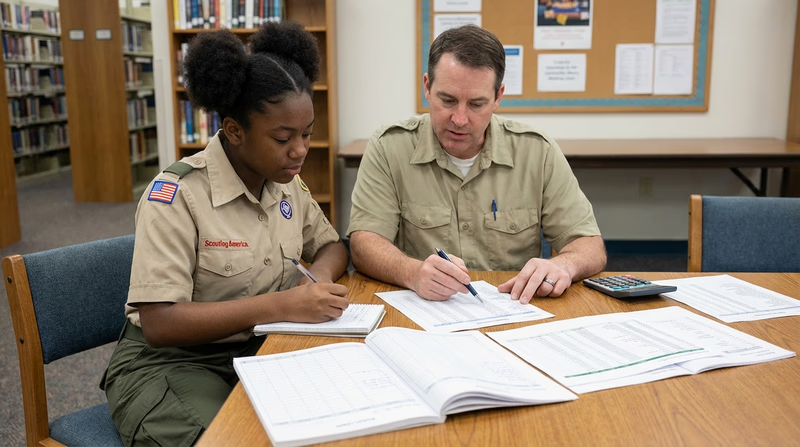
When you meet with your counselor, be ready to reflect honestly. Here are questions to think about:
Budget Review Reflection
Questions to prepare for your counselor discussion
- Which expense categories were most accurate? Why?
- Which categories were most off? What surprised you?
- Did any unexpected income or expenses arise? How did you handle them?
- Did you adjust your spending during the 13 weeks, or stick to the original plan?
- What would you change about your budget categories or estimates?
- Would you use a different tracking method next time?
- What did you learn about your own spending habits?
Lessons for Next Time
The whole point of this exercise is to get better at budgeting. Here are common improvements Scouts make:
- Add a “miscellaneous” category to absorb unpredictable small expenses
- Budget by category, not just total — knowing you spent $200 total is less useful than knowing you spent $80 on food and $60 on entertainment
- Review weekly, not just at the end — catching a spending spike in week 3 lets you adjust before week 13
- Be more realistic about income — budget based on what you consistently earn, not your best week