Req 7b — Ways to Borrow
Borrowing Options
Not all borrowing is the same. Different situations call for different types of loans, and each comes with its own terms, interest rates, and rules. Understanding your options helps you choose the right tool for the right job — and avoid costly mistakes.
Secured vs. Unsecured Loans
The biggest distinction in borrowing is whether the loan is secured or unsecured.
Secured loans are backed by something valuable you own (called collateral). If you cannot repay the loan, the lender can take the collateral. Because the lender has this safety net, secured loans usually have lower interest rates.
Unsecured loans have no collateral. The lender is trusting you to repay based on your promise and your credit history. Because this is riskier for the lender, unsecured loans typically charge higher interest rates.
Common Ways to Borrow
Mortgage: A loan used to buy a home. The home itself is the collateral. Mortgages typically have terms of 15 or 30 years and relatively low interest rates because the home secures the loan. This is usually the largest loan a person will ever take out.
Auto loan: A loan to buy a car. The car is the collateral. Terms are usually 3 to 7 years. As you learned in Requirement 7a, shorter terms mean less total interest.
Student loans: Money borrowed to pay for college or trade school. These come in two forms:
- Federal student loans — funded by the government, with fixed interest rates and flexible repayment options
- Private student loans — from banks or other lenders, often with variable rates and fewer protections
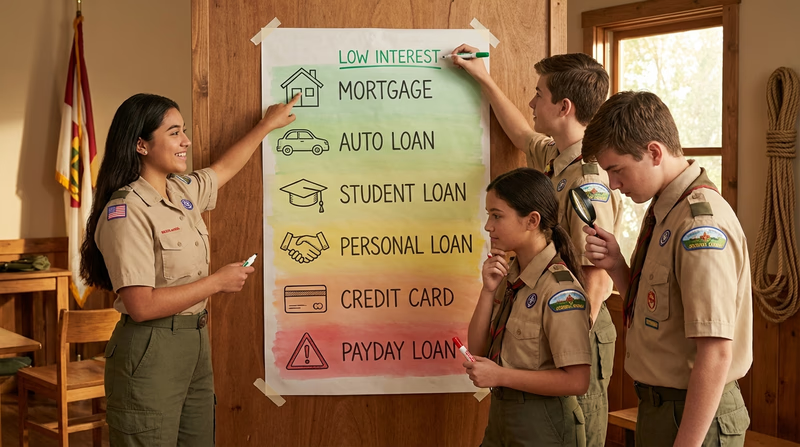
Personal loan: An unsecured loan from a bank or credit union for general purposes — home repairs, medical bills, or consolidating other debts. Interest rates are moderate (typically 6–15%), and terms range from 1 to 7 years.
Home equity loan / HELOC: If a homeowner has paid off part of their mortgage, they can borrow against the equity (the portion of the home they own outright). These are secured by the home and offer relatively low rates, but the borrower risks losing their home if they cannot repay.
Credit cards: Technically a form of borrowing, covered in detail in Requirement 7c. You borrow money every time you charge something and do not pay it off by the due date.
Sources You Should Avoid
Payday loans: Short-term, small-dollar loans that charge extremely high interest rates — often equivalent to 400% APR or more. They target people in financial emergencies and create cycles of debt that are very hard to escape.
Title loans: You hand over your car title as collateral for a short-term loan. If you cannot repay, you lose your car. Interest rates are extremely high.
Pawnshops: You leave a valuable item as collateral and receive a fraction of its worth in cash. If you do not repay within the deadline, the pawnshop keeps your item.
Borrowing from People You Know
Borrowing from family or friends might seem simpler than going to a bank, but it can be risky in a different way. Money disputes can damage relationships. If you ever borrow from someone you know, treat it like a formal loan: agree on the amount, timeline, and whether interest is involved — and put it in writing.
Consumer Financial Protection Bureau — Choosing a Loan Tools and guides from the CFPB to help you compare different types of loans and understand your rights as a borrower.