Req 7d — Credit Reports
Your Financial Reputation
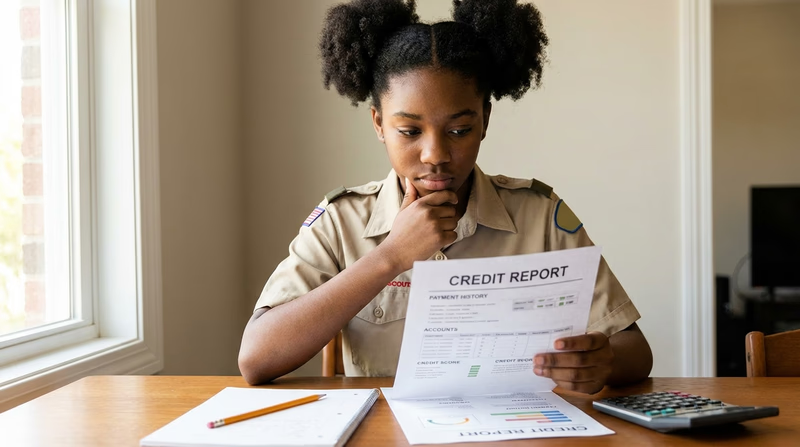
A credit report is a detailed record of your borrowing and repayment history. Think of it as a report card for how you handle money. Just as your school grades follow you from year to year, your credit report follows you throughout your adult life.
Three major companies — called credit bureaus — collect and maintain credit reports: Equifax, Experian, and TransUnion. Lenders, landlords, and even some employers check your credit report to decide whether they want to do business with you.
What Is on a Credit Report?
Your credit report includes:
- Personal information: Name, address, Social Security number, date of birth
- Credit accounts: Every credit card, loan, and mortgage you have ever had — when it was opened, the credit limit or loan amount, and your payment history
- Payment history: Whether you paid on time, were late, or missed payments entirely
- Public records: Bankruptcies, tax liens, or court judgments related to debt
- Inquiries: A record of who has looked at your credit report (lenders checking before approving a loan, for example)
Your Credit Score
Your credit report is used to calculate your credit score — a three-digit number (usually between 300 and 850) that summarizes your creditworthiness. The higher the score, the more trustworthy you appear to lenders.
Credit score ranges:
- 800–850: Exceptional
- 740–799: Very good
- 670–739: Good
- 580–669: Fair
- Below 580: Poor
What affects your credit score:
| Factor | Impact | What It Means |
|---|---|---|
| Payment history | 35% | Do you pay your bills on time? |
| Amounts owed | 30% | How much of your available credit are you using? |
| Length of credit history | 15% | How long have you had credit accounts? |
| New credit | 10% | Have you opened many new accounts recently? |
| Credit mix | 10% | Do you have different types of credit? |
How Personal Responsibility Affects Your Credit
Your daily financial decisions directly shape your credit report. Here is how responsible behavior helps — and irresponsible behavior hurts:
Builds good credit:
- Paying every bill on time, every month
- Keeping credit card balances low (under 30% of your limit)
- Only applying for credit when you truly need it
- Keeping old accounts open (length of history matters)
Damages your credit:
- Missing payments or paying late
- Maxing out credit cards
- Applying for many credit cards in a short period
- Defaulting on loans (failing to repay)
- Declaring bankruptcy
Why Your Credit Score Matters
Your credit score affects much more than just whether you can get a loan:
- Interest rates: A higher score means lower interest rates on mortgages, car loans, and credit cards. Over the life of a 30-year mortgage, the difference between a good score and a fair score can cost over $50,000.
- Renting an apartment: Most landlords check credit reports. A poor score can mean you are denied housing.
- Employment: Some employers check credit reports (with your permission) as part of the hiring process, especially for jobs involving money.
- Insurance premiums: In many states, your credit score affects your car and homeowner’s insurance rates.
- Cell phone plans: Carriers check credit to decide whether you qualify for a contract plan or need a prepaid plan.
Checking Your Own Credit Report
Federal law entitles everyone to one free credit report per year from each of the three bureaus. You can access them at AnnualCreditReport.com — the only truly free, government-authorized source.
AnnualCreditReport.com The only federally authorized source for free annual credit reports from all three major credit bureaus. Consumer Financial Protection Bureau — Credit Reports and Scores Comprehensive guide to understanding, checking, and disputing errors on your credit report.