Req 9 — Project Planning
Prepare a written project plan demonstrating the steps below, including the desired outcome. This is a project on paper, not a real-life project. Examples could include planning a camping trip, developing a community service project or a school or religious event, or creating an annual patrol plan with additional activities not already included in the troop annual plan. Discuss your completed project plan with your counselor.
a. Define the project. What is your goal?
b. Develop a timeline for your project that shows the steps you must take from beginning to completion.
c. Describe your project.
d. Develop a list of resources. Identify how these resources will help you achieve your goal.
e. Develop a budget for your project.
From Idea to Plan
This requirement pulls together many of the skills you have been learning throughout this badge — budgeting, time management, and organized thinking — and applies them to a real-world scenario. You will create a complete project plan on paper. Even though you are not required to carry out the project, your plan should be detailed enough that someone could pick it up and actually do it.
Choosing Your Project
The requirement gives you several examples. Pick something you genuinely care about — passion makes planning easier and your discussion with your counselor more interesting.
Project ideas:
- A weekend camping trip for your patrol
- A community service project (park cleanup, food drive, volunteering event)
- A school event (fundraiser, dance, field day)
- A religious or club event
- An annual patrol activity plan
- A personal goal (training for a race, building something, learning a new skill)
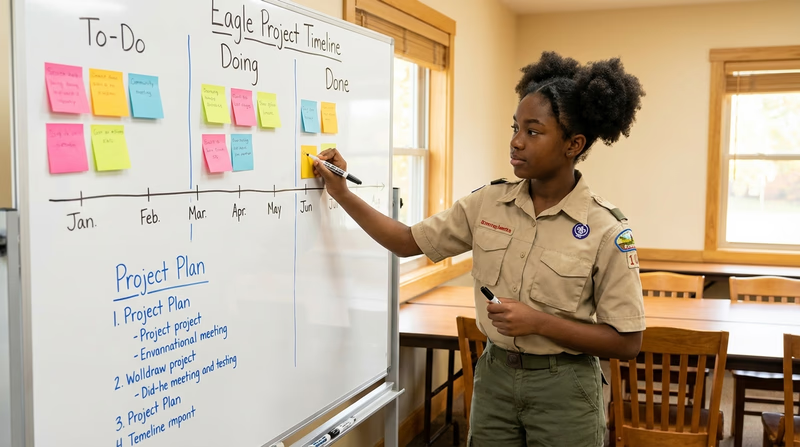
Step A: Define Your Project and Goal
Every good project starts with a clear goal. Your goal should answer the question: “When this project is complete, what will we have accomplished?”
Write your goal using the SMART framework:
- Specific: What exactly will happen?
- Measurable: How will you know it is done?
- Achievable: Can it realistically be accomplished?
- Relevant: Why does this project matter?
- Time-bound: When will it be completed?
Example: “Organize a one-day community park cleanup on April 15 with at least 10 volunteers, removing litter and planting 20 native plants in the garden bed.”
Step B: Develop a Timeline
A timeline breaks your project into individual steps and assigns each step a deadline. This is the backbone of your plan.
Start from your completion date and work backward:
Sample Timeline (Park Cleanup)
Working backward from event date
- 6 weeks before: Get permission from the park authority and set the date
- 5 weeks before: Create a volunteer sign-up sheet and start recruiting
- 4 weeks before: Order supplies (trash bags, gloves, plants)
- 3 weeks before: Confirm volunteers, assign roles and responsibilities
- 2 weeks before: Visit the site to finalize the plan and identify areas to focus on
- 1 week before: Send reminders to all volunteers, confirm supply delivery
- Day before: Prepare supply kits and review the schedule
- Event day: Execute the cleanup, take photos, thank volunteers
- 1 week after: Send thank-you notes and report results to the park authority
Step C: Describe Your Project
Write a clear description that someone who knows nothing about your project could read and understand. Include:
- What is happening (the activities)
- Who is involved (participants, leaders, helpers)
- Where it will take place
- When it will happen (date and time)
- Why it matters (the purpose and benefit)
- How it will be organized (logistics, transportation, communication)
Step D: List Your Resources
Resources are everything you need to make the project happen. Think broadly:
People:
- Who will help? What skills do they need?
- Do you need adult supervision?
- Who has expertise you can tap into?
Materials and equipment:
- What supplies do you need?
- What do you already have vs. what needs to be purchased or borrowed?
- Are there tools or equipment required?
Facilities:
- Where will the project take place?
- Do you need to reserve a space?
- Are there permits or permissions required?
Information:
- What do you need to research?
- Are there manuals, guides, or experts you should consult?
For each resource, explain how it contributes to achieving your goal. This shows your counselor that you have thought through not just what you need but why you need it.
Step E: Develop a Budget
Apply the budgeting skills you learned in Requirement 2 to your project. Your project budget should include:
Expected expenses:
- Materials and supplies (with specific prices from research)
- Transportation costs
- Food and beverages (if applicable)
- Printing or communication costs
- Permit or rental fees
- Contingency fund (10–15% of total for unexpected costs)
Expected income/funding:
- Personal or family contributions
- Troop or organization funds
- Fundraising
- Donations (in-kind or monetary)
- Sponsorships
Putting Your Plan Together
Your final written project plan should be organized and easy to follow. Consider using section headers that match the five parts of this requirement:
- Project Goal (Step A)
- Timeline (Step B)
- Project Description (Step C)
- Resource List (Step D)
- Budget (Step E)