Req 4b — Teach Tricks and Skills
Teaching a trick is really teaching communication. Your pet does not understand your goal at the start. It learns by repetition, timing, reward, and trust. When training goes well, you can almost see the moment when the animal connects the action to the reward.
Pick Behaviors That Fit Your Pet
The best tricks are safe, realistic, and suited to the species. A dog might learn sit, spin, fetch, or roll over. A cat might learn target touch, sit on cue, or jump to a stool. A bird might step onto a hand, turn around, or retrieve a small object. A rabbit might come when called or go through a short obstacle course.
The requirement says “tricks or special abilities,” which gives you room to think broadly. A special ability might include calmly entering a carrier, stationing on a mat, responding to a target, or tolerating a grooming routine without a struggle. Useful behaviors count too.
Use Short, Clear Training Sessions
Most pets learn better in short sessions than in one long drill. Five focused minutes can beat 25 distracted ones.
A basic training cycle looks like this:
Simple Training Cycle
Repeat this pattern many times
- Cue or setup: Ask for the behavior or create the situation where it can happen.
- Mark the success: Use a word, clicker, or immediate reward at the exact right moment.
- Reward: Give a treat, toy, praise, or another reward your pet values.
- Reset: Return to the starting position and try again.
- End on a win: Stop while your pet is still engaged and successful.
Timing matters. If the reward comes too late, your pet may connect it with the wrong action.
Break Big Tricks Into Tiny Steps
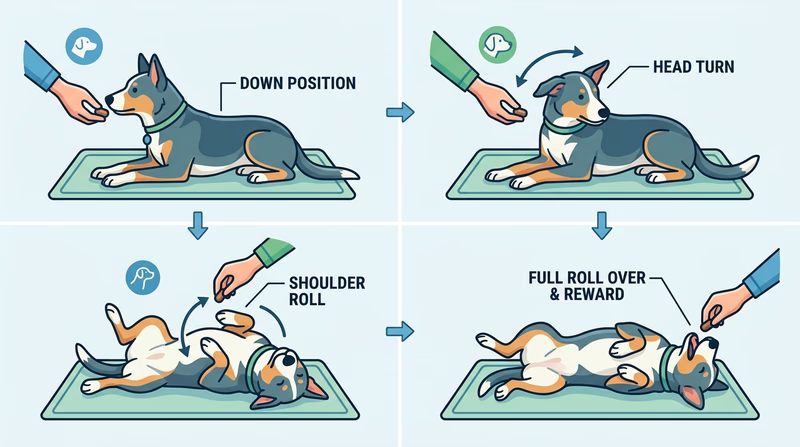
A finished trick may look smooth, but training usually happens in pieces. A roll over starts with lying down, then turning the head, then shifting the shoulders, then completing the movement. Fetch may begin with noticing a toy, then touching it, then picking it up, then carrying it back.
That is called shaping: rewarding closer and closer versions of the behavior you want.
Keep Records of Progress
Your counselor may want more than a final performance. Be ready to explain how you trained the behaviors and what changed over time.
Track things like:
- which tricks you chose
- what reward you used
- how long sessions lasted
- where your pet got stuck
- what helped the behavior improve
These notes connect well with the observation skills you already used in Req 1.
Learn From Demonstrations, Then Adapt
🎬 Video: Easiest Way to Teach Your Dog to Roll Over (video) — https://www.youtube.com/watch?v=IsJ0VdeOJcg
🎬 Video: Train Your Cat to Do Fun Tricks (video) — https://www.youtube.com/watch?v=oX7vgQTK9fo
🎬 Video: How I Trained My Cat to Fetch (video) — https://www.youtube.com/watch?v=zrDskEObBs8
These official videos show that different animals can learn in different ways. Watch how trainers reward small successes, repeat calmly, and avoid rushing. Use the ideas, but adjust them for your own pet’s size, attention span, motivation, and comfort level.
American Kennel Club — Trick Dog Examples of skill-building progressions and organized trick-training goals that can inspire safe, structured practice. Link: American Kennel Club — Trick Dog — https://www.akc.org/sports/trick-dog/What Success Looks Like
Your three tricks do not need to look like a movie performance. They should show clear effort, steady practice, and a real response from your pet. If the pet understands the behavior and can do it with reasonable consistency, you are on the right track.
A good counselor discussion includes the process, not just the result. Explain what worked, what did not, and how your pet taught you to be a better trainer.
Training can also point toward future jobs or hobbies. The next requirement asks whether you want to explore careers with pets or grow this interest into a healthy long-term pursuit.