 Getting Started
Introduction & Overview
Overview
A photograph can freeze one blink, one touchdown, one sunrise, or one expression that disappears a second later. Photography teaches you how to notice those moments on purpose instead of by accident. As you work on this badge, you will learn to use light, timing, composition, and editing to make pictures that communicate something real.
Photography is also one of the most practical creative skills a Scout can carry. You can use it to document adventures, tell stories for your troop, record service projects, explore nature, or simply pay closer attention to the world around you. A camera does not do the seeing for you. You do.
Then and Now
Then
Photography began as chemistry and patience. In the 1800s, early photographers used metal plates, glass negatives, and long exposure times. Portrait subjects sometimes had to sit still for many seconds just to avoid a blurry image. Cameras were bulky, expensive, and far from everyday tools.
As film photography improved, cameras became smaller and faster. Roll film, 35mm cameras, flash bulbs, and color film made photography more practical for families, newspapers, travelers, and scientists. For much of the 20th century, developing pictures still meant darkrooms, chemicals, enlargers, and waiting to see whether the shot worked.
Now
Today, many Scouts start with a phone camera in their pocket, but the core ideas are the same: light enters a camera, the camera records it, and the photographer decides what matters. Digital cameras made it easier to review, delete, and edit images right away. That means modern photographers can experiment faster, but they still need judgment.
Now photography is everywhere: sports, journalism, science, art, advertising, wildlife research, law enforcement, family history, and social media. The tools changed, but the challenge did not. A strong photo still depends on observation, planning, and good decisions.
Get Ready!
You do not need fancy gear to do well in this badge. You need curiosity, patience, and a willingness to try the same subject more than one way. Bring your camera often, look carefully before pressing the shutter, and be ready to learn from both your best shots and your mistakes.
Kinds of Photography
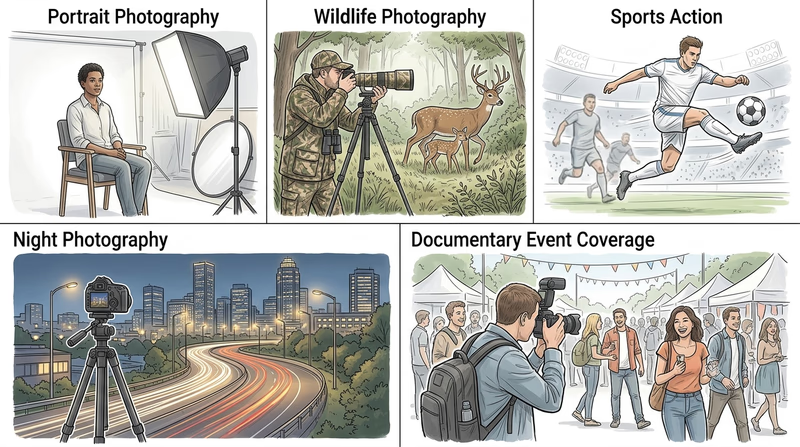
Portrait Photography
Portrait photography focuses on people. That might mean a close-up of one face or a wider image that shows personality through clothing, location, and body language. Good portrait photographers pay close attention to expression, eye contact, and how light falls across a face.
Documentary and Story Photography
Documentary photography shows real events, places, and people. Instead of staging everything, the photographer looks for moments that reveal what is happening. This kind of photography is especially useful in Scouting because campouts, service projects, and ceremonies all tell stories.
Nature and Wildlife Photography
Nature photography can include landscapes, weather, plants, insects, and animals. It rewards patience and observation. Often the goal is not just to show what was there, but to show scale, mood, color, or behavior in a way someone else can feel.
Sports and Action Photography
Action photography is about timing. The key question is often, “When should I press the shutter?” Fast shutter speeds can freeze movement, while slower settings can blur motion to show speed. Either way, the photographer has to anticipate what will happen next.
Macro and Close-Up Photography
Macro and close-up photography reveal small details that people often miss, such as insect wings, bark texture, or the stitching on a baseball glove. This kind of work teaches you to slow down and think about focus, distance, and background clutter.
Night and Low-Light Photography
Low-light photography includes campfires, city lights, stars, evening events, and indoor scenes. It can create dramatic images, but it also makes camera shake, noise, and poor focus more likely. Understanding exposure becomes especially important here.
Next Steps
The first requirement starts with something every good photographer needs: safe habits. Before you worry about lighting tricks or editing tools, make sure you know how to protect yourself, your subjects, and your equipment.