Req 2 — Control Light and Motion
This requirement is the heart of photography. If you understand how light, exposure, focus, composition, and timing work together, you can stop hoping for a good picture and start building one on purpose.
Requirement 2a
How natural light affects a photo
Natural light can be soft, harsh, warm, cool, direct, or filtered. Early and late in the day often give softer shadows and warmer color. Midday sun can create bright highlights and dark shadows. Cloud cover acts like a giant diffuser and can make portraits easier because the light becomes more even.
How low light affects a photo
Low light makes it harder to keep a photo sharp. The camera may need a slower shutter speed, higher ISO, or wider aperture, and each of those choices changes the look of the image. Night scenes can feel dramatic, but they also reveal camera shake and digital noise much faster.
How artificial light affects a photo
Artificial light gives you control, but it can also create odd color casts or flat-looking images if used carelessly. Flash can freeze action and brighten a dark subject, yet direct flash can also make faces look harsh. Lamps, LEDs, and studio lights all have different color temperatures and directions.
Official Resources
🎬 Video: Golden Hour Magic: Perfect Light for Stunning Photos (video) — https://youtu.be/FWcOshGthBI?si=Ft8P8g7G36BnSSle
🎬 Video: Artificial Lighting for Photography (So Much Easier Than You Think!) (video) — https://youtu.be/Z9znfhFQPbE?si=iynxep4eY2ZuuzNY
🎬 Video: Why Most Natural Light Photography is Flat (and How to Fix It) (video) — https://youtu.be/VgT4O6CclfA?si=Gw4HDf3VeGxeE6z7
Requirement 2b
Aperture affects brightness and background blur
Aperture is the opening inside the lens. A wider aperture lets in more light and often creates a blurrier background. A narrower aperture lets in less light and usually keeps more of the scene in focus. The f-stop number works backward from what many people expect: f/2.8 is wider than f/11.
Shutter speed affects motion
Shutter speed is how long the camera records light. A fast shutter speed can freeze a runner, bird, or splash. A slow shutter speed can blur motion, which can look exciting when used intentionally.
ISO affects sensitivity and image quality
ISO controls how sensitive the camera is to light. A higher ISO helps in darker situations, but it usually adds more grainy-looking digital noise. A lower ISO often produces cleaner images when enough light is available.
Together, aperture, shutter speed, and ISO form the exposure triangle. Changing one often means adjusting another.
Official Resources
🎬 Video: Iso, Shutter Speed and Aperture Explained | Exposure Basics for Beginners (video) — https://youtu.be/Edvpu_939l4?si=lFqGf0-AJuUJR-v-
🎬 Video: Photography Basics in 10 Minutes (video) — https://youtu.be/V7z7BAZdt2M?si=0XATnG-lMciqFgr0
Requirement 2c
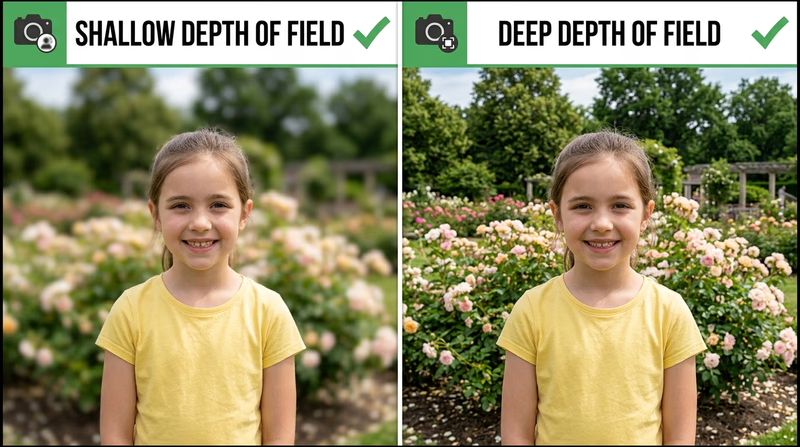
What depth of field means
Depth of field is how much of the picture looks acceptably sharp from front to back. A shallow depth of field keeps only a small area sharp, which helps a subject stand out. A deep depth of field keeps more of the scene in focus, which is useful for landscapes and group scenes.
Aperture, distance, and lens choice all affect depth of field. If you move closer to your subject or use a wider aperture, the background usually blurs more.
Official Resources
🎬 Video: Depth of Field in 30 Seconds (video) — https://youtube.com/shorts/98B3dvdAX6c?si=a6zX8YPAisVYAszi
Requirement 2d
Rule of thirds
Imagine your picture divided into a tic-tac-toe grid. Placing the main subject near one of those intersection points often makes the image feel more balanced and interesting than putting everything dead center.
Leading lines
Roads, fences, shadows, and tree lines can guide the viewer’s eye toward the subject. Good leading lines create direction and make the photo easier to read.
Framing
Framing means using something in the scene, such as a doorway, branches, or a window, to surround the subject. This can add depth and make the viewer focus on what matters.
Depth in composition
A photo feels stronger when it has layers. A foreground object, a main subject in the middle, and background context can make a flat scene feel more three-dimensional.
Official Resources
🎬 Video: Basic Photography | Composition: The Only Rules You Need to Know (video) — https://youtu.be/eImryR3yKz8?si=ITbUmVHQYD9gR72Y
🎬 Video: Photography Composition: Master Leading Lines for Stunning Shots! (video) — https://youtu.be/2uAYj6WScJQ?si=SrzE5OUdOVWWH65y
🎬 Video: Master the Rule of Thirds for Better Photos (video) — https://youtube.com/shorts/Z1Wb8ZH0uvc?si=e6TjeQIgyqaYBcUr
Requirement 2e
Angle of view describes how much of a scene the lens includes. A wide angle of view fits more into the frame, which is useful for landscapes, buildings, and cramped spaces. A narrow angle of view shows less of the scene and makes distant subjects appear larger.
Your physical shooting angle matters too. Kneeling down, climbing safely to a higher position, or stepping to one side can completely change the feeling of a photo. Kids photographed at eye level often look more natural than when shot from standing height. A flower photographed from ground level can feel much more dramatic than the same flower photographed from above.
Official Resources
🎬 Video: Angle of View and Framing (video) — https://youtu.be/9SZy4ptc5ws?si=SfIb8MuYpZziiVaW
Requirement 2f
To stop action, use a fast shutter speed so the moving subject looks crisp. This works well for sports, pets, bikes, and splashing water. If the shutter is too slow, the subject will smear across the frame.
To blur motion, slow the shutter on purpose. A blurred waterfall can look smooth and soft. A runner with slightly blurred legs can feel faster than a perfectly frozen runner. Motion blur works best when the blur looks intentional instead of accidental.
Official Resources
🎬 Video: How to Shoot Motion Blur Photography Like a Pro (video) — https://youtu.be/5h4J8nZn1Sw?si=n6r01F0XG_ncDOxH
🎬 Video: Photography Tips: How to Do Stop Action Photography (video) — https://youtu.be/YtkIsA4VdRw?si=T0IV9u60N-evsqrl
Requirement 2g
The decisive moment is the split second when everything comes together: the peak of a jump, the instant a flag unfurls, the laugh before someone looks away, or the exact moment a hand reaches a finish line. This idea reminds photographers that timing is part of composition.
A scene can look ordinary one second and unforgettable the next. That is why photographers watch carefully, anticipate action, and keep shooting when something is about to happen instead of after it already did.
Official Resources
🎬 Video: Decisive Moment (video) — https://youtu.be/meeqJ58eSzk?si=lxhdmU83SSLCDxvw
Camera Setting Guides
Easy to Understand Guide to Camera Settings for Beginners (website) A plain-language overview of common settings and how they affect brightness, focus, and motion. Link: Easy to Understand Guide to Camera Settings for Beginners (website) — https://shotkit.com/camera-settings/ Common Camera Settings for Beginners (website) A detailed beginner guide to camera settings, with examples of when to adjust each one. Link: Common Camera Settings for Beginners (website) — https://photographylife.com/common-camera-settings#camera-setupBy now you know the words photographers use when they talk about why a picture worked.