Req 4 — Rope for Real Loads
The wrong rope can make a good design fail. Pioneering is not just about how you tie the rope. It is also about what the rope is made from, how strong it is, and how well it has been cared for.
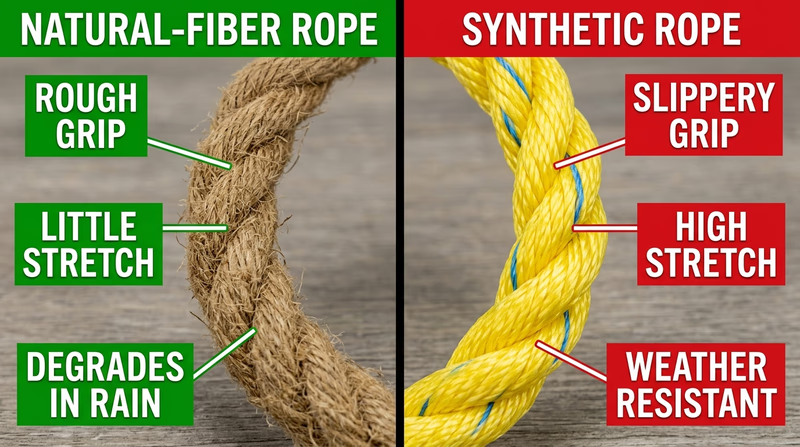
Natural-fiber rope vs. synthetic rope
Natural-fiber rope
Natural-fiber rope is made from plant materials such as manila, sisal, hemp, or cotton. It often grips well, feels traditional in the hand, and can hold lashings securely because the surface has more texture.
Advantages:
- Good grip for many lashings
- Traditional look and feel for pioneering instruction
- Often easier to keep from slipping at the start of a lashing
Disadvantages:
- Can rot if stored damp
- Loses strength over time from mildew and weather
- Usually heavier for its strength than synthetic rope
Synthetic rope
Synthetic rope is made from manufactured fibers such as nylon, polyester, or polypropylene. It is usually stronger for its size, resists rot better, and handles wet conditions more easily.
Advantages:
- Strong for its diameter
- Resists mildew and moisture damage better
- Often lasts longer if maintained well
Disadvantages:
- Some types can be slippery for lashings
- Some stretch more than you want in a structure
- Heat and sunlight can still weaken them over time
Breaking strength vs. safe working load
These two ideas are related, but they are not the same.
- Breaking strength is the amount of force that can make the rope fail under test conditions.
- Safe working load is the much lower amount you should actually allow in real use.
You never plan a project right up to the rope’s breaking point. Real builds have movement, shock loads, knots, wear, moisture, and human error. Safe working load gives you a safety margin.
Which rope suits pioneering best?
For many Scout pioneering builds, the best rope is the rope that balances three qualities:
- Enough strength for the intended load
- Enough grip to hold lashings securely
- Good condition, with no major wear or damage
That is why the answer is not always “synthetic is better because it is stronger.” A rope that is too slick for your lashings, or too stretchy for your design, may be less suitable even if the raw strength number is high.
Care and storage
A strong rope can become an unsafe rope if you treat it poorly.
How to care for pioneering rope
Simple habits that make rope last longer
- Coil it neatly so it does not kink or tangle.
- Keep it dry before storing, especially natural-fiber rope.
- Store it off the ground and away from standing water.
- Inspect it often for fraying, cuts, mildew, hard spots, or melted fibers.
- Retire damaged rope instead of hoping it will be fine one more time.
This official video is especially useful because it connects rope care with spar care, which is exactly how real projects are stored and reused.
🎬 Video: How to Prepare and Preserve Lashing Ropes and Pioneering Spars (video) — https://youtu.be/2GfbsP7G5YE?si=VuSeeyD_YzDOVzEO
In Req 5, you will go a step farther and learn splices, which let you finish or repair rope in ways knots cannot.