Req 6 — Twist, Lay, and Whip
Making rope teaches you what rope really is: not one thing, but a system of smaller pieces working together. Once you understand yarns, strands, lay, and tension, you start to see why some rope feels balanced and some wants to kink or untwist.
How a simple rope is built
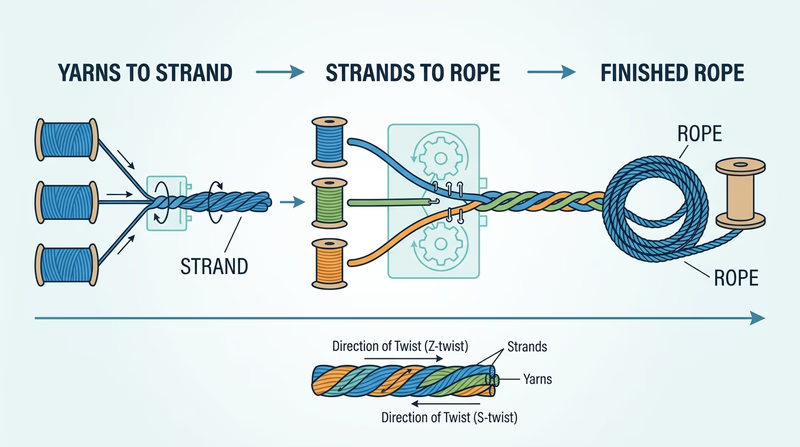
Your finished rope has three levels:
- Yarns are the smallest pieces.
- Strands are groups of yarns twisted together.
- The rope is made by laying the strands together in the opposite direction.
That opposite twist is what makes rope stable. If everything twists the same way, the rope wants to snarl or separate.
Keys to a good rope-making session
What to watch while the machine is turning
- Keep the yarns even so one strand is not fatter than the others.
- Maintain steady tension so the rope forms tightly instead of loosely bunching.
- Let the strands lay together naturally instead of forcing them.
- Measure the finished length after the rope is fully formed.
- Whip both ends so your work stays neat.
Why this requirement matters in pioneering
You may not make every rope you use in camp, but this project teaches you how twisting affects strength, flexibility, and handling. That helps you understand every other rope skill in the badge, from whipping to splicing to choosing the right rope for a structure.
This official video is the best starting point because it shows the overall process from yarns to finished rope.
🎬 Video: Making a Rope from Twine (video) — https://youtu.be/1yb5fqq4dxU?si=Zkl9MOFSFyIRwdwD
These splice videos also help because they show how rope structure matters after the rope is made.
🎬 Video: How to Create a Back Splice (video) — https://youtu.be/s65PbgZZSgE?si=OkKgfp8pSZRqQ3ts
🎬 Video: How to Create an Eye Splice (video) — https://youtu.be/ZHffzAX3-tk?si=mIKK34hC692CWIrc
🎬 Video: How to Create a Short Splice (video) — https://youtu.be/8HZbsRtxgw0?si=gQq1qdxcJrRcY2lQ
In Req 7, you will apply the same mechanical thinking to anchors, where small setup choices make a huge difference in safety.