Req 7 — Keep the Structure Put
A strong structure can still fail if it is not anchored. Anchoring matters because every pioneering build creates forces that try to pull, lift, twist, or slide the structure out of place. The anchor system resists those forces and sends them safely into the ground.
Why anchoring matters
Think about what happens when someone walks across a bridge, leans on a tower, or tightens a guy line. The load does not stay in one place. It moves through the spars, through the lashings, and finally into the ground. If the anchoring is weak, the whole project can creep, rack, or collapse even if the visible frame looks solid.
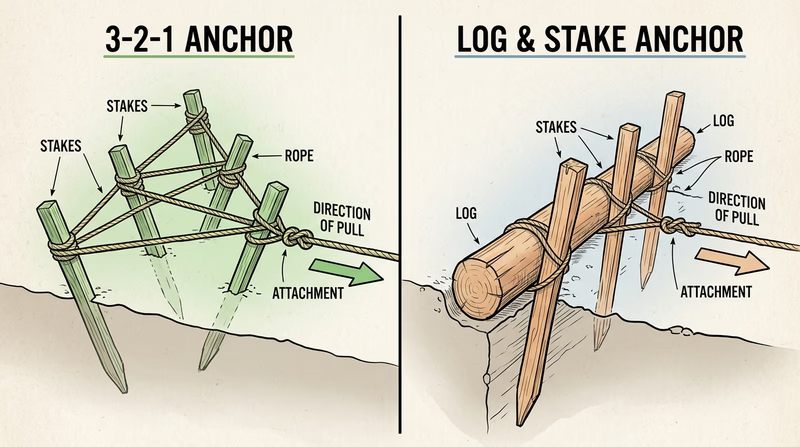
The 3-2-1 anchoring system
The 3-2-1 system uses multiple stakes driven into the ground and tied together so the load is shared.
- Three stakes are set in line with the pull.
- Two stakes help distribute the force and support the main line of pull.
- One anchor point is created where the load line attaches.
The exact arrangement can vary by instruction style, but the main idea stays the same: spread the force across several stakes instead of trusting a single point.
The log-and-stake anchoring system
This system uses a buried or ground-level log backed up by stakes. The rope pulls against the log, and the stakes help keep that log from shifting.
It is useful when you need a broad, solid anchor and ground conditions allow the system to seat firmly. It also helps Scouts see that anchoring is not only about the rope. The soil, the wood, and the direction of pull all matter.
Questions to ask about any anchor
Use these before trusting the system
- What direction is the force pulling?
- Is the ground firm enough to resist that force?
- Will the load be steady, or could it jerk and shock-load the anchor?
- Is the anchor backed up or inspected by an adult before use?
This official video is the core resource for the requirement because it shows how anchor systems are laid out and why direction of pull matters.
🎬 Video: Anchoring Pioneering Projects (video) — https://youtu.be/_z-GzDAjVZM?si=qyEvV1jFW0nCHHT8
The rope-making video is also useful here because anchors depend on understanding rope tension, twist, and load path.
🎬 Video: Making a Rope from Twine (video) — https://youtu.be/1yb5fqq4dxU?si=Zkl9MOFSFyIRwdwD
In Req 8, you will look at trestles, pole placement, and X braces—the structural pieces that make a project resist movement before the anchors even engage.