Req 2 — Home Water Systems
This page covers the two big halves of home plumbing:
- Water supply — how clean hot and cold water gets where it needs to go
- Drainage — how wastewater leaves the house safely
When you make your drawings for this requirement, the goal is not art. The goal is to show that you understand where water starts, where it goes, what controls it, and how the system stays safe in both summer and winter.
🎬 Video: How Your Home Plumbing Works (From Start to Finish) (video) — https://youtu.be/8jxRn-T_LCs?si=pwjNJvf0MCXM5gdY
Requirement 2a
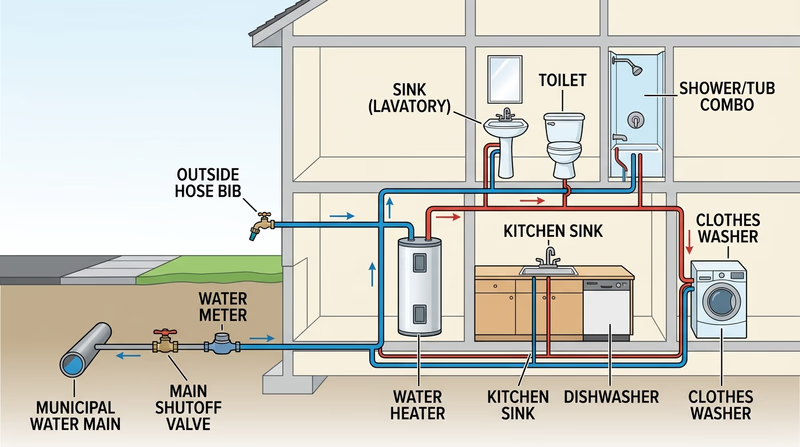
Start your drawing where water enters the building. In many homes, it comes in through a service line from a municipal water main. In others, it may come from a well system. Soon after entry, you will usually find a main shutoff valve and a water meter if the house uses city water.
From there, cold water branches out to fixtures and appliances. One branch also feeds the water heater, which sends heated water to sinks, showers, tubs, dishwashers, and clothes washers. Toilets normally use only cold water.
A good supply-system drawing often includes these parts:
- Water service entry point
- Main shutoff valve
- Water meter
- Cold-water branches to fixtures
- Water heater
- Hot-water branches to fixtures
- Fixture shutoff valves under sinks or behind toilets
How the supply side works
The water supply system works under pressure. That pressure pushes water through pipes when a faucet opens or a toilet refills. Pipes and fittings must be watertight because even a tiny opening can leak constantly under pressure.
How to make it safe from freezing
Frozen water expands. If water in a pipe freezes, it can split the pipe or crack a fitting. The leak often appears only after the ice melts and water pressure returns.
Ways to protect the system from freezing include:
- Insulate exposed pipes in crawl spaces, garages, basements, and exterior walls.
- Seal drafts around pipe penetrations where cold air enters.
- Disconnect and drain garden hoses before freezing weather.
- Shut off and winterize exterior hose bibs if needed.
- Keep some heat in vulnerable indoor spaces.
- In severe cold, let a faucet drip slightly if local guidance recommends it.
Requirement 2b
The drainage system is different from the supply system because it does not usually run under pressure. Most home drains work by gravity. Wastewater flows downhill through drainpipes to a building drain and then out to a sewer or septic system.
Your drawing should show how water leaves major fixtures such as sinks, tubs, showers, toilets, and appliances. It should also show two features many people never notice: traps and vents.
What drains do
Drains carry wastewater away. To work well, they need the right pipe size and the correct slope. Too flat, and solids may settle out. Too steep, and water can outrun solids in some cases, leaving clogs behind.
What vents do
Vents connect the drain system to outside air, usually through the roof. That may sound odd, but it is essential. Venting helps wastewater flow smoothly by preventing air-pressure problems inside the piping.
Without proper venting, drains can gurgle, empty slowly, or siphon water out of traps.
Why traps matter
A trap is the curved section of pipe under many sinks and fixtures. It holds a small amount of water that acts like a plug against sewer gases. If the trap seal is lost, odors and gases can enter the room.
What to Include in Your Drainage Drawing
Show the path of wastewater clearly
- Fixtures: Sink, toilet, tub, shower, or laundry connection.
- Trap: Show the water seal under a sink or fixture.
- Drain branch: The horizontal line carrying wastewater away.
- Vent: The pipe that allows air into the system and usually goes upward through the roof.
- Main building drain: The larger pipe carrying waste out of the house.
By following both clean-water supply and wastewater drainage, you now have a full-system view of the house. Next, focus on the tools plumbers use to work on these systems safely and accurately.