Req 3 — Essential Plumbing Tools
A good plumber is not someone who owns the most tools. A good plumber knows which tool fits the job, how to use it without damaging the pipe or fitting, and when to stop before too much force turns a minor repair into a broken part.
🎬 Video: 6 Essential Plumbing Hand Tools...and Others to Keep Around! (video) — https://youtu.be/uppuvS8BShU?si=a2SBD-wzgASkoSy2
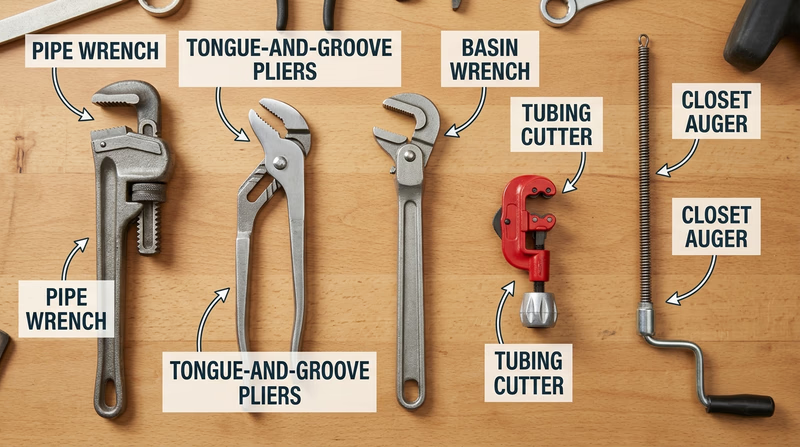
Five important plumber’s tools you can learn for this requirement include:
Pipe Wrench
A pipe wrench grips round pipe and threaded fittings. Its jaws bite harder as you pull. That is useful on steel pipe, but it can damage softer finishes, so it is not the right tool for every visible fixture.
Best use: Threaded metal pipe and sturdy fittings.
Tongue-and-Groove Pliers
These adjustable pliers are common in plumbing because they can grip different sizes of nuts, slip-joint connections, and some fittings. They are often safer and more flexible than using the wrong-size wrench.
Best use: Slip nuts, drain work, and general gripping.
Basin Wrench
A basin wrench is designed for the awkward nuts that hold a faucet under a sink. If you have ever tried reaching behind a sink bowl with a normal wrench, you already know why this tool exists.
Best use: Tight spaces under sinks, especially faucet mounting nuts.
Tubing Cutter or Plastic Pipe Cutter
Clean cuts matter in plumbing. A tubing cutter makes a smooth, square cut on copper. Plastic pipe cutters are made for materials such as PEX or some plastic pipe. A square cut helps fittings seal correctly.
Best use: Making clean cuts before soldering, crimping, or fitting pipe.
Plunger or Closet Auger
A plunger is often the first response to a simple clog. A closet auger is designed for toilets and reaches deeper into the trapway without damaging the bowl when used correctly.
Best use: Clearing simple drain or toilet blockages.
How to Demonstrate a Tool Well
Show your counselor more than just the name
- Name the tool and the kind of job it is for.
- Point out the working parts such as jaws, cutting wheel, handle, or adjustment mechanism.
- Show safe hand placement before applying force.
- Explain what material or fitting the tool is meant to touch so you do not damage the job.
- Describe one mistake to avoid with that tool.
Once you know the tools, the next step is learning the language of plumbing parts so you can recognize what those tools are working on.