Req 6a — Hardware Store Field ID
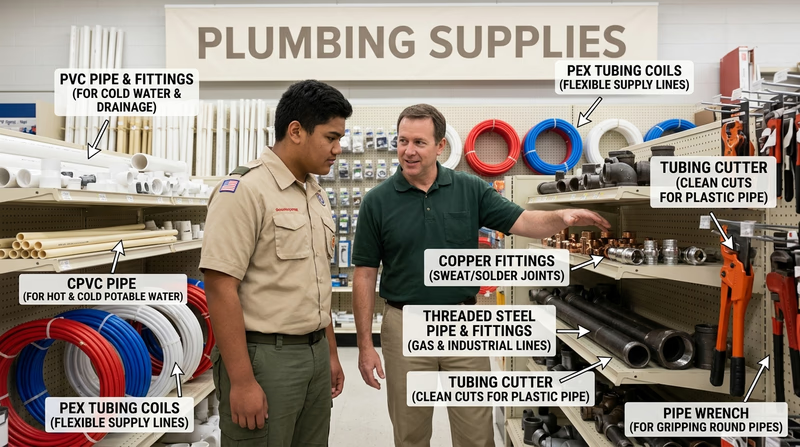
This option turns a store visit into a field study. Instead of walking past shelves of fittings and tools, you will learn to recognize the materials by color, shape, labeling, and common use. That makes every later plumbing task easier.
- Req 6a1 focuses on PVC.
- Req 6a2 focuses on CPVC.
- Req 6a3 focuses on PEX.
- Req 6a4 focuses on copper.
- Req 6a5 focuses on steel.
- Req 6a6 adds specialty plumbing tools.
Requirement 6a1
How to identify PVC
PVC is usually rigid plastic pipe, often white, though some systems use other colors. In stores, look for straight pipe, elbows, tees, couplings, and adapters labeled PVC.
What PVC is commonly used for
PVC is often used in drain, waste, and vent systems and in some cold-water or specialty applications depending on local code.
What to notice in the aisle
Look for pipe size markings, matching fittings, and the solvent cement area nearby. Notice how many shape options are available just to change direction, add a branch, or adapt from one fitting style to another.
Requirement 6a2
How to identify CPVC
CPVC is another rigid plastic pipe. It is often cream or yellowish rather than bright white, though exact color can vary by brand and use.
What CPVC is commonly used for
CPVC is rated for hotter water than standard PVC, so it may be used for hot- and cold-water supply in some installations.
What to notice in the aisle
Compare CPVC fittings with PVC fittings and look for labeling that makes the temperature and material difference clear.
Requirement 6a3
How to identify PEX
PEX is flexible tubing, often sold in coils or long straight lengths. It is commonly red, blue, or white, which helps people distinguish hot and cold lines during installation.
What PEX is commonly used for
PEX is used for water supply lines because it is flexible, fast to route, and works well with modern connection systems.
What to notice in the aisle
Look for the tubing, crimp rings, expansion fittings, quick-connect fittings, and the specialized tools that go with each system.
Requirement 6a4
How to identify copper
Copper pipe has a reddish-metal color and is sold in rigid lengths or coils, depending on type and use. Copper fittings include elbows, tees, couplings, and adapters.
What copper is commonly used for
Copper is a long-trusted material for water supply lines and is valued for heat tolerance and durability.
What to notice in the aisle
Compare the fitting selection with plastic systems and notice the separate materials used for soldering, such as flux and solder.
Requirement 6a5
How to identify steel
Steel pipe is heavier and darker than copper or plastic. Threaded steel fittings often look rugged and industrial.
What steel is commonly used for
Steel appears in older plumbing systems and in specialty applications. It is strong, but heavy and more prone to corrosion than some modern materials.
What to notice in the aisle
Look at the threaded ends, threaded fittings, and how different the system feels from smooth plastic or soldered copper systems.
Requirement 6a6
How to identify specialty plumbing tools
These are the tools that make plumbing possible in tight spaces or with specific materials. You may see basin wrenches, tubing cutters, PEX crimpers, pipe threaders, closet augers, torch kits, deburring tools, and inspection mirrors.
What to learn from the tool section
Try to match each tool to a job. Which one cuts? Which one grips? Which one clears a clog? Which one makes a connection?
What to notice in the aisle
Specialty plumbing tools often sit near the materials they are used with. That is a clue: the store layout itself can help you understand the system.
Store Visit Strategy
How to make the most of your field trip
- Take notes or photos if allowed so you can review later.
- Read labels carefully instead of guessing by color alone.
- Compare fitting shapes such as elbows, tees, and couplings in multiple materials.
- Ask your supervising adult questions about where they have seen each material used.
Now that you can identify the common materials, move on to a hands-on connection method by cutting and solvent welding plastic pipe.