Req 6e — Replacing a Faucet
6e.
Replace a kitchen or lavatory faucet.
Faucet replacement is a great real-world plumbing project because it combines planning, tight-space tool use, shutoff control, and leak checking. It also reminds you that many plumbing jobs are more about patience than strength.
🎬 Video: Women's DIY Bathroom Remodel (video) — https://youtu.be/hyTeVMYgRM0?si=Vjs95F0m6dK-Ae11
Before you start
Make sure the replacement faucet matches the sink layout. Count the holes in the sink or countertop, and check that the new faucet kit fits.
A simple replacement sequence
- Shut off the hot and cold supply valves.
- Open the old faucet to relieve pressure.
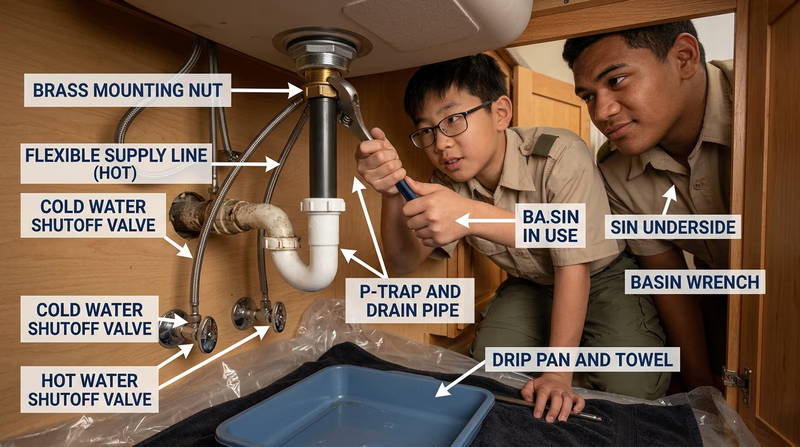
- Put a towel or pan under the work area.
- Disconnect the supply lines.
- Remove mounting nuts and lift out the old faucet.
- Clean the sink surface before installing the new faucet.
- Set the new faucet, tighten the mounting hardware, and reconnect the supplies.
- Turn the water back on slowly and check carefully for leaks.
Where Faucet Jobs Often Go Wrong
Slow down at these points
- Wrong faucet style for the sink opening pattern
- Supply valves that do not shut off fully
- Tight, awkward access under the sink
- Overtightening mounting hardware or supply connections
- Skipping the final leak check
After supply-side service work, the next task moves to the drainage side by taking apart and reinstalling a trap.