Req 2a — Clay Bodies for Two Jobs
This requirement covers two different pottery jobs, and they do not ask the clay to behave the same way:
- Making sculpture using the hand-building method
- Throwing on the wheel
A clay body is the recipe for your clay. Different recipes change how sticky, strong, smooth, plastic, and shrink-prone the clay feels. A good answer for your counselor compares the two jobs instead of pretending one clay body fits everything.
Requirement 2a1
Hand-building clay needs to hold shape without slumping. When you stack coils, join slabs, or add a neck to a sculpture, the walls must support themselves before the piece dries.
Properties of a good hand-building clay body
A strong hand-building clay body usually has these traits:
- Good plasticity so it can bend and join without cracking
- Enough strength to stand up in slabs, coils, or sculpted forms
- Some tooth or texture so it does not collapse easily
- Moderate drying speed so details can be refined before the piece hardens
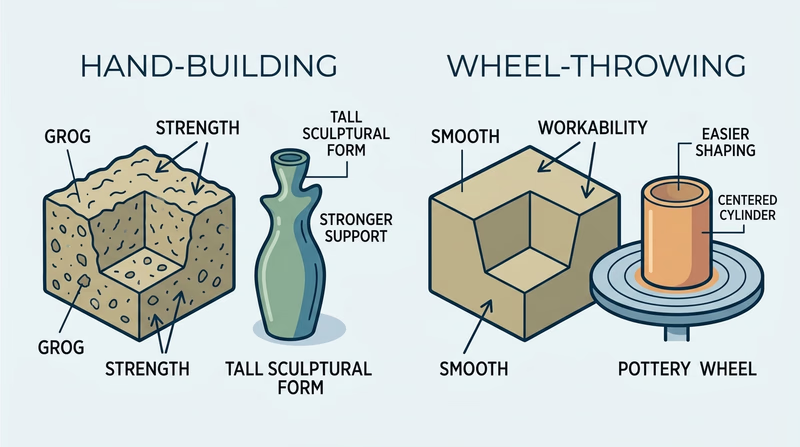
Hand-builders often like clay that feels a little firmer and less slippery than wheel clay. That extra body helps walls stay upright and lets details hold their shape.
Ingredients that help hand-building clay work well
Many hand-building clay bodies include:
- Clay particles for plasticity and workability
- Grog or sand-like material for strength and reduced shrinkage
- Fillers or temper to help the clay keep shape and dry more evenly
- Water in the right amount so the clay is workable but not mushy
Grog is especially useful for sculpture because it reduces warping and gives the clay a stronger internal structure. The trade-off is a rougher feel.
Requirement 2a2
Wheel throwing is different because the clay is being stretched and lifted while spinning fast. A wheel clay body needs to be smooth, even, and plastic enough to move under your hands without tearing apart.
Properties of a good wheel-throwing clay body
A strong wheel clay usually has these traits:
- High plasticity so it can be centered and pulled upward
- Smooth texture so your hands glide easily over the surface
- Even moisture response so the walls rise without cracking
- Enough strength while thin so cylinders and bowls can hold shape
Too much coarse material can make wheel clay feel scratchy and harder to pull evenly. Too little strength can make the walls buckle while you are working.
Ingredients that help wheel clay work well
Wheel clay bodies usually include:
- Fine clay particles for smoothness and plasticity
- Ball clay or similar ingredients to improve workability
- Controlled amounts of grog or filler if extra strength is needed
- Water balanced carefully so the clay centers well without turning sloppy
The smoother recipe helps the clay respond to pressure from your hands. That is why a clay body made for sculpture may feel sturdy but frustrating on the wheel, while a wheel clay may feel wonderful to throw yet too floppy for a tall hand-built form.
Official Resource
🎬 Video: Best Clay for Pottery: Hand-Building, Wheel Throwing & Sculpting Explained (video) — https://youtu.be/d2l-Aup2QMM?si=WqEsE2JrVKcD5MIK
Use this video to notice the language potters use when comparing clay bodies: smooth, gritty, plastic, stiff, forgiving, and strong. Those are exactly the kinds of comparisons your counselor wants to hear.
A strong comparison for your counselor
Try explaining the two clay bodies side by side
- For hand-building: Emphasize shape support, strength, and added grog or texture.
- For wheel throwing: Emphasize smoothness, plasticity, and easy movement under the hands.
- For both: Explain that water content matters because clay that is too wet or too dry becomes hard to control.
Req 2b shifts from the clay recipe to the machine many potters use with it. Next, learn how different potter’s wheels create motion and control.