Req 2b — How Potters' Wheels Work
A potter’s wheel has one main job: spin the clay smoothly so your hands can shape it evenly from all sides. The big difference between wheel types is how that spinning starts, how fast it stays, and how much physical effort the potter has to supply.
Three common kinds of wheels
Kick wheel
A kick wheel is powered by the potter. You use your foot to push a heavy flywheel, and that motion turns the wheel head on top. The heavy lower wheel stores momentum, so the top keeps spinning even after each kick.
Kick wheels are simple, quiet, and great for learning rhythm. They also take more physical effort. If the potter stops kicking, the wheel slows down.
Treadle wheel
A treadle wheel also uses human power, but instead of kicking a heavy wheel directly, the potter pumps a pedal or treadle. That motion transfers power through a mechanical linkage to the wheel head.
Treadle systems let the potter keep both hands on the clay while a foot keeps the wheel moving. They still depend on steady body rhythm, but they can feel more controlled than a basic kick wheel.
Electric wheel
An electric wheel uses a motor to spin the wheel head. The potter controls the speed with a foot pedal or hand control. Because the motor keeps a steady speed, electric wheels are common in schools and community studios.
Electric wheels make it easier for beginners to focus on centering, opening, and pulling walls without also powering the wheel themselves. They still require good body position and touch, but they remove a lot of the physical effort.
How to compare wheel types
A quick way to organize your counselor discussion
- Power source: Kick and treadle wheels use human power; electric wheels use a motor.
- Speed control: Human-powered wheels depend on rhythm; electric wheels use a pedal or control system.
- Feel while throwing: Kick and treadle wheels teach body timing; electric wheels offer steadier speed.
- Typical setting: Electric wheels are common in classrooms, while kick and treadle wheels are often used by traditional or specialty studios.
Why the wheel type matters
Different wheels shape the way a potter works. A kick wheel may encourage a slower pace and stronger awareness of rhythm. An electric wheel may help a beginner succeed faster because the speed stays more constant. Neither automatically makes better pottery. They just solve the same problem in different ways.
Official Resources
Selecting a Potter's Wheel (PDF) A simple overview of wheel features, controls, and practical differences between common models. Link: Selecting a Potter's Wheel (PDF) — https://select.schoolspecialty.com/wcsstore/SSICatalogAssetStore/ideas-resources/V2182323.pdf Pottery Wheels - a Buyers Guide (website) A broader comparison of wheel styles, useful for seeing how power, speed, and studio needs affect wheel choice. Link: Pottery Wheels - a Buyers Guide (website) — https://ceramic.school/pottery-wheels/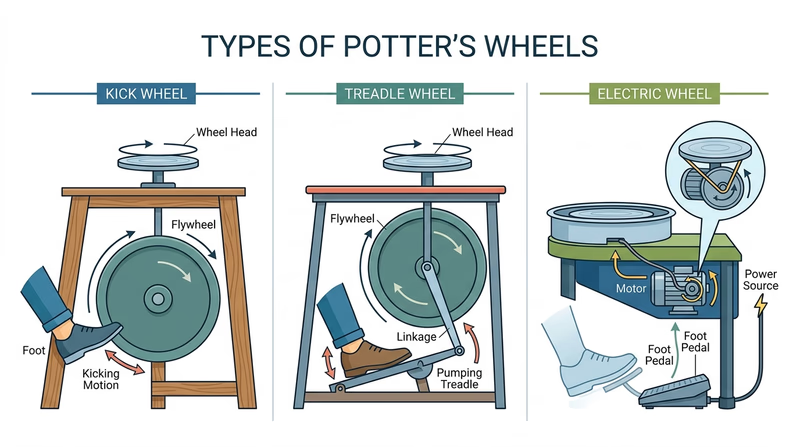
Once you understand clay bodies and wheels, the next step is designing a form before you build it. Req 3 moves from equipment to observation and planning.