Req 6 — The U.S. Ceramic Industry
If you only picture handmade mugs and art fair bowls, you are seeing just one corner of the ceramic world. In the United States, ceramics shows up in homes, schools, hospitals, vehicles, factories, and electronics. Pottery is the artistic doorway into a much bigger materials field.
What “the ceramic industry” includes
Ceramics are materials made from clay or other inorganic compounds that are shaped and then hardened by heat. That definition includes art pottery, but it also includes many products people never call “ceramics” in everyday speech.
Broadly, the industry includes:
- Art and studio ceramics — bowls, plates, sculpture, tile art, and one-of-a-kind work
- Construction ceramics — bricks, roof tiles, sewer pipe, and wall or floor tile
- Household ceramics — toilets, sinks, dishes, bakeware, and countertop surfaces
- Technical or advanced ceramics — spark plugs, electronic insulators, cutting tools, medical and aerospace components
Things made other than craft pottery
Here are examples worth mentioning to your counselor:
- Bathroom fixtures such as toilets and sinks
- Tile for floors, showers, and walls
- Bricks and masonry products for buildings
- Electrical insulators that help control current safely
- Spark plugs used in engines
- Heat-resistant parts used in furnaces and industrial equipment
- Dental crowns and medical implants made from specialized ceramic materials
- Protective and engineering parts in electronics, vehicles, and some aerospace uses
Why ceramics are used so widely
Ceramic materials are valuable because many of them can resist heat, wear, chemicals, or electricity better than other materials. Some are porous when that is useful. Others become dense and extremely hard after firing.
That is why a studio potter and an engineer might both care about firing temperature, shrinkage, and material composition even though their final products look nothing alike.
What Are Ceramics? (website) An overview from a ceramics organization that shows how pottery connects to engineering, manufacturing, and advanced materials. Link: What Are Ceramics? (website) — https://ceramics.org/about/what-are-ceramics/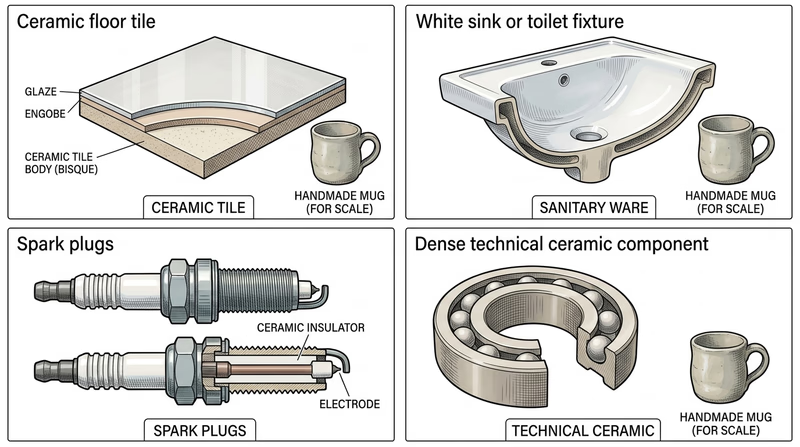
Req 7 asks you to choose a real-world pottery experience. That is a good next step, because the best way to understand a field is to see people doing it in real places.