 Getting Started
Introduction & Overview
Programming is how people turn ideas into actions a computer can actually perform. Every game menu, weather app, smartwatch alert, and traffic light controller depends on instructions written by a programmer. This merit badge gives you a behind-the-screen view of how software works — and then asks you to build some of it yourself.
You do not need to start as an expert. Good programmers begin by noticing problems, breaking them into steps, testing small pieces, and improving what they made. Along the way, you will learn how code developed over time, how different languages are used, how to protect creative work, and how programming can become a project, a hobby, or even a career.
Then and Now
Then — Instructions for Giant Machines
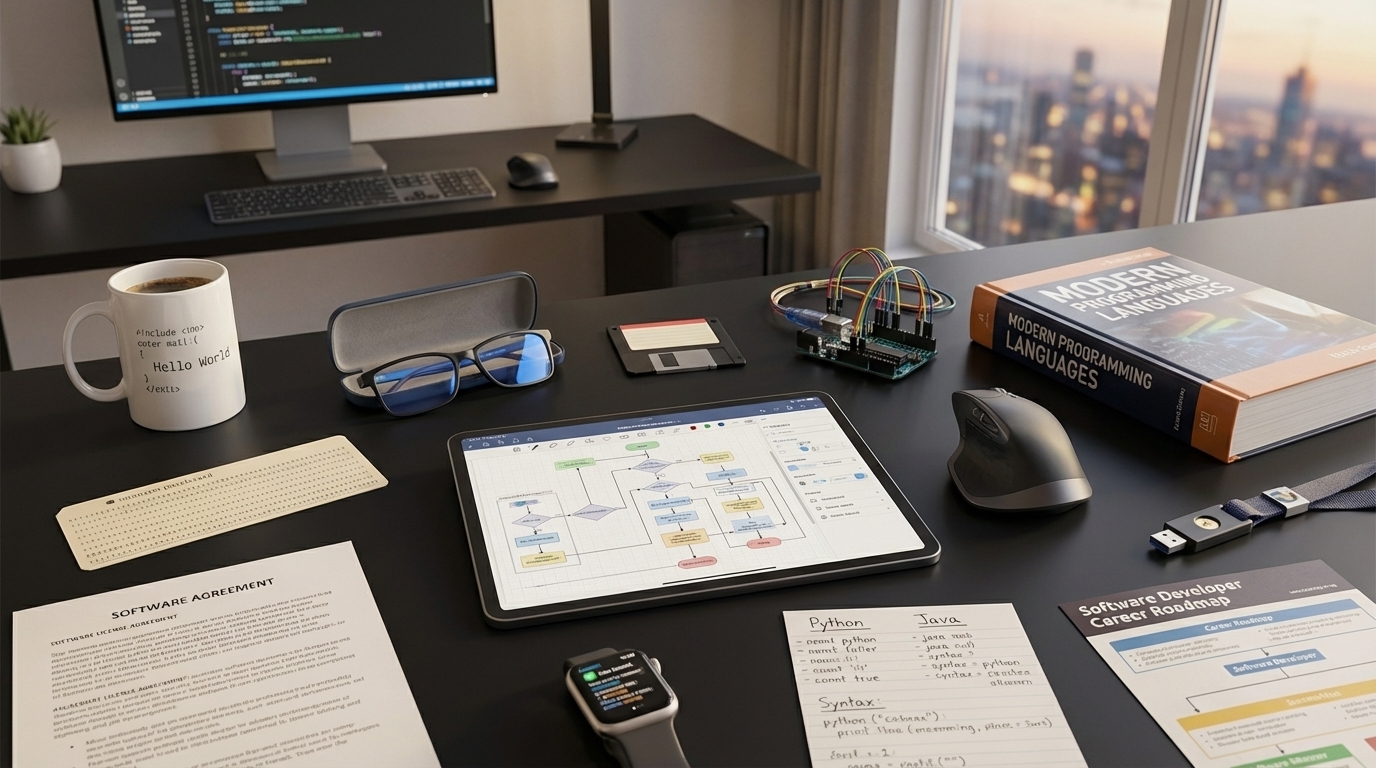
Early computers were not pocket-sized, battery-powered devices. They filled rooms, used huge amounts of electricity, and were programmed with switches, cables, or punched cards. In the 1800s, Ada Lovelace described how a machine might follow a series of instructions to do more than arithmetic, which is why many people call her the first computer programmer. In the 1900s, programmers wrote code for machines like ENIAC by thinking carefully about every step because computers had very little memory and almost no room for mistakes.
Back then, programming was slower and more physical. A bug might mean a stack of punched cards had to be fixed and run again. But the big idea was already there: if you can describe a process clearly enough, a machine can help you do it.
Now — Code Is Everywhere
Today, programming touches almost every part of daily life. It runs websites, robots, cash registers, video games, medical devices, weather forecasts, and the tools Scouts use to map trails or track fitness. Modern languages let programmers build faster, test more easily, and collaborate with people all over the world.
Programming is also more accessible than ever. You can learn with drag-and-drop blocks, type real code in a browser, or build apps on a laptop at home. The tools have changed, but the core challenge is the same: solve a problem clearly enough that a computer can follow your instructions exactly.
Get Ready!
Programming rewards patience, curiosity, and a willingness to test ideas. If something does not work the first time, that does not mean you failed — it means you found the next clue.
Kinds of Programming
Programming is a broad field. Here are some of the main areas you may notice as you work through this badge.
Web Programming
Web programmers build the sites and web apps you use through a browser. They work with languages like HTML, CSS, and JavaScript to create pages that look good, respond to clicks, and update with new information.
If you have ever used an online calendar, watched a video site load, or filled out a form on a troop website, you have used web programming.
App Programming
App programmers create software for phones, tablets, and computers. Their job is to make programs that are useful, reliable, and easy to understand. Some apps help people learn, some keep businesses running, and some are just plain fun.
Game Programming
Game programmers combine logic, art, sound, and storytelling. They build rules, scoring systems, movement, collision detection, menus, and artificial behaviors that make a game feel alive.
Physical Computing and Robotics
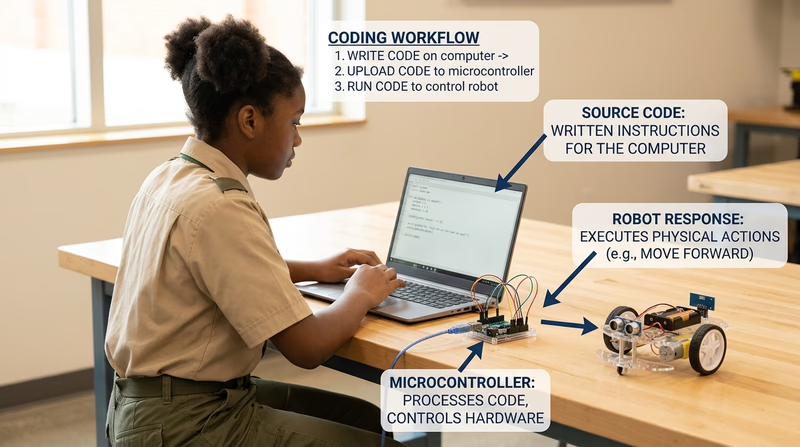
Not all programming stays on a screen. Some code controls robots, sensors, drones, traffic signals, thermostats, and wearable devices. In these projects, software connects to the physical world.
Data and Automation
Some programmers write code to organize information, spot patterns, or automate repeated tasks. A small script can rename files, total scores, clean up a spreadsheet, or graph weather readings faster than doing it by hand.
Creative Coding
Programming can also be a creative tool for music, animation, digital art, storytelling, and interactive media. Code is not only about business or engineering. It can also help you express an idea in a way other people can see, hear, or play.
Next Steps
You are about to start with something every programmer needs: safe habits. That includes digital safety, smart online behavior, and taking care of your body while you work at a screen.