Extended Learning
Congratulations
You have worked through programming as history, daily technology, safe practice, software rights, and hands-on projects. That already puts you ahead of many people who use software every day without ever thinking about how it is built.
The exciting part is that programming keeps opening new doors. You can use it to solve practical problems, make creative projects, understand data, and work with people who think in very different ways.
Debugging as a Life Skill
Debugging is more than fixing code. It is a way of thinking.
When programmers debug, they do not usually solve a problem by guessing wildly. They observe what happened, compare that to what should have happened, change one variable, test again, and learn from the result. That same approach works in many other places — science projects, gear planning, robotics, electronics, and even everyday decision making.
A Scout who learns debugging well becomes calmer when something breaks. Instead of saying, “It failed, so I quit,” they ask, “What is the smallest useful thing I can test next?”
How Programmers Work Together
Many people imagine programming as a lonely activity. In real projects, teamwork matters a lot. Programmers often work with designers, testers, writers, teachers, engineers, scientists, or customers. That means communication matters almost as much as syntax.
Good programmers explain ideas clearly, ask good questions, write notes another person can follow, and accept feedback without taking it personally. They also learn how to read code written by someone else, which is a very different skill from writing fresh code on your own.
Skills that matter beyond coding
- breaking a big problem into smaller pieces
- naming things clearly
- testing before making claims
- listening when users describe a problem
- improving a project without starting over every time
Programming in the Physical World
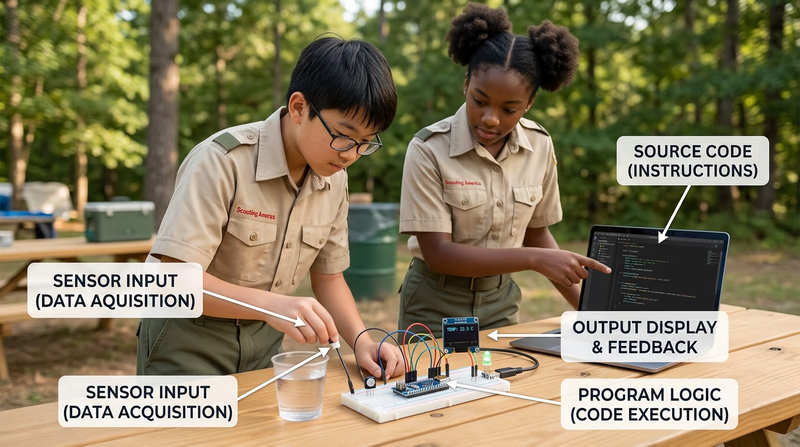
Some of the most exciting programming happens when code leaves the screen and affects real objects. Sensors can measure temperature, movement, light, or moisture. Microcontrollers can turn on motors, blink lights, trigger alarms, and collect data outdoors.
That opens the door to projects connected to Scouting life, such as a campsite weather display, a gear checklist app, a simple trail-condition dashboard, or a hydration reminder system.
Real-World Experiences
Programming experiences worth trying
Each one helps you keep learning after the badge
- Visit a makerspace: Many communities have public makerspaces where you can try robotics, 3D printing, electronics, and coding tools.
- Join a robotics or coding club: Working with a team teaches collaboration and project planning, not just syntax.
- Build a useful family or troop tool: A packing checker, menu calculator, or event sign-up helper turns coding into service.
- Attend a hackathon or coding workshop: Beginner-friendly events help you see how programmers solve problems together.
- Explore open-source projects: Reading real code written by other people helps you grow quickly.