Req 4 — Intellectual Property and Software Use
Programming is creative work. When someone writes software, designs a logo, creates documentation, or invents a new technical process, the law may protect that work in different ways. This requirement helps you understand the main protection types and the rules that tell people how software may be used.
Requirement 4a
The four big types are copyright, trademark, patent, and trade secret.
Copyright
Copyright protects original creative expression. In software, that usually includes the actual code someone wrote, certain graphics, sounds, and written documentation. It does not protect the general idea of “a to-do list app,” but it can protect the specific code and creative material used to build one.
Trademark
Trademark protects names, logos, and symbols that help people recognize a brand. A programming company might trademark the name of its app or its logo so other companies cannot confuse customers by pretending to be connected to that brand.
Patent
A patent protects certain inventions or processes for a limited time. Software-related patents can be complicated, but the main idea is that a new and non-obvious technical method may qualify for protection in some cases.
Trade secret
A trade secret protects valuable information a company keeps private, such as an algorithm, process, or method that gives it an advantage. Trade-secret protection depends on keeping the information secret.
How the four types differ
A quick way to keep them straight
- Copyright protects creative expression.
- Trademark protects brand identity.
- Patent protects certain inventions or technical methods.
- Trade secret protects valuable information kept confidential.
Requirement 4b
When you buy software, you often are not buying full ownership of the software itself. You are usually buying a license, which is permission to use it under certain rules.
Owning a physical item like a book means you can lend that copy, keep it, or give it away. Software is different because the creator usually keeps the rights to the program. Your license might limit how many devices can use it, whether you can change it, whether you can share it, or how long you may access it.
This is why a subscription app can stop working if the subscription ends, and why downloading one paid copy for many friends is not allowed.
The Difference Between Licensing and Owning Software (PDF) This official explanation helps you discuss why most software users receive permission to use software rather than full ownership rights. Link: The Difference Between Licensing and Owning Software (PDF) — https://filestore.scouting.org/filestore/Merit_Badge_ReqandRes/Requirement%20Resources/Programming/Req4-IP.docxRequirement 4c
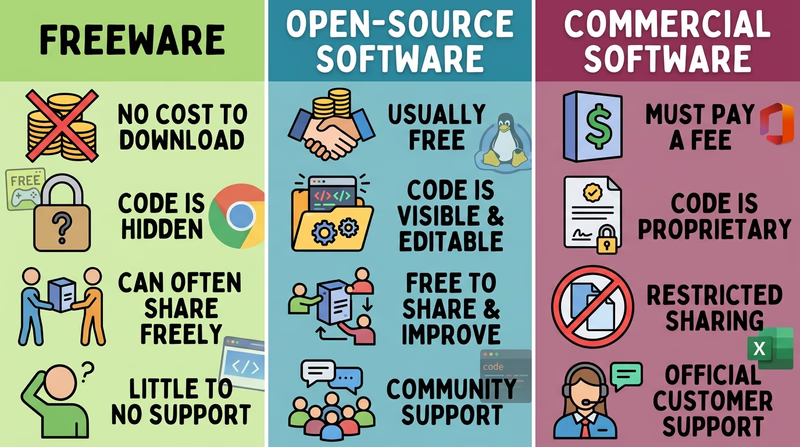
These three categories are easy to mix up, but they are not the same.
Freeware
Freeware is software you can use at no cost, but the creator still controls what you may do with it. You might be allowed to install it for personal use but not change it or redistribute it.
Open source
Open-source software makes its source code available under a license that allows people to study, use, modify, and often share it. But open source still has rules. Some licenses require you to include the original license, give credit, or share changes under the same terms.
Commercial software
Commercial software is sold for money or used to support a business model. It may be installed once, rented by subscription, or offered through an account. Commercial does not mean bad. It just means the software is part of a business product or service.
Why respect the terms? Because programmers deserve credit for their work, companies and nonprofits depend on those rules to keep projects running, and ignoring the license can be unfair or illegal.
🎬 Video: Open Source VS Commercial Software (video) — https://www.youtube.com/watch?v=SdW5pnha9kg
As you begin your own projects in the next requirement, this topic becomes practical. Every time you install a tool, reuse a library, or share your work, you are making choices about software rights and responsibilities.