Req 6b — Build a Programming Hobby
Programming does not have to become your job to become an important part of your life. It can support hobbies, creative projects, outdoor activities, and personal goals. This option is about asking, “How could coding make something I already enjoy even better?”
Ways programming can connect to hobbies and healthy living
Here are a few strong directions:
Robotics and maker projects
Programming can power model rovers, small robots, lights, sensors, and inventions. If you like building with your hands, coding can become the part that makes your project respond and move.
Game design
If you enjoy games, programming can turn you from a player into a creator. You might build simple mechanics, scoring systems, menus, or interactive stories.
Fitness and tracking
Programming can help you log workouts, graph mile times, count steps, track cycling routes, or study patterns in sleep and exercise data. That connects coding to a healthy lifestyle in a direct way.
Digital art and music
Some people use code to create animations, generative art, sound experiments, or interactive media. This is a strong option if you enjoy creativity as much as problem solving.
Outdoor and practical tools
Programming can support navigation tools, camping checklists, weather dashboards, or gear-planning tools. Scouts often enjoy seeing code solve a real outdoor problem.
Research what it would take
For whichever hobby path you choose, think through three practical questions:
- Training needed — Would you need lessons, tutorials, club support, or a new language?
- Expenses — Would you need software, hardware, subscriptions, a microcontroller, or other tools?
- Organizations and support — Are there clubs, online communities, camps, makerspaces, or nonprofits that could help?
Goal-setting for a coding hobby
Bring both short-term and long-term thinking to your counselor discussion
- Short-term goal: Something you could start this month, such as finishing a small game, building a step tracker, or trying a coding club.
- Skill goal: One specific thing you want to improve, such as debugging, web design, or controlling hardware.
- Long-term goal: Something larger, such as making a full app, joining a robotics team, or contributing to a project with others.
- Support plan: List the people, spaces, or organizations that could help you keep going.
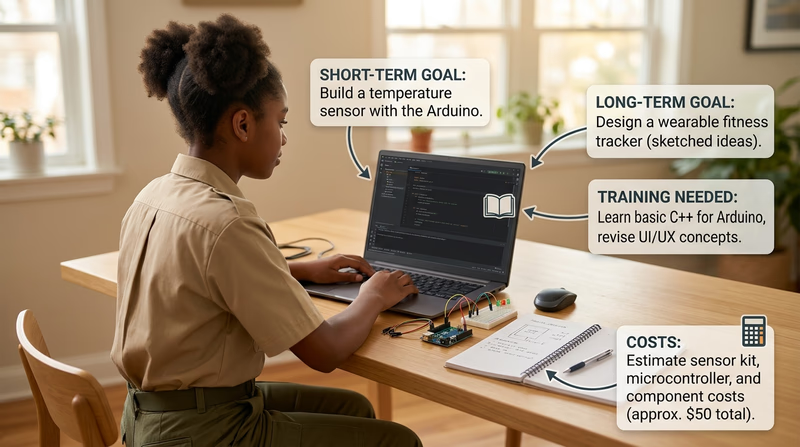
Whether you choose the career path or the hobby path, this requirement is about looking forward. Programming is not just a badge topic. It is a skill you can keep using in many parts of life.