Req 4 — Vectors and Pest Control
A vector is a living organism that carries a disease-causing germ from one host to another. Mosquitoes, ticks, fleas, and some rodents are classic examples. The vector may not be the disease itself, but it can be the vehicle that moves the disease.
Why does this matter? Because controlling the vector often lowers disease even when you cannot eliminate the germ completely. You may not be able to remove West Nile virus from nature, but you can reduce standing water where mosquitoes breed.
Home and camp control: what individuals can do
Many vector problems start with habits and local conditions.
Mosquitoes
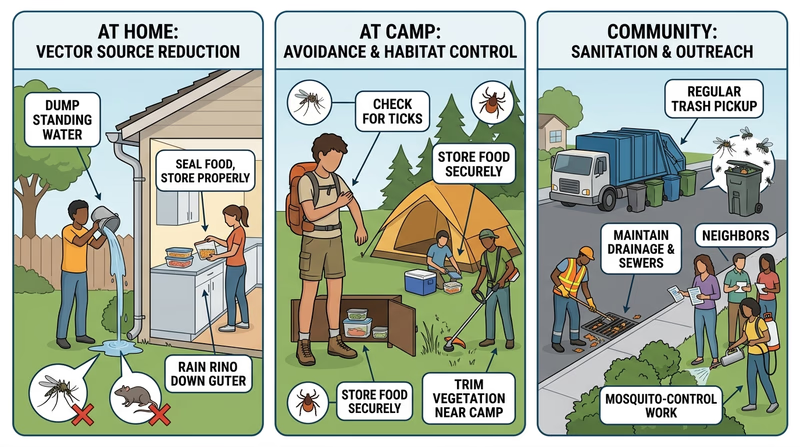
Mosquitoes breed in standing water. Individuals can dump water from buckets, flowerpots, tarps, old tires, and clogged gutters. At camp, empty containers, avoid leaving puddle traps around the site, and wear long sleeves or repellent when mosquitoes are active.
Ticks
Individuals can reduce tick risk by staying on trails, wearing long pants, using repellent as directed, and checking skin and clothing after outdoor activities. Campsites with tall grass and brush increase tick exposure.
Rodents
Mice and rats are attracted by food, trash, water, and shelter. At home and camp, store food in sealed containers, clean up crumbs, remove trash promptly, and block small entry points where rodents can get inside.
Simple vector control that Scouts can do
Small actions can lower risk fast
- Dump standing water around camp or home.
- Store food tightly so rodents cannot reach it.
- Keep sleeping and cooking areas clean to reduce pests.
- Wear protective clothing and check for ticks after outdoor activity.
- Report infestations early before they become larger problems.
What requires community-level action
Some vector problems are too large for one family or one patrol to solve alone.
Mosquito control across an entire town may require drainage work, seasonal monitoring, larvicide programs, public education, and coordinated treatment in high-risk areas. Rat control in a city may depend on trash systems, building maintenance, sewer conditions, and neighborhood-wide enforcement. Lead-up work such as abandoned-lot cleanup or storm-drain maintenance also reduces vector habitat.
This is a key public health lesson: some health risks are personal, but many are shared. If one house is spotless but the whole neighborhood has unmanaged trash and standing water, the problem can still spread.
Why vector control is important
Vector control prevents disease, lowers medical costs, protects outdoor recreation, and keeps outbreaks smaller. It also protects people who may not be able to protect themselves easily, including young children, older adults, and people with weaker immune systems.
After learning how communities control risk, you are ready to compare two real-world public health systems and choose which one to investigate.