Req 5a — Waste and Wastewater Systems
This option is about hidden systems. Most people flush, throw something away, and stop thinking about it. Public health workers cannot do that. They have to make sure sewage and trash are collected, separated, treated, and disposed of in ways that do not contaminate water, soil, food, or air.
Requirement 5a1
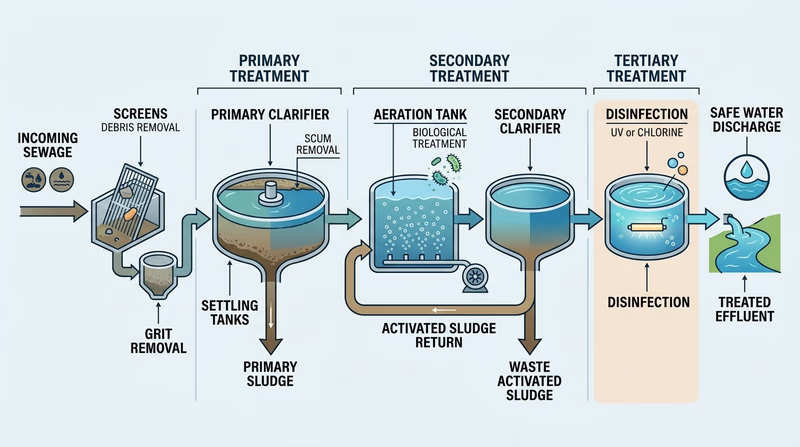
If you visit a wastewater treatment plant, watch for stages such as screening, settling, biological treatment, disinfection, and careful release or reuse. Each step removes something different: large debris, solids, organic waste, or harmful microbes.
If you visit a solid-waste operation, look for sorting, containment, compaction, recycling, hazardous-waste separation, and methods that keep leaking material from reaching soil or groundwater. Modern landfills are engineered systems, not just giant holes in the ground.
A strong answer to your counselor explains the process in order and ties each step back to public health. Ask yourself: What problem would happen if this step were skipped?
Questions to ask during the visit
These help you turn observations into a better explanation
- What are the first safety checks when waste arrives?
- How does the facility separate dangerous material from ordinary waste?
- What happens to liquids, odors, or runoff?
- How does the facility keep workers and the public safe?
- What laws or inspections does the facility have to follow?
Requirement 5a2
Do not just retell the tour in order. Pull out the most important ideas.
- What surprised you?
- Which safety step seemed most important?
- What part of the process depends on trained workers making good decisions?
- What would happen in your community if this facility shut down for a week?
Those questions turn a visit into a public health discussion instead of a travel report.
Requirement 5a3
In the wilderness, you do not have pipes, pumps, or engineered landfills. That means your patrol has to use outdoor ethics and sanitation skills to keep the environment — and other people — safe.
Human waste should be handled according to local rules and Leave No Trace guidance. In some places that means catholes; in others, it means pack-it-out systems or designated toilets. Trash should never be buried unless local rules explicitly allow a specific practice, because animals dig it up and weather exposes it again. Food scraps, grease, and wash water can attract animals and contaminate campsites.
The main public health idea is simple: keep waste away from water, camps, food areas, and wildlife.
EPA — Facts and Figures about Materials, Waste and Recycling Useful context for understanding how large the solid-waste challenge is and why safe management matters. Link: EPA — Facts and Figures about Materials, Waste and Recycling — https://www.epa.gov/facts-and-figures-about-materials-waste-and-recyclingIf this option is not the one you plan to do, compare it with the food-service option next. If it is your choice, the next page still helps you see how public health works in another everyday system.