Req 5b — Food Safety in Action
This option shows how public health works minute by minute. In a kitchen, safety depends on many small decisions: where food is stored, how hands are washed, whether raw meat touches ready-to-eat food, and whether someone checks temperatures instead of guessing.
Requirement 5b1
Preparation and workflow
Watch how food moves through the kitchen. Safe facilities separate raw and cooked foods, keep work surfaces clean, and avoid confusing workflows where one mistake can spread contamination.
Handling and hygiene
Food handlers protect meals by washing hands, using clean tools, avoiding bare-hand contact when appropriate, and staying home when sick. Good habits matter because bacteria do not need a dramatic mistake to spread.
Storage and contamination control
Cold foods should stay cold, hot foods should stay hot, and storage should keep drips, spills, and raw products from contaminating other items. Labels, dates, and organized shelving are public health tools, not just kitchen neatness.
What to notice during your visit
Look for signs that contamination is being prevented on purpose
- Separate areas for raw and ready-to-eat foods
- Handwashing stations that are easy to reach and actually used
- Covered, labeled storage in refrigerators and dry goods areas
- Clean thermometers and sanitation tools ready to use
- Managers or staff checking routines instead of assuming everything is fine
Requirement 5b2
Conditions that help microorganisms grow
Microorganisms grow best when they have moisture, nutrients, the right temperature, and enough time. Many foods provide all four. That is why cooked rice, meat, dairy, soups, sauces, and cut produce can become risky if they sit too long.
Preventing growth and spread
The best prevention methods are keeping food out of unsafe temperature ranges, avoiding cross-contamination, cleaning surfaces, washing hands, chilling leftovers quickly, and using safe storage times.
Killing harmful microorganisms
Proper cooking is one of the most important ways to kill disease-causing microbes. Heat works only if the food actually reaches the needed internal temperature, which is why guessing by color or “looks done” is not enough.
Requirement 5b3
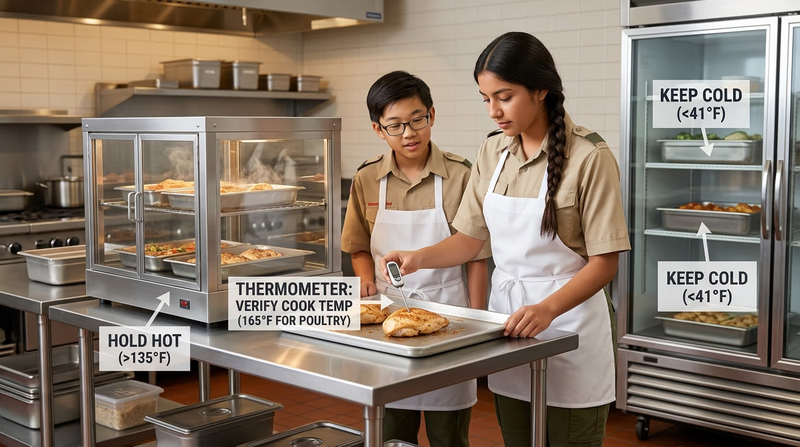
A thermometer replaces guessing with evidence. You cannot tell a safe internal temperature just by looking at meat, casseroles, or leftovers. Color, texture, and steam can fool you.
Thermometers also matter for refrigerators, freezers, hot-holding equipment, and dish sanitation systems. Public health depends on measurements because harmful microorganisms grow when food stays too warm for too long.
🎬 Video: The Importance of Cooking to a Safe Internal Temperature and How to Use a Food Thermometer — USDAFoodSafety — https://www.youtube.com/watch?v=-2KkV2yFiN0
Requirement 5b4
When you report back, focus on what the facility does to prevent a problem before anyone gets sick. That is the public health mindset.
Good discussion points include:
- the most important contamination-control step you saw
- one routine that looked small but mattered a lot
- how staff balanced speed with safety
- what could go wrong if the system broke down for one shift
You have now studied two real-world prevention systems. Next, the guide broadens out to other public health hazards in air, water, noise, and substance use.