Req 1 — Your Self-Introduction
This is where your public speaking journey begins — and it starts with the topic you know best: yourself. A self-introduction might seem simple, but organizing your thoughts and delivering them clearly to a group is a real skill. This requirement is designed to get you comfortable standing up and speaking, using a subject where you are already the expert.
Why Self-Introductions Matter
You will introduce yourself hundreds of times throughout your life — at a new school, at a job interview, at the start of a team project, or when meeting new people at camp. A strong self-introduction creates a positive first impression and helps others connect with you. It is one of the most practical speaking skills you can develop.
Building Your Introduction
A three- to five-minute talk needs structure, or it will feel like rambling. Here is a simple framework that works every time:
Opening (30 seconds) — Start with something that grabs attention. This could be a fun fact about yourself, a short story, or even a question to the audience. Avoid starting with “Um, hi, my name is…” — that is forgettable. Instead, try something like:
- “Last summer, I ate a scorpion. On purpose. Let me explain…”
- “If you had to describe yourself in three words, what would they be? Mine are curious, outdoors, and hungry.”
- “I have been a Scout for four years, and in that time I have learned one important thing — always check your boots for spiders.”
Body (2–3 minutes) — This is the main part. Cover three or four topics about yourself. Think of these as “chapters” of your talk:
- Who you are: Your name, age, school, family — the basics
- What you care about: Hobbies, interests, passions, Scouting adventures
- A story: Share one short, specific story that shows who you are (a camping trip, a challenge you overcame, something funny that happened)
- A surprising fact: Something the audience would not guess about you
Closing (30 seconds) — End with something memorable. Circle back to your opening, share what you are looking forward to, or leave the audience with a thought. A strong closing makes people remember you.
Handling Nervousness
Almost everyone feels nervous before speaking. That is completely normal — even professional speakers get butterflies. The trick is not to eliminate the nervousness but to manage it.
Nerves Management Toolkit
Techniques to calm yourself before speaking
- Breathe deeply: Take three slow, deep breaths before you stand up. Inhale for four counts, hold for four, exhale for four.
- Power pose: Stand tall with your shoulders back for two minutes before your talk. Research suggests this can boost your confidence.
- Prepare thoroughly: The number one cure for nervousness is knowing your material cold. Practice until you can deliver your talk without reading it.
- Arrive early: Get comfortable in the room before others arrive. Stand where you will speak. It will feel less unfamiliar when it is time to start.
- Focus on the message: Shift your attention from “everyone is watching me” to “I have something worth sharing.” That mental flip changes everything.
- Accept imperfection: You will stumble. You might lose your place. That is fine. Your audience wants you to succeed, and a small mistake makes you relatable.
Practice Makes Comfortable
You would not perform a skit at camp without rehearsing, and you should not give a speech without practicing either. Here is how to prepare:
- Write it out — Put your key points on paper. You do not need a word-for-word script, but having an outline helps you stay on track.
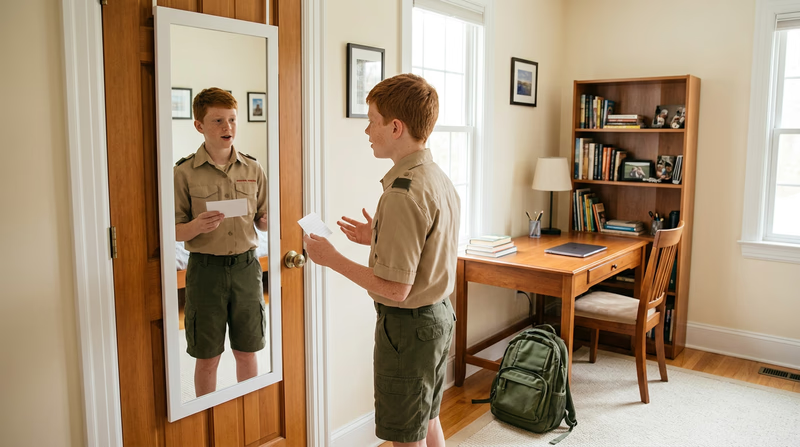
- Say it out loud — Practicing in your head is not the same as saying the words. Speak your introduction out loud, even if it is just to your bedroom wall.
- Time yourself — Set a timer. Three minutes is shorter than you think, and five minutes is longer than you think. Adjust until you are in the range.
- Practice in front of someone — A family member, a friend, even your pet. Getting used to having eyes on you is half the battle.
- Record yourself — Use your phone to record a practice run. Watching it back is uncomfortable but incredibly useful. You will notice habits you did not know you had.
Choosing Your Audience
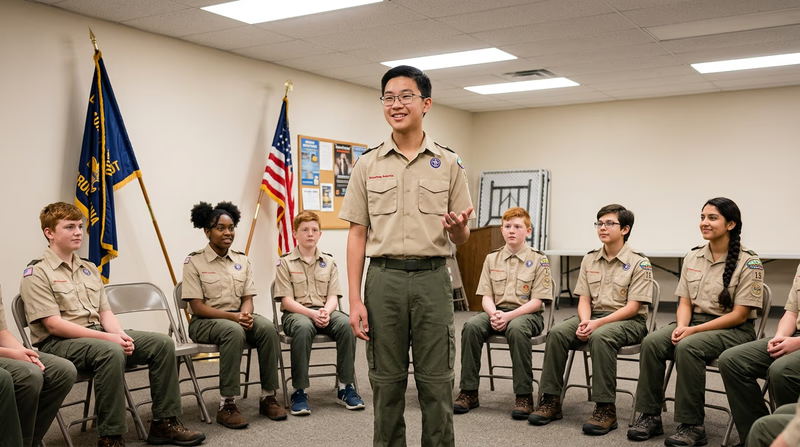
The requirement says “an audience such as your troop, class at school, or some other group.” Choose a group where you feel reasonably comfortable. Your troop is a great option because everyone there is rooting for you. A school class, a youth group, or a family gathering all work too. The key is that it is a real audience — not just your merit badge counselor one-on-one.
Explore More Resources
Toastmasters: Tips for New Speakers Practical advice from the world's largest public speaking organization, including tips on overcoming fear and structuring your first speech.