Req 3 — Impromptu Speaking
So far, you have had time to plan, practice, and polish your speeches. Now the training wheels come off. Impromptu speaking means standing up and talking about a topic you did not know about in advance — no notes, no rehearsal, just you and your thoughts. This might sound terrifying, but it is actually a skill you already use every day. Every time you answer a question in class, explain something to a friend, or share your opinion at a patrol meeting, you are speaking impromptu.
Why Impromptu Speaking Matters
Real life rarely gives you time to prepare a speech. A teacher calls on you. A boss asks for your opinion in a meeting. A reporter sticks a microphone in your face. The ability to organize your thoughts quickly and express them clearly is one of the most valuable communication skills you can have. It shows people that you can think clearly under pressure — and that builds trust and respect.
The PREP Method
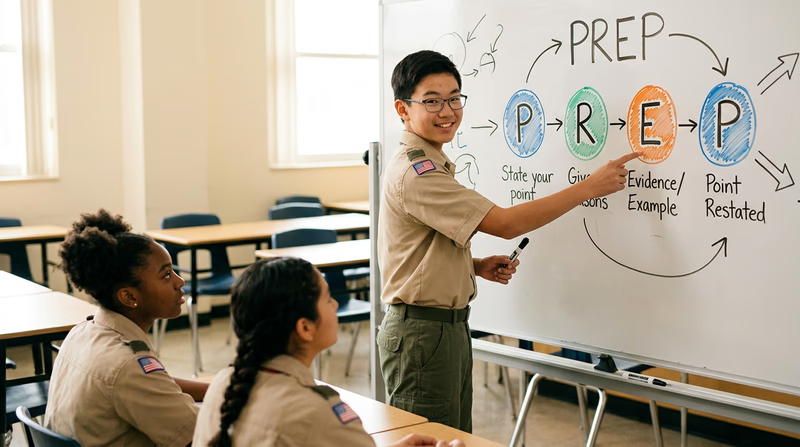
When you have zero preparation time, you need a mental framework — a structure you can grab onto in the first few seconds. The most popular one is called PREP:
- P — Point: State your main idea right away. “I believe…” or “The most important thing about this topic is…”
- R — Reason: Explain why you hold that point. “Here’s why…” or “The reason is…”
- E — Example: Give a specific example, story, or piece of evidence. “For instance…” or “I experienced this when…”
- P — Point: Restate your main idea to close. “And that is why I believe…”
That is it. Four steps. You can use this framework for almost any topic, and it naturally fills about two minutes — exactly what this requirement asks for.
Other Frameworks for Quick Thinking
PREP is not the only option. Here are two more structures that work well:
Past–Present–Future
- Past: “In the past, this was…”
- Present: “Today, it is…”
- Future: “In the future, it could be…”
This works especially well for topics about change, technology, or trends. If your counselor gives you a topic like “space exploration” or “recycling,” this framework practically fills itself.
Problem–Solution
- Problem: “There is a challenge with…”
- Solution: “One way to address it is…”
- Benefit: “If we do this, the result would be…”
This is great for persuasive or opinion-based topics. It shows that you can identify issues and think critically about how to solve them.
What Your Counselor Will Do
Your counselor will choose a topic that is interesting to you — they know your hobbies, your Scouting experiences, and what you care about. They will not try to stump you with something you know nothing about. The point is not to test your knowledge but to see that you can organize your thoughts and speak clearly without preparation.
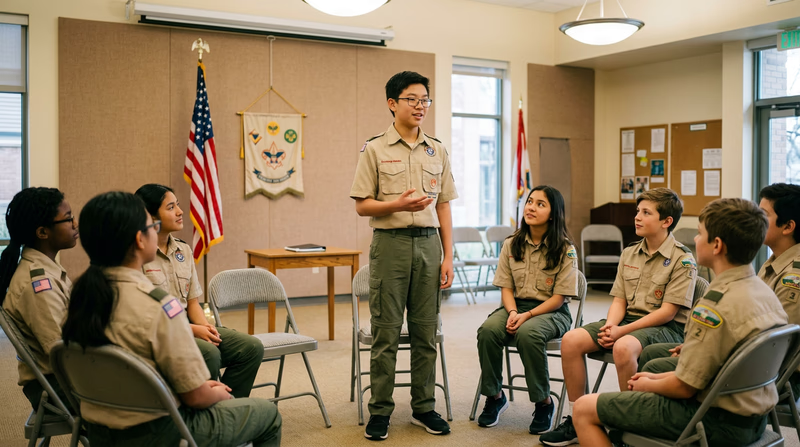
You might be asked to speak during a group discussion (like a patrol meeting or a roundtable) or directly to your counselor. Either way, the expectation is at least two minutes of coherent, on-topic speaking.
Tips for Impromptu Success
Impromptu Speaking Survival Guide
Quick tips for when you are put on the spot
- Pause before you start: Take two or three seconds to collect your thoughts. A brief pause looks confident, not confused.
- Pick one main idea: Do not try to cover everything. Choose one angle and go deep on it.
- Use transition phrases: “Another reason is…” and “For example…” buy you thinking time while sounding polished.
- Speak slowly: When you are nervous, you speed up. Consciously slow down. It gives you time to think and makes you easier to understand.
- End on purpose: Do not trail off with “so… yeah…” Instead, circle back to your opening point and close with a clear final sentence.
- Smile: A genuine smile puts you and your audience at ease. It signals confidence even when your heart is racing.
Practice Makes Impromptu Feel Natural
The irony of impromptu speaking is that the best way to get good at it is to practice. Here are ways to build your skills before the big day:
- Table Topics: This is a Toastmasters exercise where someone names a topic and you speak for one to two minutes. Do this with friends or family at dinner.
- Question of the Day: Each morning, pick a random topic (use an app, a dictionary, or a news headline) and give a two-minute PREP response out loud.
- Debate a friend: Pick a silly topic (“Is cereal a soup?”) and each argue a side for two minutes. This builds your ability to think quickly and support a position.
- Volunteer in class: Every time a teacher asks a question, raise your hand. The more you practice speaking up in low-stakes situations, the easier it becomes in high-stakes ones.