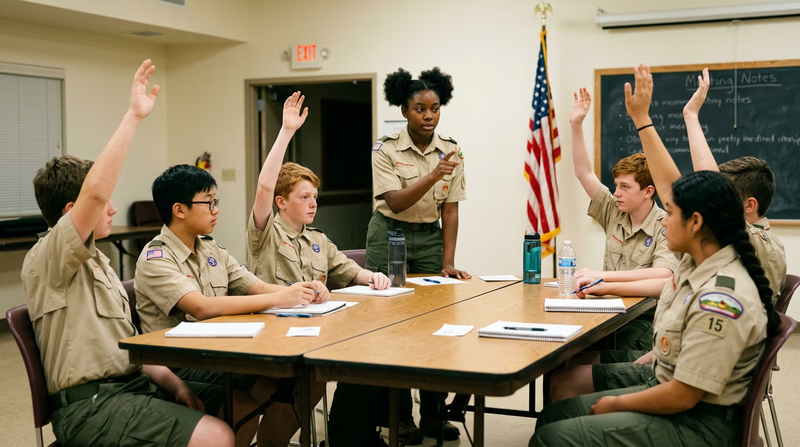
Req 5 — Parliamentary Procedure
Public speaking is not only about standing in front of a crowd and giving a speech. It is also about leading productive conversations, keeping meetings on track, and making sure every voice in the room gets heard. That is what parliamentary procedure is all about — and it is a skill that will serve you in Scouting, school, and far beyond.
What Is Parliamentary Procedure?
Parliamentary procedure is a set of rules for running meetings fairly and efficiently. The most widely used set of rules is called Robert’s Rules of Order, written by Henry Martyn Robert in 1876. Robert was a U.S. Army officer who attended a church meeting that turned into chaos because nobody agreed on how to run it. He decided to write a guidebook, and it has been the standard ever since.
The core idea behind parliamentary procedure is simple: every member of a group deserves a fair chance to speak, propose ideas, and vote — and no one person should dominate the conversation.
Key Roles in a Meeting
Every formal meeting has specific roles. Understanding who does what is the first step to running a meeting well.
- Chair (or Presiding Officer): The person who runs the meeting. The chair calls the meeting to order, recognizes speakers, keeps the discussion on track, and calls for votes. The chair stays neutral during debate.
- Secretary: Takes notes (called “minutes”) on what happens during the meeting. The minutes include what was discussed, what was decided, and any votes taken.
- Members: Everyone else in the meeting. Members can propose ideas (motions), discuss them, and vote on them.
The Flow of a Meeting
A formal meeting follows a set order, called an agenda. Here is a typical structure:
- Call to Order — The chair says, “The meeting will come to order.”
- Reading of Minutes — The secretary reads the notes from the last meeting. Members approve them or suggest corrections.
- Reports — Officers or committees share updates.
- Old Business — Unfinished items from previous meetings.
- New Business — New items for discussion and decision.
- Announcements — General information for members.
- Adjournment — The chair officially ends the meeting.
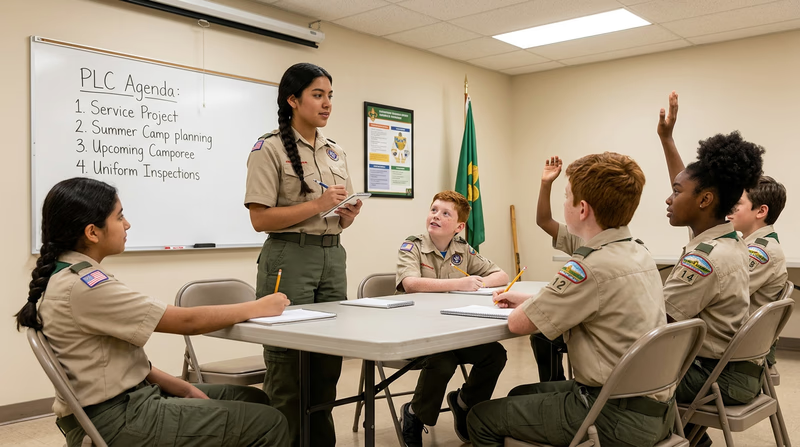
How Motions Work
A motion is a formal proposal for the group to do something. Motions are the engine of parliamentary procedure — they are how decisions get made. Here is how the process works:
The Life of a Motion
Six steps from idea to decision
- A member makes a motion: “I move that we hold our next campout at Lake Wilson.”
- Another member seconds the motion: “I second the motion.” (This shows that at least two people think the idea is worth discussing.)
- The chair states the motion: “It has been moved and seconded that we hold our next campout at Lake Wilson. Is there any discussion?”
- Members discuss: Anyone who wants to speak raises their hand. The chair recognizes them one at a time. Speakers should address the chair, not each other.
- The chair calls for a vote: “All those in favor, say ‘aye.’ All opposed, say ’no.’”
- The chair announces the result: “The motion carries” (passed) or “The motion fails” (did not pass).
Types of Motions You Should Know
Not all motions are created equal. Some motions take priority over others. Here are the most important ones:
Main Motion — Introduces a new topic for the group to consider. This is the most common type. “I move that we buy new troop T-shirts.”
Amendment — Changes a motion that is already on the table. “I move to amend the motion to specify blue T-shirts instead of red.” The amendment is voted on first, then the original motion (as amended, if the amendment passes).
Motion to Table — Temporarily sets aside a motion to deal with something more urgent. “I move to table this motion until next month’s meeting.”
Motion to Adjourn — Ends the meeting. “I move that we adjourn.” This motion requires a second and a vote.
Point of Order — A member believes a rule is being broken and asks the chair to correct it. “Point of order — we have not had a second on this motion.” The chair rules on it immediately.
Point of Information — A member asks a factual question. “Point of information — how much money is in the treasury?” This does not require a vote.
Running the Meeting Yourself
For this requirement, you may either lead a discussion or meeting using parliamentary procedure, or answer your counselor’s questions about the rules. If you choose to lead a meeting, here is how to prepare:
Meeting Leader Preparation
Get ready to chair a meeting
- Write an agenda: List the items to be discussed in the correct order (call to order, minutes, reports, old business, new business, announcements, adjournment).
- Assign a secretary: Someone needs to take minutes. Ask a fellow Scout before the meeting starts.
- Prepare at least one item for new business: Have a motion ready so the group has something to practice with.
- Review the motion process: Know the six steps from memory so you can guide the group through them.
- Stay neutral: As chair, you do not take sides during debate. Your job is to make sure everyone gets a fair chance to speak.
- Keep it moving: If discussion drags on, you can say, “Is there any further discussion?” and then call for a vote.