Pulp and Paper Merit Badge — Complete Digital Resource Guide
https://merit-badge.university/merit-badges/pulp-and-paper/guide/
Introduction & Overview
Paper is so common that it almost disappears into the background. You write on it, mail it, recycle it, unwrap food from it, and carry it home in boxes and bags. The Pulp and Paper merit badge helps you notice the huge system behind those everyday objects — forests, fiber, chemistry, machines, design, recycling, and careers.
This badge is also about trade-offs. Paper products can be useful, renewable, recyclable, and engineered for specific jobs, but they also depend on land, water, energy, and smart management. As you work through the guide, you will see how the industry tries to balance performance, cost, and stewardship.
Then and Now
Then
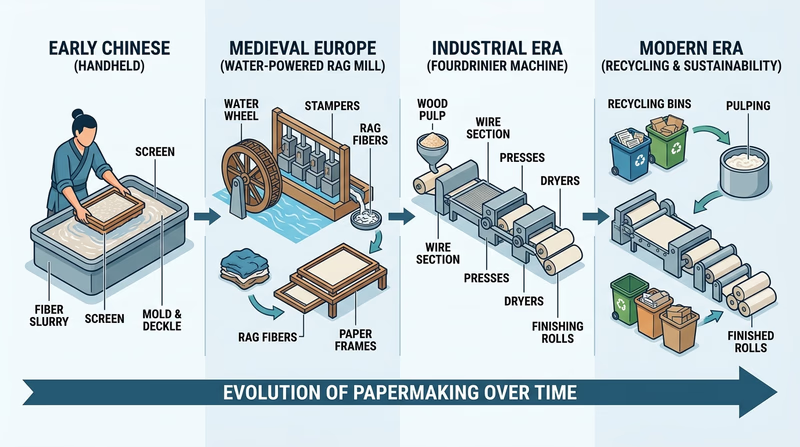
Long before modern paper mills, people needed lightweight surfaces for writing and record-keeping. Ancient civilizations used clay tablets, bark, parchment, papyrus, and cloth. True papermaking is usually traced to China around the second century, where plant fibers were beaten into a watery slurry, lifted on a screen, and dried into thin sheets.
That idea traveled slowly westward along trade routes. Over centuries, papermaking spread through the Islamic world into Europe, where mills used water power to crush linen and cotton rags into pulp. Early paper was valuable. Books were copied by hand, documents were stored carefully, and paper was something people saved.
Now
Today, paper is made at industrial scale from wood fibers and recovered recycled fiber. A single paper machine can produce enormous rolls that are later turned into copier paper, tissue, paperboard, cartons, labels, food packaging, and shipping boxes. Paper also competes with plastic, metal, glass, and digital media, so modern mills focus on efficiency, performance, and sustainability.
Instead of being rare, paper is now part of nearly every supply chain. It carries information, protects products, absorbs moisture, cushions fragile items, and can often be recycled into something new. That is why understanding paper means understanding forests, manufacturing, consumer habits, and waste systems all at once.
Get Ready!
This badge will feel more hands-on than many Scouts expect. You will look closely at products in your own home, learn the language of mills and forests, compare manufacturing steps, and even make paper yourself. By the time you finish, a cardboard box or paper towel roll will look a lot less ordinary.
Kinds of Pulp and Paper
Printing and Writing Papers
These are the papers people usually picture first: notebook paper, copier paper, sketch paper, envelopes, and book pages. They need good strength, predictable thickness, and a surface that works well with pencil, pen, toner, or ink.
Packaging Papers and Paperboard
Packaging is one of the biggest uses of pulp and paper today. This category includes corrugated boxes, folding cartons, paper bags, and heavy paperboard used to protect products. These materials are engineered more for strength, stiffness, and cushioning than for smooth writing.
Tissue and Sanitary Papers
Toilet tissue, facial tissue, napkins, and paper towels are made for softness, absorbency, and quick use. They are usually lighter and fluffier than writing paper because the goal is to soak up liquid or provide comfort, not survive repeated handling.
Specialty Papers
Some papers are coated, laminated, waxed, textured, heat-resistant, grease-resistant, or turned into labels and release liners. Specialty papers solve a specific problem. A bakery wrapper, a milk carton, and a glossy magazine page may all start with pulp, but they are engineered very differently.
What to Notice as You Learn
These questions will help you think like a paper engineer- Source: What fibers or raw materials were used to make this product?
- Purpose: What job does the paper need to do well?
- Trade-offs: Does it need softness, strength, smoothness, brightness, or absorbency?
- After use: Can it be reused, recycled, composted, or only thrown away?
Ready to start with the story behind one of the world’s most useful materials? First, trace how papermaking developed and why paper still matters so much.
Req 1 — Paper Through History
If paper disappeared for one week, you would notice fast. Shipping would slow down, food packaging would change, labels would go missing, schools and offices would scramble, and stores would run short of cartons, tissues, receipts, and paper towels. That is why this requirement is about more than old mills and ancient history. It is about how one material became part of almost every daily system people rely on.
A Short History of Papermaking
The story usually begins in China, where early papermakers discovered that plant fibers could be soaked, beaten into pulp, suspended in water, and lifted out on a screen. When the water drained away, the fibers dried into a thin sheet. That basic idea still describes paper today.
From China, papermaking spread to other regions over centuries. Craftspeople in the Islamic world improved techniques and built mills. Later, paper production reached Europe, where rag paper made from linen and cotton became important for books, maps, legal records, and trade. Water-powered mills let workers process more fiber than hand labor alone.
For a long time, old cloth rags were the main raw material. That became a problem as demand for newspapers, books, and business records exploded. By the 1800s, inventors developed ways to get usable fibers from wood. That change transformed paper from a valuable material into a mass-market product.
Why Wood Changed Everything
Trees contain cellulose fibers that can be separated, cleaned, and turned into pulp. Once mills learned how to do that at scale, paper became cheaper and more available. Newspapers could be printed in huge numbers. Packaging expanded with industrial trade. Schools, governments, and businesses could all use more paper without depending on limited rag supplies.
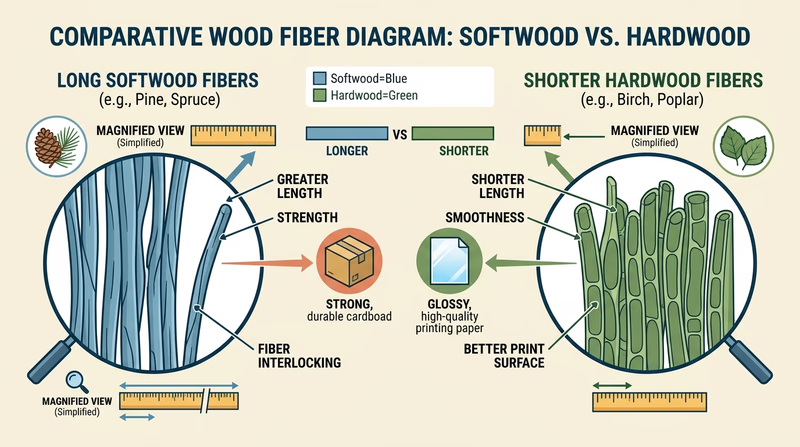
Wood also made it possible to tailor pulp to different products. Longer fibers from many softwoods help create strength. Shorter fibers from many hardwoods can improve smoothness and printing quality. Recycled fiber adds another important source for new paper and paperboard.
Paper’s Role in Society
Paper helps people communicate, organize, protect, and clean.
Communication and Learning
Books, notebooks, worksheets, maps, signs, and packaging labels all depend on paper or paperboard. Even in a digital world, paper is still useful because it is easy to carry, mark up, stack, print, archive, and recycle.
Packaging and Shipping
E-commerce has made corrugated boxes, protective inserts, and paper mailers even more important. A product may be made in one place, packed in another, shipped through several warehouses, and delivered to a home — with paper packaging helping at every step.
Hygiene and Food Service
Tissues, napkins, toilet paper, paper towels, cups, cartons, and wraps support sanitation and convenience. These are products people use quickly and replace often, which is why recycling, fiber sourcing, and responsible use matter.
Ways Paper Shows Up in Daily Life
Look for these roles around you today- Information: books, receipts, labels, mail, instructions.
- Protection: boxes, cartons, dividers, sleeves, and wraps.
- Absorption: tissues, paper towels, coffee filters, and napkins.
- Presentation: gift wrap, greeting cards, magazines, and display packaging.
Paper’s Role in the Economy
The pulp and paper sector supports a chain of jobs, not just mill workers. It includes foresters, loggers, truck drivers, machine operators, mechanics, chemists, lab technicians, designers, recycling workers, warehouse staff, and packaging engineers. When you buy cereal in a carton, receive a box in the mail, or use a paper napkin in a restaurant, you are touching part of that economic network.
Paper products also connect rural and urban economies. Forestland and fiber production often begin in rural areas. Converting, printing, packaging, retail, and recycling may happen closer to towns and cities. That makes paper an example of a material that moves through many communities before and after you use it.
🎬 Video: The History of Paper From Ancient China to Modern Times (video) — https://youtu.be/gvdeiWWOG8w
In the next requirement, you will move from history to the modern industry itself — starting in the forest, where the raw material for most paper begins.
Req 2 — Forests, Fiber, and Stewardship
This requirement covers four connected parts of the industry:
- How trees are planted, grown, and harvested
- How forests are managed to meet long-term demand
- How sustainable forest management shapes decisions
- How mills and land managers reduce pollution
Think of this as the forest-to-factory foundation for the whole badge. Before a sheet of paper exists, someone has to grow fiber, protect land, plan future harvests, and reduce the impact of manufacturing.
Requirement 2a: Planting, Growing, and Harvesting Trees
The industry begins with fiber supply. In some regions, companies manage their own timberland. In others, they buy wood from private landowners or public sources. Either way, the goal is the same: produce a reliable supply of usable wood fiber.
Planting may happen naturally or by reforestation. Natural regeneration means new trees grow from seeds already in the area. Reforestation means workers plant seedlings after harvest. Seedlings may be chosen for fast growth, disease resistance, straight trunks, or fiber traits that work well for pulp products.
Growing trees is not just “leave them alone and wait.” Foresters track tree spacing, competing vegetation, insect pressure, storm damage, and fire risk. Some stands are thinned so the remaining trees have more sunlight, water, and room to grow. Different species grow at different rates, and mills choose species based on the product they want to make.
Harvesting can be done in different ways. Some cuts remove most trees in one area and then replant. Other methods remove selected trees over time. After harvest, logs are sorted by size, species, and destination. Higher-value logs may become lumber or veneer, while smaller logs, tops, and chips can supply the pulp and paper industry.
🎬 Video: How They Grow Trees for Paper Manufacture (video) — https://youtu.be/qNX5EkbqYek
Requirement 2b: Managing Forests to Match Supply and Demand
A mill cannot wait until it runs out of trees and then suddenly grow more. Forest management works on long timelines, so companies forecast future needs years or even decades ahead. They estimate how much fiber their products will require, how fast different forests grow, and how much land must be planted or protected to keep the cycle going.
One key idea is sustained yield. That means harvesting at a rate the forest can replace over time. Foresters use inventories, sample plots, satellite data, and growth models to estimate how much wood is standing now and how much will be available later. If demand rises, they may need more land, better productivity, more recycled fiber, or different product planning.
Supply is also balanced by using more than one source of fiber. Mills may combine company-owned timber, purchased logs, sawmill chips, and recovered paper. That helps them stay flexible if storms, pests, drought, fire, or market shifts change the available wood supply.
🎬 Video: Forest Management (video) — https://youtu.be/jGvlrhivWo8
How the Industry Tries to Keep Pace
These are the levers foresters and mills can adjust- Plan ahead: estimate how much fiber future products will need.
- Track growth: measure how quickly forests are regenerating and maturing.
- Diversify supply: use multiple landowners, species, and recycled inputs.
- Protect productivity: reduce losses from pests, disease, erosion, and wildfire.
Requirement 2c: Sustainable Forest Management
Sustainable forest management means treating forests as long-term working ecosystems, not one-time mines for wood. In practice, that includes replanting, protecting water quality, reducing soil damage, maintaining wildlife habitat, respecting laws and land-use rules, and keeping records that show how wood was sourced.
Many companies follow certification systems or supplier standards that require audits and documented practices. Even when forests are harvested, the goal is to leave the land able to keep producing fiber and supporting ecological functions in the future.
A strong SFM plan asks more than “How much wood can we cut?” It also asks:
- What happens to streams and wetlands?
- Are we protecting soil and reducing erosion?
- Are different age classes and habitats being maintained across the landscape?
- Can future generations still use this land productively?
🎬 Video: Sustainable Forestry (video) — https://youtu.be/dYFt-3LNNNg
Requirement 2d: Addressing Pollution
Papermaking uses large amounts of water, energy, and chemicals, so pollution control is a major part of modern mill design. One way the industry has addressed pollution is by improving wastewater treatment. Water used in pulping and papermaking can carry fibers, organic material, and process chemicals. Mills reduce that impact by capturing solids, treating wastewater before discharge, and reusing water inside the plant when possible.
A second way is by reducing air emissions and cleaner chemical use. Modern recovery systems, scrubbers, and process improvements can reduce sulfur compounds, particulates, and other emissions. Mills have also changed bleaching chemistry and process controls to lower the release of harmful compounds compared with older methods.
Other improvements include energy recovery from process byproducts, better spill prevention, more recycling of scrap fiber, and tighter environmental monitoring.
🎬 Video: Green Spotlight on the Paper Industry (video) — https://youtu.be/bNjp_J3yang
In Req 1, you looked at why paper matters. In this requirement, you saw what it takes to keep raw material flowing responsibly. Next, you will zoom in on the fibers themselves and how wood becomes pulp.
Req 3 — Fibers, Pulp, and Bleaching
This requirement moves from the forest into the fiber itself. Before you start the subrequirements, be ready to name at least four important papermaking trees. Common examples include pine, spruce, fir, and hemlock from the softwood group, plus eucalyptus, birch, aspen, and poplar from the hardwood group.
Softwoods often provide longer fibers that help with strength. Hardwoods often provide shorter fibers that can improve smoothness, opacity, and print quality. Mills mix fibers because different products need different performance.
🎬 Video: What Kind of Tree Does Paper Come From (video) — https://youtube.com/shorts/oRgPQdX0CLI
Requirement 3a: Other Uses for Trees and Forestland
A tree grown on industrial forestland is not useful only for paper. Different parts of the same tree may end up in different industries. Straight, high-quality sections may become lumber or plywood. Smaller logs, chipped residues, or lower-grade wood may be used for pulp. Bark and other byproducts may be used as fuel or soil products in some operations.
The land itself often has more than one purpose too. Managed forestland can support wildlife habitat, watershed protection, hunting leases, recreation, erosion control, and carbon storage. In some places, roads built for forestry also provide access for firefighting, research, or maintenance crews.
That is why foresters think in terms of multiple use. A working forest can produce fiber while still supporting streams, habitat, and recreation if it is managed carefully.
Purposes and Techniques of Forest Management (website) Explains how forestland can support more than one use at the same time, including timber, water, wildlife, and grazing. Link: Purposes and Techniques of Forest Management (website) — https://www.britannica.com/science/forestry/Range-and-forageRequirement 3b: Two Ways of Getting Fibers From Wood
The two big approaches are mechanical pulping and chemical pulping.
Mechanical pulping
In mechanical pulping, wood is ground or refined until the fibers separate. This keeps most of the wood substance, including lignin, which is the material that helps hold the tree together. Mechanical pulping usually gets more pulp from each log because less material is dissolved away.
Chemical pulping
In chemical pulping, wood chips are cooked with chemicals that dissolve much of the lignin and free the cellulose fibers. This process usually gives a lower yield than mechanical pulping, but the resulting fibers are often stronger and better suited to many durable paper products.
Major differences
| Method | Main idea | Strengths | Trade-offs |
|---|---|---|---|
| Mechanical | Physically grind or refine wood apart | High fiber yield, good for some printing uses | More lignin stays in the pulp, which can affect brightness and aging |
| Chemical | Use chemicals to dissolve lignin and release fibers | Stronger pulp, cleaner cellulose fiber | Lower yield from the original wood, more process complexity |
A simple way to remember it: mechanical pulping tears wood apart; chemical pulping cooks it apart.
🎬 Video: From Tree to Paper (video) — https://youtube.com/shorts/c-87Bw_lXso
Requirement 3c: Why Some Pulps Are Bleached
Not every paper product needs bright white pulp. Shipping boxes and some packaging grades can work well with brown or unbleached pulp. But products such as office paper, some tissues, high-brightness printing paper, and certain packaging grades may need lighter color and cleaner-looking fiber.
Bleaching helps remove or alter leftover color-causing compounds, especially those linked to lignin. The goal is usually one or more of these:
- increase brightness
- improve appearance for printing
- create a cleaner-looking sheet
- meet the product expectations of customers
Bleaching is not just “pour in bleach.” In industrial papermaking, it happens in controlled stages. After chemical pulping and washing, the pulp may go through one or more treatment steps using specific chemicals. Between stages, it is washed and tested so the mill can reach the desired brightness without damaging fiber strength more than necessary.
🎬 Video: Bleaching (video) — https://youtu.be/d43q0j831f8
Req 2 focused on growing and managing trees. This requirement showed what mills want from those trees once they arrive: usable fiber with the right properties. Next, you will follow that pulp all the way into finished paper and recycling.
Req 4 — From Pulp to Paper
A paper mill is really a giant water-management and fiber-alignment system. Pulp starts as a wet suspension of loose fibers. The mill spreads those fibers into a thin layer, drains and presses out water, dries the sheet, and winds it into rolls. Recycling runs that process in reverse first: used paper is collected, sorted, pulped again, cleaned, and then turned into new products.
How Paper Is Made
Here is the basic industrial sequence:
- Prepare the pulp. Fibers are mixed with lots of water to make a slurry.
- Form the sheet. The slurry is spread on a moving screen so water can drain away.
- Press the sheet. Rollers squeeze out more water and bond the fibers more tightly.
- Dry the paper. Heated cylinders or other drying systems remove the remaining moisture.
- Finish the sheet. The paper may be smoothed, coated, cut, wound, or converted for its final use.
The surprising part is how wet the process starts. A newly formed sheet is mostly water. Getting that water out efficiently is one of the biggest engineering challenges in papermaking.
🎬 Video: Production of Paper (video) — https://youtu.be/OEbf9ffkyy8
🎬 Video: From Tree to Sheet: How Paper Is Made | Unveiling the Manufacturing Process (video) — https://youtu.be/invUjqvE0Oc
How Paper Is Recycled
Paper recycling gives used fiber another job. The process usually includes these steps:
- Collection: paper is gathered from homes, schools, stores, and businesses.
- Sorting: materials are separated by grade because cardboard, office paper, and mixed paper do not all behave the same way.
- Repulping: the paper is mixed with water and broken back into fibers.
- Cleaning and screening: contaminants such as staples, plastic, tape, or food residue are removed.
- Deinking or refining: depending on the grade, inks and coatings may be reduced and the fiber adjusted.
- Remanufacturing: the recycled pulp is blended and turned into new paper or paperboard.
Fiber cannot be recycled forever. Every time paper is processed, the fibers tend to get shorter and weaker. That is why many products use a mix of virgin fiber and recycled fiber.
Making Paper by Hand
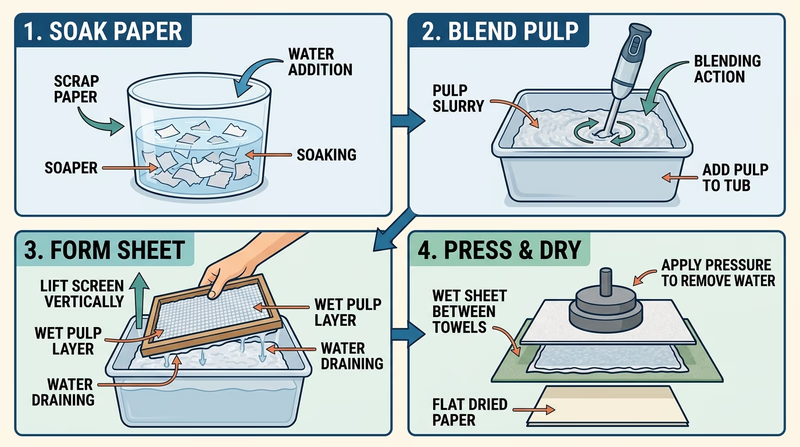
Hand papermaking is a small-scale version of the same core idea. You make a pulp slurry, lift it on a screen, remove water, and dry the sheet.
Simple hand-papermaking process
- Tear scrap paper into small pieces.
- Soak the pieces in water.
- Blend or mash them into pulp.
- Stir the pulp into a tub of water.
- Lift the slurry with a screen or mould and deckle.
- Let water drain off.
- Press the wet sheet between towels or cloth.
- Dry it flat.
You can add flower petals, thread, or bits of colored paper for texture, but the real lesson is how fibers form a sheet when water drains away.
🎬 Video: How to Make Handmade Paper from Recycled Materials (video) — https://youtu.be/Ow5LeG-zzyg
Before You Make a Sheet by Hand
Set yourself up for a cleaner result- Use small scraps: they soak and blend more evenly.
- Add plenty of water: thin slurry forms more consistent sheets.
- Press gently but firmly: too much force can tear the wet sheet.
- Allow full drying time: damp paper wrinkles and tears easily.
In Req 3, you learned how pulp is produced. Here, you followed the rest of the path into finished paper and recycled fiber. Next, you will see how chemistry and surface treatment change what paper can do.
Req 5 — Coatings and Specialty Papers
Some paper is meant to absorb ink quickly. Some is meant to resist grease. Some needs to look bright and glossy under store lights. Coated and specialty papers exist because plain paper cannot do every job equally well. This requirement is about how manufacturers tune the surface and structure of paper to match a purpose.
What Coated Paper Is
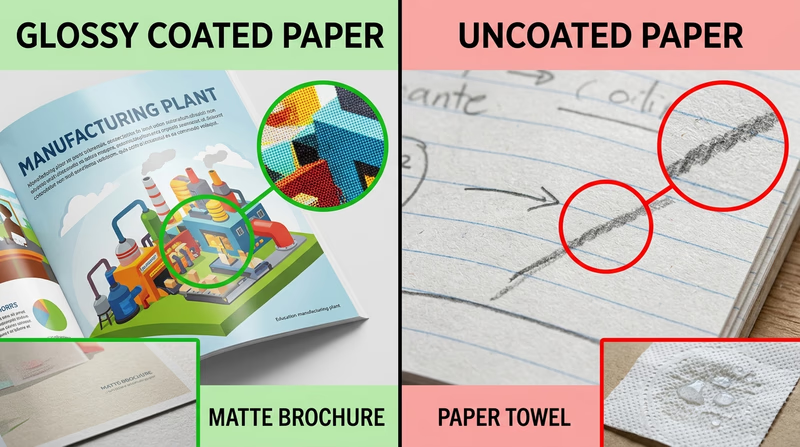
Coated paper is paper with an added surface layer. That coating may include minerals such as clay or calcium carbonate, plus binders and other ingredients that help the surface behave in a specific way. The coating changes how the sheet feels, prints, reflects light, or resists liquids.
A coated sheet is usually smoother and more controlled at the surface than an uncoated sheet. That can improve image sharpness, color appearance, brightness, and feel.
Why Paper Is Coated
Manufacturers coat paper for several common reasons:
- to make printing look sharper
- to improve smoothness and brightness
- to add gloss or a matte finish
- to reduce how much ink soaks into the sheet
- to add resistance to grease, moisture, or other conditions
A magazine page and a paper towel are almost opposites. The magazine page wants controlled ink on a smooth surface. The paper towel wants fast absorbency. Coating helps create that difference.
🎬 Video: Coated vs. Uncoated Paper (video) — https://youtu.be/TCFpE6vtC4s
Major Uses for Different Kinds of Coated Papers
Gloss-coated paper
Gloss-coated paper reflects light strongly and helps printed colors look rich and vivid. It is common in magazines, catalogs, brochures, and photo-heavy advertising pieces.
Matte or dull-coated paper
Matte-coated paper still offers a controlled printing surface, but with less glare. It is useful when readability matters as much as image quality, such as in higher-end books, reports, and some packaging.
Functional packaging coatings
Some coatings are less about appearance and more about performance. Food packaging, labels, freezer cartons, cups, and wrappers may use coatings to resist moisture, grease, scuffing, or handling damage.
Match the Paper to the Job
Ask these questions when you compare coated papers- Does it need sharp printing? Smooth coated surfaces help images and text stay crisp.
- Will people touch it a lot? Packaging may need scuff resistance or stiffness.
- Will it face food, moisture, or grease? Functional coatings can help protect the paper.
- Does glare matter? Matte finishes may be easier to read than glossy ones.
One Other Way Paper Is Changed for New Uses
Paper can also be changed mechanically or chemically without using a classic print coating. One good example is creping, a mechanical treatment often used for tissue and towels. Creping creates a wrinkled, stretchier structure that makes the sheet softer and more absorbent.
Another example is adding wet-strength chemistry so a paper product can stay intact when damp. That matters for things like labels, beverage carriers, or some paper towels.
The big idea is that paper is not just one material. Engineers can adjust fiber mix, thickness, pressing, surface treatment, texture, additives, and converting steps to create very different products from similar raw material.
In Req 4, you followed the basic papermaking process. Here, you saw how manufacturers fine-tune the final product. Next, you will bring that knowledge home by identifying real pulp and paper products around you.
Req 6 — Paper Products Around You
This requirement sounds easy until you try to build a thoughtful list. “Paper products” includes much more than notebook paper. The best lists show range: writing papers, packaging, tissues, food-service items, and specialty products. If you bring 10 examples that all do the same job, you will miss the real lesson — how many different ways fiber can be engineered.
Where to Look in Your Home
Paper products show up in almost every room:
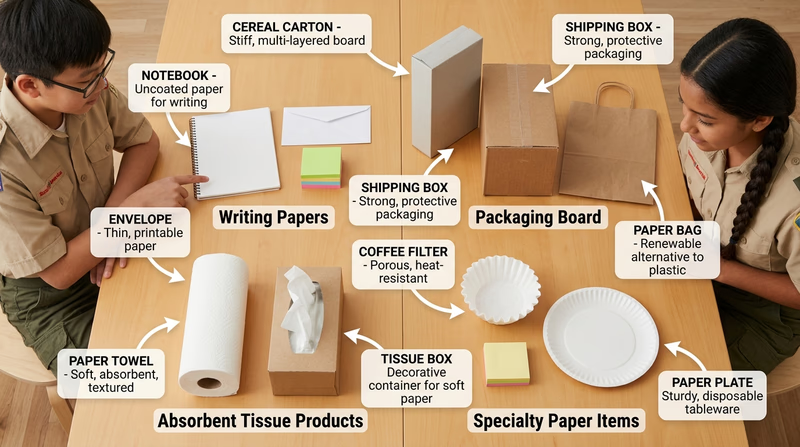
- Kitchen: cereal boxes, paper towels, napkins, coffee filters, egg cartons, food cartons.
- Bathroom: toilet tissue, facial tissue, cardboard tube cores, soap packaging.
- Bedroom or office: notebooks, envelopes, printer paper, sticky notes, book pages.
- Garage or entryway: shipping boxes, paper mailers, product packaging, tags.
Build a Strong List of 15
Try to include items from several categories.
Categories to Include
Aim for variety, not just quantity- Printing and writing: notebook paper, envelopes, index cards, books.
- Packaging: corrugated boxes, cereal cartons, shoe boxes, tissue boxes.
- Absorbent products: paper towels, napkins, toilet tissue, tissues.
- Food-service and specialty: coffee filters, cupcake liners, paper plates, labels, freezer cartons.
A strong list might include a cereal box, paper towel roll, school notebook, shipping box, facial tissue box, envelope, toilet paper roll, coffee filter, paper grocery bag, greeting card, recipe card, frozen food carton, sticky note pad, paper plate, and book page.
Notice what each item is designed to do. Is it stiff? Soft? Smooth? Grease-resistant? Printed brightly? Easy to tear? Thinking this way connects Req 6 back to Req 4 and Req 5.
Choose 10 Examples to Share
For the 10 items you bring or discuss with your counselor, pick examples that show different properties. A paper towel and a glossy carton tell a better story together than two similar cardboard boxes.
For each example, be ready to explain:
- what the product is used for
- what kind of paper or paperboard it seems to be
- what properties it needs most
- whether you think it could be recycled after use
Compare Products Like an Engineer
A Scout who says “this is a tissue” is only partly done. A Scout who says “this tissue is thin, soft, and absorbent, so it was designed for comfort rather than strength” is showing real understanding.
Try this comparison method:
| Product | Main job | Key property | Likely reason it was made that way |
|---|---|---|---|
| Paper towel | Absorb spills | High absorbency | Loose, soft structure helps soak up liquid |
| Cereal box | Hold dry food and print branding | Stiffness + printability | Paperboard must stand up and take bright printing |
| Shipping box | Protect contents | Strength | Corrugated structure resists crushing |
| Notebook paper | Writing | Smoothness + flexibility | Surface works well with pencil and pen |
You have now worked from forests all the way to products in your own home. Next comes a choose-one requirement where you will explore the industry more directly through a visit or research experience.
Req 7 — Choose Your Industry Experience
You must choose exactly one option. Each path gives you a different view of the industry: raw fiber, finished paper, box-making, recycling operations, or product development. Your best choice depends on what is available near you and which part of the industry you most want to understand.
Your Options
- Req 7a — Inside a Pulp Mill: Focus on the earliest factory stage, where wood is turned into cellulose fibers. You will gain a strong understanding of pulping operations and the chemistry behind fiber separation.
- Req 7b — Inside a Paper Mill: Follow pulp into the finished sheet and learn how mills control paper properties and end uses. This is a great option if you want to connect pulping to the actual products people buy.
- Req 7c — Boxes and Corrugated Containers: See how paperboard becomes shipping containers and packaging. This option is especially practical because box plants are often easier to find than full paper mills.
- Req 7d — Recycling Collection and Sorting: Watch the back end of the system, where used paper is collected, separated, and prepared for reuse. You will learn how contamination and sorting affect recycling success.
- Req 7e — Research and Development: Study how new paper products are invented and improved. This option is best if site visits are hard to arrange or if you are interested in engineering, testing, and innovation.
How to Choose
Choosing Your Option
Compare the practical differences before you decide- Access: Recycling facilities and box plants are often easier to find locally than pulp or paper mills.
- Safety and permission: Mills may have stricter tour rules, age limits, or protective-equipment requirements.
- What you’ll gain: Pulp mills teach fiber conversion, paper mills teach sheet-making, box plants teach converting and packaging, recycling sites teach material recovery, and research projects teach innovation.
- Time needed: A scheduled visit may take longer to arrange than the research-based option.
| Option | Best for Scouts who want to learn about… | What you will likely observe |
|---|---|---|
| 7a | Fiber separation and pulping | wood chips, digesters, washing, cellulose fibers |
| 7b | Finished paper production | paper machines, rolls, converting, end-use samples |
| 7c | Packaging manufacture | corrugating, cutting, folding, printing, box assembly |
| 7d | Recycling operations | collection, sorting lines, contamination removal, bale prep |
| 7e | Product innovation | testing, new designs, sustainability ideas, performance goals |
Choose the option that gives you the clearest, safest, and most meaningful experience — then move into that page and prepare for it.
Req 7a — Inside a Pulp Mill
A pulp mill is where the tree stops being a log and starts becoming papermaking fiber. If you visit one, pay attention to the sequence. The requirement is not asking for every machine name. It is asking whether you can explain how wood is changed into cellulose fibers that can later become paper.
What Happens First
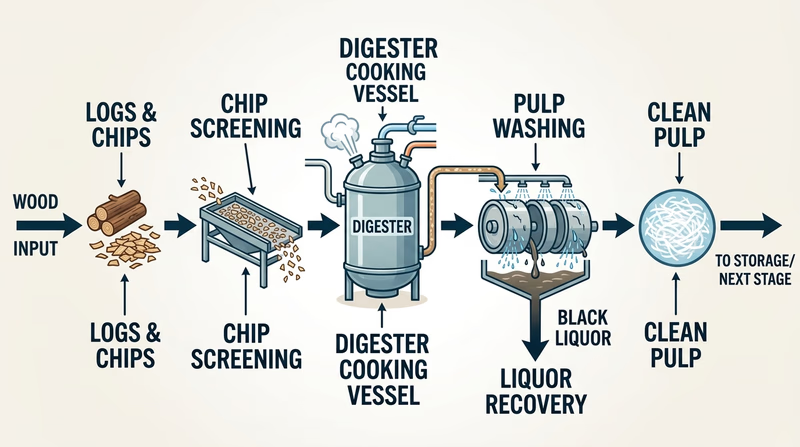
Most mills start with wood that has already been debarked and cut into chips, or they process incoming logs into chips on site. Chips are easier to cook and handle evenly than whole logs.
The chips are screened for size because consistent chips process more predictably. Oversized or undersized pieces can cause trouble later in pulping.
How the Mill Separates Cellulose Fibers
The main job is to free cellulose fibers from the lignin and other materials that hold the wood together. In a chemical pulp mill, wood chips are cooked in a digester with chemicals and heat. That process breaks down much of the lignin so the cellulose fibers can separate.
After cooking, the pulp is usually washed to remove spent chemicals and dissolved material. It may then be screened to remove knots or uncooked pieces and cleaned further before bleaching or shipping to a paper mill.
If the mill uses a mechanical process, it may rely more on grinding or refining to separate fibers. Either way, the purpose is the same: turn wood structure into usable fiber.
How Is Paper Made Today? (website) A current overview of modern papermaking steps that helps you place pulp-mill operations in the larger production flow. Link: How Is Paper Made Today? (website) — https://www.afandpa.org/news/2025/how-paper-made-todayWhat to Watch for During a Visit
Questions to Answer During the Tour
These will help you describe the process clearly later- What arrives at the mill? Logs, chips, or both?
- How are chips prepared? Debarking, chipping, screening, or storage.
- How are fibers separated? Chemical cooking, mechanical refining, or a combination.
- What happens after pulping? Washing, screening, bleaching, drying, or shipping.
A Good Way to Describe the Process
When you report back to your counselor, use a clear chain:
- Wood arrives and is prepared.
- Chips are processed to separate cellulose fibers.
- The pulp is washed and cleaned.
- The resulting fiber is sent forward for papermaking or further treatment.
That structure is much stronger than a random list of machines.
Req 3 taught you the theory of pulp. This option lets you see it in action. Next is the paper mill option, where those fibers become a finished sheet.
Req 7b — Inside a Paper Mill
A paper mill takes pulp and turns it into a product with a specific job: writing, printing, wrapping, absorbing, or packaging. Your sample matters because it gives you something concrete to discuss with your counselor. The best description connects the product’s use to the way the mill made it.
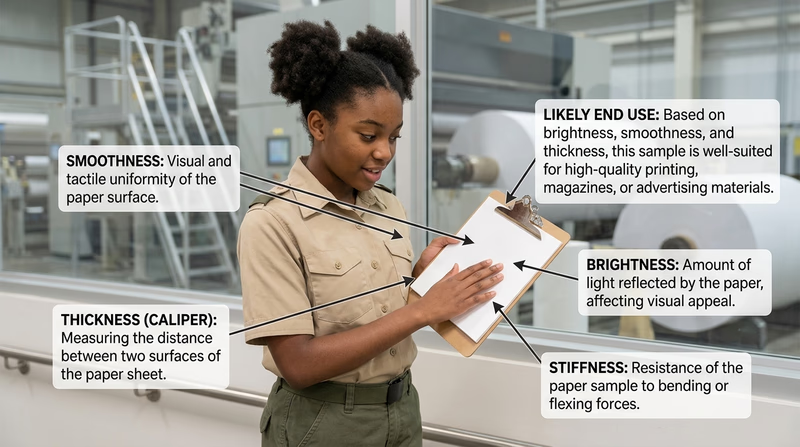
What to Notice About the Sample
Before or after the visit, study your sample closely.
- Is it smooth or rough?
- Thin or heavy?
- Soft or stiff?
- Bright white, brown, or coated?
- Meant for printing, absorbing, or packaging?
Those clues help you explain why the mill used certain steps.
Main Paper-Mill Processes
Most paper mills follow a pattern like this:
- Prepare the furnish. Blend pulp, water, and additives.
- Form the sheet. Spread the slurry across a moving screen.
- Press and dry. Remove water and strengthen the sheet.
- Finish or convert. Smooth, coat, cut, emboss, wind, or package the paper.
The exact steps depend on the grade. Tissue, office paper, label stock, and boxboard are not finished the same way because they are built for different performance.
Match the Process to the Product Use
If your sample is copier paper, the mill likely focused on smoothness, brightness, and stable thickness. If it is paperboard or kraft paper, the mill may have emphasized strength and stiffness more than brightness. If it is tissue, softness and absorbency mattered most.
A strong counselor explanation sounds like this: “This paper is used for ___, so the mill needed to make it ___, ___, and ___.”
If you cannot visit a paper mill, the next options show other important parts of the industry. The box-plant option is especially good for understanding packaging.
Req 7c — Boxes and Corrugated Containers
A box plant is where paperboard becomes practical packaging. This option is a great reminder that the pulp and paper industry is not just about giant mills. Converting plants take rolls or sheets of containerboard and turn them into the boxes that protect products during shipping, storage, and display.
What a Container Plant Usually Does
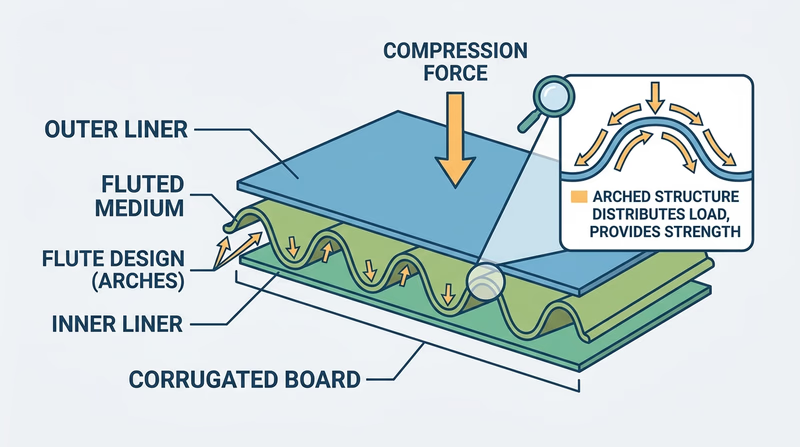
Many box plants work with corrugated board, which has three basic layers:
- a flat liner on one side
- a fluted middle layer
- another flat liner on the other side
The fluted layer adds thickness and crush resistance without using solid heavy board everywhere. That structure is why corrugated boxes can be both light and strong.
Typical Manufacturing Steps
At a box plant, you may see some or all of these steps:
- Corrugating: medium is formed into flutes and glued to linerboard.
- Cutting and scoring: sheets are cut to size and folded along planned lines.
- Printing: graphics, labels, or instructions are added.
- Slotting and die-cutting: openings, tabs, or custom shapes are made.
- Folding and gluing: flat box blanks are assembled for shipping to customers.
The plant’s job is to make packaging that fits the product, protects it, stacks well, and can move efficiently through warehouses and trucks.
Corrugated Box Companies Listings (website) A directory that can help you identify nearby corrugated box and container manufacturers for a possible visit. Link: Corrugated Box Companies Listings (website) — https://corrugatedboxcompanies.com/more-corrugated-box-companies-listings/What to Watch for During the Visit
Observe These Details
They will help you describe the plant's products clearly- Board type: single-wall, double-wall, or specialty structure.
- Product design: regular shipping box, display carton, divider, insert, or custom cutout.
- Strength features: flutes, stacked layers, folds, and glued seams.
- Information features: printing, labels, barcodes, and brand graphics.
Explain the Product in Terms of Its Job
If the plant makes shipping boxes, describe how the corrugated structure protects products from crushing. If it makes display packaging, explain how printing and die-cutting help products stand out in a store. If it makes inserts or dividers, focus on cushioning and organization.
That is the pattern for this requirement: how it is made and why it is made that way.
If box plants are common in your area, this may be the easiest visit to arrange. The next option takes you to the recovery side of the system, where used paper gets another chance.
Req 7d — Recycling Collection and Sorting
A recycling facility shows you the paper industry’s second life. This is where old boxes, office paper, mixed paper, and cardboard are separated, cleaned up, compacted, and prepared to go back into manufacturing. If your visit goes well, you will see that recycling is not magic. It depends on sorting, good equipment, and people keeping contaminants out of the system.
What Operations You May See
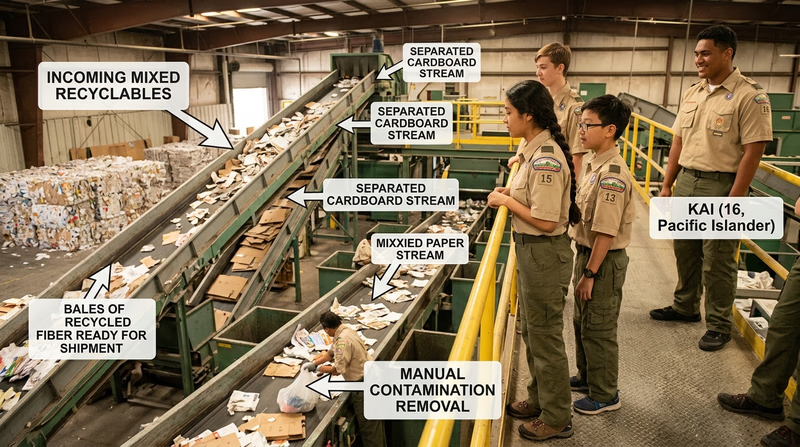
A recycled paper facility may handle collection, sorting, baling, or transfer to another processor. Common operations include:
- trucks unloading mixed recyclables or paper grades
- workers or machines separating cardboard, office paper, and mixed paper
- removing contaminants such as plastic bags, food waste, glass, or metal
- compacting sorted paper into bales for shipment
The cleaner and better sorted the paper is, the more useful it is to mills.
🎬 Video: Discover How Paper is Sorted for Recycling! (video) — https://youtu.be/xEdwIHtK_6k
🎬 Video: How Is Paper Recycled? (video) — https://youtu.be/ZuZJZccjI34
Why Sorting Matters So Much
Paper grades are not all interchangeable. Corrugated cardboard, white office paper, newspaper, and mixed residential paper each have different fiber qualities and contamination risks. A pizza box soaked with grease or a paper load tangled with plastic can lower the value of the material or make it unusable.
That means recycling begins before the truck arrives. It starts with how households, schools, and businesses prepare what they throw into recycling bins.
What to Describe to Your Counselor
After your visit, be ready to describe:
- what materials came into the facility
- how they were sorted
- what contaminants were removed
- what happened to the finished paper bales or sorted material next
If possible, explain the facility as part of a chain: collection, sorting, shipment, repulping, and remanufacturing.
This option shows what happens after consumers use paper products. The final option steps away from site visits and into innovation — how new paper products and processes are developed.
Req 7e — Research and Development
A new paper product does not begin with a giant machine. It usually begins with a problem. A package needs to survive shipping but use less material. A food wrapper needs better grease resistance. A tissue needs to feel softer without falling apart. Research and development, often called R&D, is the part of the industry that turns those problems into experiments, tests, and better products.
How Paper Products Are Developed
Product development usually follows a pattern:
- Identify a need. What must the paper do better?
- Design a concept. Choose fibers, additives, coatings, structure, or converting steps.
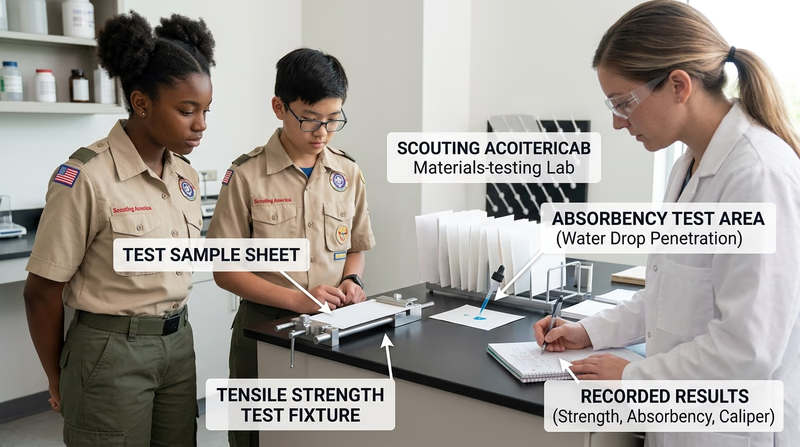
- Test samples. Measure strength, absorbency, print quality, brightness, stiffness, or barrier performance.
- Refine the product. Adjust the design based on test results and cost.
- Scale up. Move from trial runs to full production.
That process is similar to product design in many industries. The difference is that paper engineers work with fiber networks, water, chemistry, coatings, and machine settings all at once.
The Role of R&D in the Industry
R&D helps companies improve performance, lower cost, reduce waste, and respond to new demands. It can lead to stronger shipping boxes, lighter packaging, better recycled-content products, safer food packaging, or paper alternatives that replace other materials.
R&D teams may include chemists, materials scientists, engineers, machine specialists, lab technicians, and product designers. Some work in mill labs. Others work in corporate research centers or supplier companies.
🎬 Video: Revolutionizing the Paper Industry (video) — https://youtu.be/xcrVyh7s6zA
Topics You Might Research
If you need a starting point, focus your research on one of these questions:
- How are companies improving paper packaging to replace harder-to-recycle materials?
- How does recycled fiber change product design?
- How do coatings or additives change barrier performance?
- How do mills use data, sensors, and automation to improve quality?
What to Share With Your Counselor
Do not just say, “R&D makes better paper.” Give a concrete example. For instance, you might explain how a company tests box strength, redesigns flute patterns, and reduces weight while keeping protection high. Or you might describe how a mill develops a new tissue product by balancing softness, strength, and absorbency.
Whether you choose a site visit or the R&D path, Req 7 is about seeing the industry as a real working system. Next, you will look at the people inside that system by exploring careers.
Req 8 — Careers in Paper and Packaging
The pulp and paper industry is broad enough that two people can both work “in paper” and have completely different jobs. One person may manage forests. Another may tune a paper machine. Another may test coatings in a lab. This requirement is really about fit: which jobs match your interests, and what would it take to prepare for one of them?
Three Careers to Explore
Here are three strong examples to compare. You can choose others, but these show the range of the industry.
Forester or forest manager
This job focuses on growing, protecting, and planning timber resources. Foresters work with land management, replanting, fire risk, habitat, and long-term harvest planning.
Good fit if you like: outdoors work, ecology, mapping, and long-term planning.
Paper or process engineer
This role focuses on production systems inside mills. Engineers improve yield, quality, energy use, water use, and machine performance.
Good fit if you like: solving technical problems, chemistry, physics, machines, and data.
Packaging designer or packaging engineer
This role helps create containers, cartons, and corrugated products that protect items, ship efficiently, and present products well.
Good fit if you like: design, prototypes, testing, shipping systems, and real-world product problem-solving.
Pick One and Go Deeper
Once you choose a career, look for these four things:
- Education: high school courses, certificates, college majors, or trade programs.
- Training: on-the-job learning, internships, apprenticeships, or safety training.
- Experience: entry-level roles, lab experience, field time, or plant experience.
- Why it fits you: what parts of the work sound interesting or satisfying.
Questions to Guide Your Research
Career Research Questions
Bring answers to these when you meet with your counselor- What does this person actually do during a normal week?
- What subjects should I study now to prepare for it?
- What kind of workplace does this job involve? Forest, office, lab, plant, or travel?
- What skills matter most? Communication, math, troubleshooting, design, teamwork, or safety awareness?
Official resources to help you compare roles
🎬 Video: Why a Career in Pulp and Paper Pays Off (video) — https://youtu.be/JceCMm-kbg4
🎬 Video: Career Opportunities at Catalyst Paper (video) — https://youtu.be/QUeAwmqD4CM
🎬 Video: Amazing Summer Internships for Students at Pulp and Paper (video) — https://youtu.be/yfZzS3zmytQ
🎬 Video: Working for International Paper (video) — https://youtu.be/-zw1BXofRK4
Req 7 showed how the industry works. This final requirement shows who does the work. After that, you can go beyond the badge and explore where pulp, paper, packaging, and forest products may be heading next.
Extended Learning
Congratulations
You have finished a badge about one of the world’s most overlooked materials. That is part of what makes Pulp and Paper interesting. The better this industry does its job, the less most people notice it. Now you know better. You can see the forests, chemistry, machines, design decisions, packaging systems, and recycling networks behind everyday products.
Smarter Packaging Design
One of the biggest changes in the industry is the push to make packaging do more with less. Engineers try to reduce weight, cut wasted space, improve stack strength, and replace harder-to-recycle materials with fiber-based designs when possible.
That work is harder than it sounds. A lighter package saves material and shipping weight, but if it crushes too easily, the product inside may be damaged. Good packaging design balances protection, cost, appearance, recycling, and speed on the packing line.
If this topic interests you, start noticing how different companies solve the same problem. Compare online-order boxes, drink cartons, takeout packaging, and shelf-ready store displays.
The Future of Recycled Fiber
Recycling is not just about putting paper in the blue bin. The deeper challenge is preserving enough clean, useful fiber to make strong new products. That is why mills care so much about contamination, sorting quality, and matching the right recovered paper grade to the right new product.
As the industry changes, recycled fiber may be used in smarter blends, improved packaging, and new specialty grades. At the same time, engineers have to work around shorter fibers, coating residues, moisture damage, and mixed-material packaging.
A great question to keep asking is this: What makes a paper product easy or hard to recycle well? That single question connects design, consumer behavior, and mill operations.
Automation, Sensors, and Quality Control
Modern papermaking is not only about heavy machinery. It is also about measurement. Mills use sensors and control systems to track moisture, thickness, basis weight, smoothness, and other properties while the machine is running.
That means the industry needs people who understand data as well as materials. A small change in water content, fiber mix, or machine settings can affect product quality across a huge roll of paper. Quality control is one of the reasons paper manufacturing blends chemistry, mechanical systems, and computer-based monitoring.
Forests as Working Ecosystems
The badge introduced forest management, but you can keep going deeper. A working forest is not just a crop. It is also a habitat, a watershed, a recreation space, and part of a regional economy. Foresters and land managers constantly balance competing goals.
If you like the outdoors, this is one of the most interesting parts of the industry to explore. Forest work connects science, stewardship, mapping, and practical land-use decisions in a very direct way.
Real-World Experiences
Visit a packaging-heavy business
Ask how a local retailer, bakery, moving company, or warehouse chooses boxes, cartons, labels, and paper wraps. You will quickly see that packaging decisions affect cost, shipping, branding, and waste.
Compare local recycling rules
Look up what your city or county accepts for paper recycling. Then compare that list with a nearby community. Differences in accepted materials can teach you a lot about sorting capacity and contamination challenges.
Build a paper-product comparison wall
Collect safe, clean samples of cartons, labels, tissues, notebook paper, shipping boxes, and wrappers. Tape them to a board and label what each one is designed to do. This turns your house or meeting place into a mini materials lab.
Interview someone in operations or design
A short interview with a plant worker, packaging designer, printer, recycling coordinator, or forester can give you a much more realistic picture of the industry than a general web search.