Req 4 — From Pulp to Paper
A paper mill is really a giant water-management and fiber-alignment system. Pulp starts as a wet suspension of loose fibers. The mill spreads those fibers into a thin layer, drains and presses out water, dries the sheet, and winds it into rolls. Recycling runs that process in reverse first: used paper is collected, sorted, pulped again, cleaned, and then turned into new products.
How Paper Is Made
Here is the basic industrial sequence:
- Prepare the pulp. Fibers are mixed with lots of water to make a slurry.
- Form the sheet. The slurry is spread on a moving screen so water can drain away.
- Press the sheet. Rollers squeeze out more water and bond the fibers more tightly.
- Dry the paper. Heated cylinders or other drying systems remove the remaining moisture.
- Finish the sheet. The paper may be smoothed, coated, cut, wound, or converted for its final use.
The surprising part is how wet the process starts. A newly formed sheet is mostly water. Getting that water out efficiently is one of the biggest engineering challenges in papermaking.
🎬 Video: Production of Paper (video) — https://youtu.be/OEbf9ffkyy8
🎬 Video: From Tree to Sheet: How Paper Is Made | Unveiling the Manufacturing Process (video) — https://youtu.be/invUjqvE0Oc
How Paper Is Recycled
Paper recycling gives used fiber another job. The process usually includes these steps:
- Collection: paper is gathered from homes, schools, stores, and businesses.
- Sorting: materials are separated by grade because cardboard, office paper, and mixed paper do not all behave the same way.
- Repulping: the paper is mixed with water and broken back into fibers.
- Cleaning and screening: contaminants such as staples, plastic, tape, or food residue are removed.
- Deinking or refining: depending on the grade, inks and coatings may be reduced and the fiber adjusted.
- Remanufacturing: the recycled pulp is blended and turned into new paper or paperboard.
Fiber cannot be recycled forever. Every time paper is processed, the fibers tend to get shorter and weaker. That is why many products use a mix of virgin fiber and recycled fiber.
Making Paper by Hand
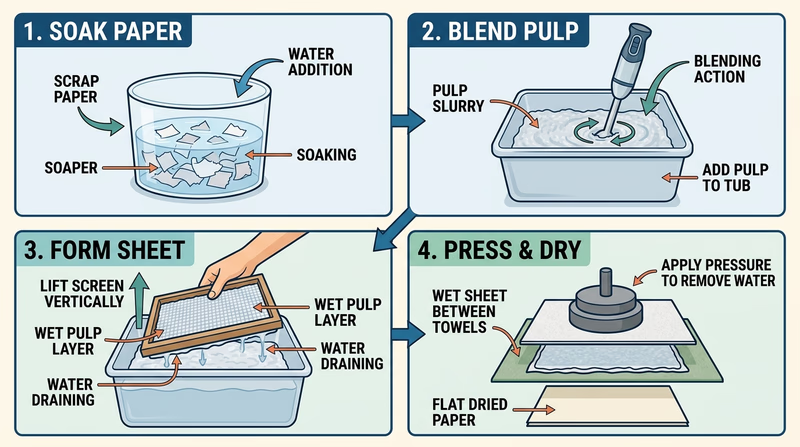
Hand papermaking is a small-scale version of the same core idea. You make a pulp slurry, lift it on a screen, remove water, and dry the sheet.
Simple hand-papermaking process
- Tear scrap paper into small pieces.
- Soak the pieces in water.
- Blend or mash them into pulp.
- Stir the pulp into a tub of water.
- Lift the slurry with a screen or mould and deckle.
- Let water drain off.
- Press the wet sheet between towels or cloth.
- Dry it flat.
You can add flower petals, thread, or bits of colored paper for texture, but the real lesson is how fibers form a sheet when water drains away.
🎬 Video: How to Make Handmade Paper from Recycled Materials (video) — https://youtu.be/Ow5LeG-zzyg
Before You Make a Sheet by Hand
Set yourself up for a cleaner result
- Use small scraps: they soak and blend more evenly.
- Add plenty of water: thin slurry forms more consistent sheets.
- Press gently but firmly: too much force can tear the wet sheet.
- Allow full drying time: damp paper wrinkles and tears easily.
In Req 3, you learned how pulp is produced. Here, you followed the rest of the path into finished paper and recycled fiber. Next, you will see how chemistry and surface treatment change what paper can do.