Req 5 — Coatings and Specialty Papers
Some paper is meant to absorb ink quickly. Some is meant to resist grease. Some needs to look bright and glossy under store lights. Coated and specialty papers exist because plain paper cannot do every job equally well. This requirement is about how manufacturers tune the surface and structure of paper to match a purpose.
What Coated Paper Is
Coated paper is paper with an added surface layer. That coating may include minerals such as clay or calcium carbonate, plus binders and other ingredients that help the surface behave in a specific way. The coating changes how the sheet feels, prints, reflects light, or resists liquids.
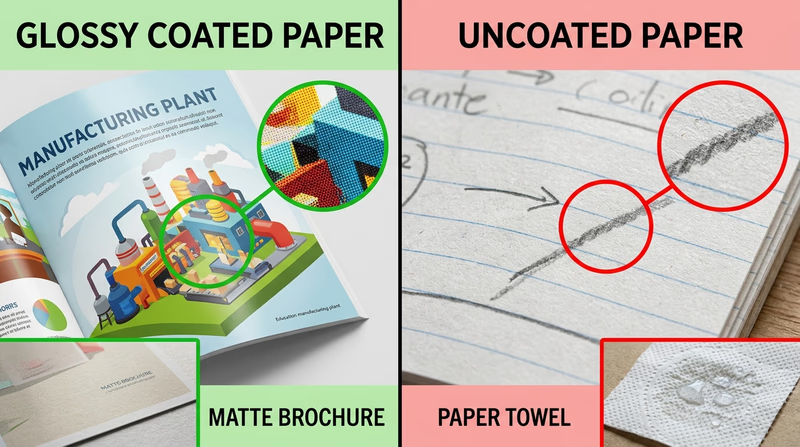
A coated sheet is usually smoother and more controlled at the surface than an uncoated sheet. That can improve image sharpness, color appearance, brightness, and feel.
Why Paper Is Coated
Manufacturers coat paper for several common reasons:
- to make printing look sharper
- to improve smoothness and brightness
- to add gloss or a matte finish
- to reduce how much ink soaks into the sheet
- to add resistance to grease, moisture, or other conditions
A magazine page and a paper towel are almost opposites. The magazine page wants controlled ink on a smooth surface. The paper towel wants fast absorbency. Coating helps create that difference.
🎬 Video: Coated vs. Uncoated Paper (video) — https://youtu.be/TCFpE6vtC4s
Major Uses for Different Kinds of Coated Papers
Gloss-coated paper
Gloss-coated paper reflects light strongly and helps printed colors look rich and vivid. It is common in magazines, catalogs, brochures, and photo-heavy advertising pieces.
Matte or dull-coated paper
Matte-coated paper still offers a controlled printing surface, but with less glare. It is useful when readability matters as much as image quality, such as in higher-end books, reports, and some packaging.
Functional packaging coatings
Some coatings are less about appearance and more about performance. Food packaging, labels, freezer cartons, cups, and wrappers may use coatings to resist moisture, grease, scuffing, or handling damage.
Match the Paper to the Job
Ask these questions when you compare coated papers
- Does it need sharp printing? Smooth coated surfaces help images and text stay crisp.
- Will people touch it a lot? Packaging may need scuff resistance or stiffness.
- Will it face food, moisture, or grease? Functional coatings can help protect the paper.
- Does glare matter? Matte finishes may be easier to read than glossy ones.
One Other Way Paper Is Changed for New Uses
Paper can also be changed mechanically or chemically without using a classic print coating. One good example is creping, a mechanical treatment often used for tissue and towels. Creping creates a wrinkled, stretchier structure that makes the sheet softer and more absorbent.
Another example is adding wet-strength chemistry so a paper product can stay intact when damp. That matters for things like labels, beverage carriers, or some paper towels.
The big idea is that paper is not just one material. Engineers can adjust fiber mix, thickness, pressing, surface treatment, texture, additives, and converting steps to create very different products from similar raw material.
In Req 4, you followed the basic papermaking process. Here, you saw how manufacturers fine-tune the final product. Next, you will bring that knowledge home by identifying real pulp and paper products around you.