Req 7b — Inside a Paper Mill
A paper mill takes pulp and turns it into a product with a specific job: writing, printing, wrapping, absorbing, or packaging. Your sample matters because it gives you something concrete to discuss with your counselor. The best description connects the product’s use to the way the mill made it.
What to Notice About the Sample
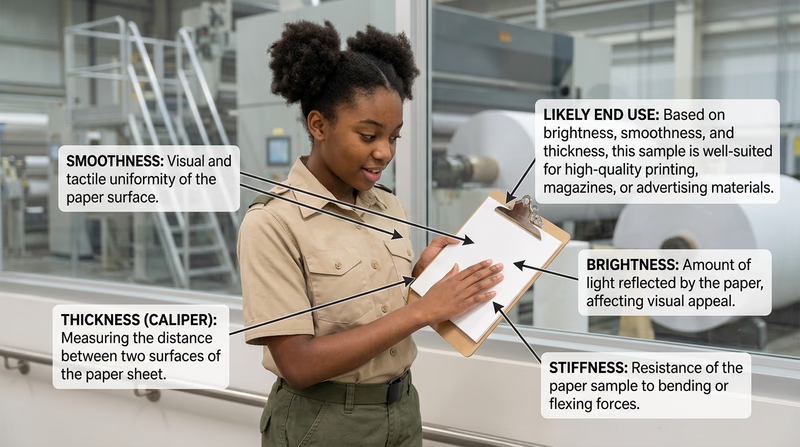
Before or after the visit, study your sample closely.
- Is it smooth or rough?
- Thin or heavy?
- Soft or stiff?
- Bright white, brown, or coated?
- Meant for printing, absorbing, or packaging?
Those clues help you explain why the mill used certain steps.
Main Paper-Mill Processes
Most paper mills follow a pattern like this:
- Prepare the furnish. Blend pulp, water, and additives.
- Form the sheet. Spread the slurry across a moving screen.
- Press and dry. Remove water and strengthen the sheet.
- Finish or convert. Smooth, coat, cut, emboss, wind, or package the paper.
The exact steps depend on the grade. Tissue, office paper, label stock, and boxboard are not finished the same way because they are built for different performance.
Match the Process to the Product Use
If your sample is copier paper, the mill likely focused on smoothness, brightness, and stable thickness. If it is paperboard or kraft paper, the mill may have emphasized strength and stiffness more than brightness. If it is tissue, softness and absorbency mattered most.
A strong counselor explanation sounds like this: “This paper is used for ___, so the mill needed to make it ___, ___, and ___.”
If you cannot visit a paper mill, the next options show other important parts of the industry. The box-plant option is especially good for understanding packaging.