Req 1a — Modern Freight Trains
Modern freight railroads do not run one kind of train — they run several, each optimized for a specific cargo or market. For this requirement you need to name three types and explain the efficiency advantage of unit trains over mixed freight trains.
Three Types of Modern Freight Trains
Unit Trains
A unit train carries a single commodity from one origin to one destination without stopping to switch cars. Every car on the train is the same type, loaded with the same product, and destined for the same terminal. Common unit train types include:
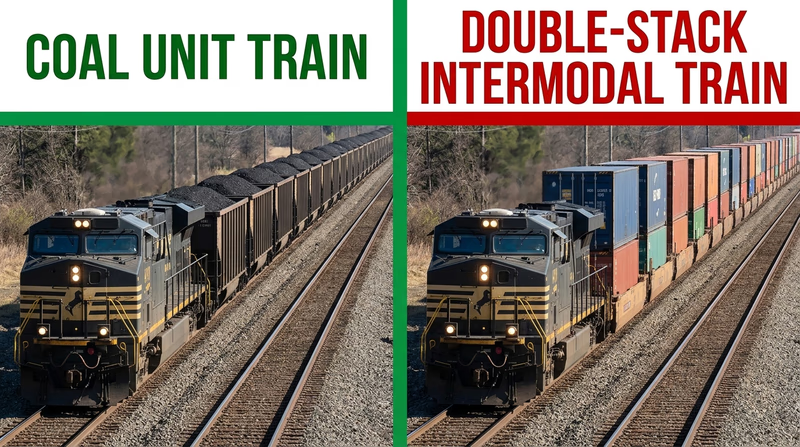
- Coal unit trains — 100–135 open hopper or gondola cars running from mine to power plant
- Grain unit trains — covered hoppers hauling corn, wheat, or soybeans from elevators to export terminals
- Intermodal unit trains — double-stack container cars running between ports and inland distribution centers
- Crude oil unit trains — tank cars moving petroleum from producing regions to refineries
- Potash and fertilizer unit trains — covered hoppers serving agricultural markets
Mixed Freight (Manifest) Trains
A manifest train carries a variety of car types and commodities picked up from and delivered to many different customers along the route. Cars are sorted and switched at classification yards. Manifest trains are more flexible than unit trains but require more handling and take longer to reach their destinations.
Intermodal Trains
Intermodal trains deserve special mention even though they are technically a subtype of unit train. They carry shipping containers — either international ocean containers or domestic trailers — in standardized well cars that allow two containers to be stacked. Intermodal has been the fastest-growing rail segment for decades because containers move seamlessly between ships, trains, and trucks.
Why Unit Trains Are More Efficient
This is the heart of what your counselor will ask about. Be ready to explain the efficiency difference clearly.
Unit Train Efficiency Factors
Know all of these for your counselor discussion
- No switching delays — a unit train never stops to add or remove cars at intermediate yards. It runs point-to-point.
- Faster turnaround — the train can be loaded, run, unloaded, and returned in a predictable cycle. Many coal and grain unit trains operate as a continuous loop.
- Higher utilization — locomotives and crews spend more time moving and less time waiting in yards.
- Purpose-built equipment — all cars are identical and optimized for that one commodity, reducing empty space and weight.
- Easier scheduling — a single-product, single-destination train is simpler to plan and less likely to be delayed by yard congestion.
- Lower cost per ton-mile — fewer labor hours, less fuel wasted at idle, and higher average speed all combine to reduce the cost of moving each ton.
A mixed freight (manifest) train, by contrast, must visit multiple yards to sort and switch cars. Each switching move takes time, ties up yard crews, and delays the shipment. A carload of freight in manifest service might spend more time sitting in yards than actually moving.
How to Present This to Your Counselor
You will explain these concepts verbally — no written report is required unless your counselor asks for one. Practice saying out loud: “A unit train carries one commodity from one place to another without switching cars, so it’s faster and cheaper than a mixed freight train, which has to stop at yards to sort cars for different destinations.” That sentence covers the core idea.